


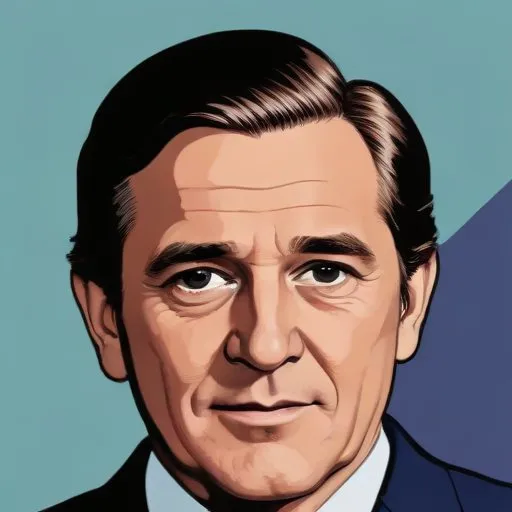
The 26th Vice President of the United States, serving from 1905 to 1909, is most known for being a strong advocate for the gold standard and a key figure in the Republican Party during the early 20th century.
Charles Warren Fairbanks, the 26th Vice President of the United States, was a prominent figure in American politics during the late 19th and early 20th centuries. He is perhaps best known for his service as Vice President from 1905 to 1909, under President Theodore Roosevelt, and his subsequent bid for the Republican vice presidential nomination in 1916.
Fairbanks was born on May 11, 1852, in a log cabin near Unionville Center, Ohio, to Mary Adelaide Smith and Loriston Monroe Fairbanks, a wagonmaker. He grew up in a modest household and was educated at Ohio Wesleyan University, where he graduated in 1872.
Fairbanks' service as Vice President under Roosevelt was marked by his opposition to the President's progressive policies. Despite this, he remained a respected figure in the Republican Party and continued to pursue higher office.
In 1916, he sought the Republican nomination for President but was instead selected as the running mate for Charles Evans Hughes. Although the Hughes-Fairbanks ticket narrowly lost to the Democratic ticket of President Woodrow Wilson and Vice President Thomas R. Marshall, Fairbanks' reputation as a seasoned politician remained intact.
Fairbanks' life and career spanned a period of significant change in American politics, from the late 19th century to the early 20th century. His experiences and achievements serve as a testament to his dedication to public service and his commitment to the principles of the Republican Party.
Today, Charles Warren Fairbanks is remembered as a skilled politician, a dedicated public servant, and a significant figure in American history.
Fairbanks' legacy extends beyond his political achievements, as he played a role in shaping the country's development during a critical period in American history. His commitment to public service and his dedication to the principles of the Republican Party continue to inspire future generations of politicians and citizens alike.
Born in 1858
A pioneering leader who championed progressive reforms, trust-busting, and conservation, earning a Nobel Peace Prize for mediating the Russo-Japanese War. He's also famous for his rugged outdoorsmanship and "big stick" diplomacy.
Born in 1857
The 27th President of the United States was a lawyer and jurist who served as the only person to hold the offices of President and Chief Justice of the United States. He's known for his significant contributions to the country's judicial system.
Born in 1865
The 29th President of the United States, a journalist-turned-politician, led the country through a period of post-war prosperity and scandalous corruption. He's infamous for his administration's numerous scandals and his own extramarital affairs.
Born in 1872
The 30th President of the United States, a lawyer and politician, led the country through a period of economic prosperity and limited government intervention, earning the nickname "Silent Cal" for his frugal and humble nature. He's most known for his minimalist approach to governance and tax cuts.
Born in 1874
The 31st President of the United States was a humanitarian and politician who led the country through the Great Depression and is known for his humanitarian efforts and infrastructure development. He's also infamous for his inability to mitigate the economic crisis.
Born in 1882
Led the United States through the Great Depression and World War II, implementing a series of reforms known as the New Deal and helping to establish the country as a global superpower.
Born in 1884
The 33rd President of the United States, a strong leader who made tough decisions, including dropping atomic bombs on Japan and establishing the Marshall Plan to rebuild Europe after WWII.
Born in 1890
Led the Allied forces to victory in World War II and later served as President, maintaining peace and prosperity during the Cold War era. He's known for his strategic leadership and diplomatic skills.
