


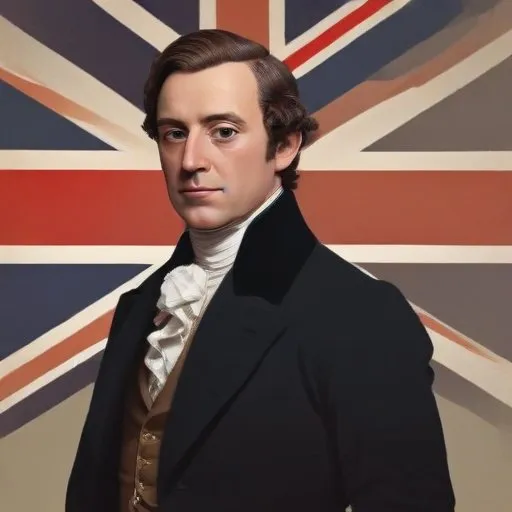
A British politician who served as Prime Minister of Great Britain during the late 18th century, known for his role in repealing the Stamp Act and advocating for American independence.
Charles Watson-Wentworth, 2nd Marquess of Rockingham, is remembered as one of the most influential British Whig statesmen of the 18th century, serving two terms as Prime Minister of Great Britain. His patronage of the Whig party earned him the title of leader of the Rockingham Whigs, a faction that played a significant role in shaping British politics during this period.
Born on May 13, 1730, Charles Watson-Wentworth was the son of Thomas Watson-Wentworth, 1st Marquess of Rockingham, and Lady Mary Finch, daughter of the 7th Earl of Winchilsea. He was educated at Westminster School, where he developed a strong foundation in politics and governance.
During the Jacobite rising of 1745, Rockingham's father made him a colonel and organized volunteers to defend the country against the Young Pretender. Without parental consent, Rockingham rode from Wentworth to Carlisle to join the Duke of Cumberland in pursuit of the Young Pretender. His bravery and zeal during this period earned him recognition and praise from the Duke of Cumberland.
Rockingham's leadership skills and Whig sympathies earned him the patronage of many prominent Whigs, who came to be known as the Rockingham Whigs. He served in only two high offices during his lifetime - Prime Minister and Leader of the House of Lords - but his influence extended far beyond these roles. His first term as Prime Minister lasted from 1765 to 1766, during which he played a crucial role in repealing the Stamp Act, a move that helped to ease tensions between Britain and its American colonies.
Rockingham's second term as Prime Minister began in 1782, during which he played a key role in shaping British foreign policy and navigating the complexities of the American Revolutionary War. His approach to governance was characterized by a strong sense of morality and a commitment to the principles of liberty and justice.
Rockingham's philosophical contributions were shaped by his strong Whig sympathies and his commitment to the principles of liberty and justice. He believed in the importance of representative government, the protection of individual rights, and the limitation of monarchical power. His leadership style was characterized by a willingness to listen and consult with others, earning him the respect and admiration of his contemporaries.
Rockingham's legacy extends far beyond his own lifetime. His commitment to the principles of liberty and justice helped to shape the course of British politics and governance. His leadership style, characterized by a willingness to listen and consult with others, remains an inspiration to leaders and politicians around the world.
Rockingham's life and legacy must be understood within the context of 18th-century British politics and governance. His commitment to Whig principles and his leadership style helped to shape the course of British history, earning him a place among the most influential statesmen of his time.
In conclusion, Charles Watson-Wentworth, 2nd Marquess of Rockingham, was a statesman, patron, and leader who played a significant role in shaping British politics and governance during the 18th century. His commitment to the principles of liberty and justice, his leadership style, and his philosophical contributions continue to inspire and influence leaders around the world.
Born in 1738
The British monarch who ruled during the American Revolution, losing the colonies, and later suffered a mental illness that led to a regency crisis. He's also known for his cultural and artistic patronage.
Born in 1749
A prominent 18th-century politician who championed individual liberties and opposed British imperialism, known for his charismatic oratory skills and influential foreign policy decisions.
Born in 1729
An 18th-century thinker who shaped modern conservatism, advocating for gradual social change and warning against the dangers of radical revolution. He's also known for his philosophical writings on aesthetics and the sublime.
Born in 1720
A British aristocrat who served as Prime Minister from 1756 to 1757, known for his brief tenure and lack of significant accomplishments. He was a prominent figure in 18th-century British politics, but his impact was limited.
Born in 1725
A pioneering advocate for press freedom and a vocal critic of government corruption, known for his fearless journalism and radical politics.
Born in 1712
A skilled lawyer and politician who served as Prime Minister of Great Britain, known for implementing the Stamp Act, a taxation policy that sparked American colonial resistance.
Born in 1727
A prominent 18th-century painter of landscapes and portraits, capturing the essence of British aristocracy and gentry with elegance and refinement.
