


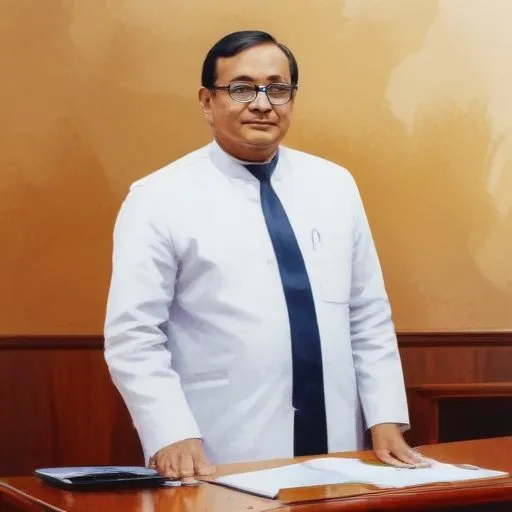
Indian lawyer and politician who served as Minister of Defence, known for playing a crucial role in India's Green Revolution, which transformed the country's agricultural sector. He implemented policies that led to self-sufficiency in food production, making India a major agricultural power.
Chidambaram Subramaniam, commonly known as CS, was a visionary Indian politician and independence activist who revolutionized India's food production landscape, earning him the title "Father of the Green Revolution." As the Minister for Food and Agriculture, he spearheaded the Indian Green Revolution, an era of self-sufficiency in food production, alongside pioneers like M. S. Swaminathan, B. Sivaraman, and Norman E. Borlaug.
Subramaniam was born on January 30, 1910, in Senguttaipalayam, a village near Pollachi in Coimbatore district, then part of the Presidency of Fort St. George (now Tamil Nadu state). He completed his early education in Pollachi before moving to Chennai, where he earned a B.Sc in Physics from the prestigious Presidency College, Chennai, affiliated with the University of Madras. Later, he graduated with a degree in law from Madras Law College, Chennai.
Subramaniam's political journey began during his college days, when he actively participated in the Civil Disobedience Movement against the British. He was imprisoned during the Quit India Movement in 1942. Later, he was elected to the Constituent Assembly and played a significant role in framing the Constitution of India.
Subramaniam served as the Minister of Education, Law, and Finance for Madras State from 1952 to 1962 under chief ministers Rajaji and K. Kamaraj. He was the First Leader of the House in the Madras Legislative Assembly for the entire duration.
In 1962, Subramaniam was elected to the Lok Sabha and served as the Minister for Steel and Mines. He later held the portfolios of Finance and Defence in the Union Cabinet.
As the Governor of Maharashtra, Subramaniam played a vital role in shaping the state's development policies.
In recognition of his outstanding contributions to India's food security, Subramaniam was awarded the Bharat Ratna, India's highest civilian honor, in 1998.
Subramaniam's visionary leadership and pioneering efforts in agriculture transformed India from a food-importing nation to a self-sufficient one. His legacy continues to inspire generations of policymakers, scientists, and farmers.
Subramaniam firmly believed in the power of science and technology in addressing India's development challenges. He advocated for a people-centric approach to policymaking, emphasizing the need for sustainable and inclusive growth.
Subramaniam's remarkable journey serves as a testament to his unwavering commitment to India's development and his vision for a self-sufficient nation.
Born in 1889
India's first Prime Minister, a key figure in the country's struggle for independence from British rule, and a champion of democracy and secularism. He played a crucial role in shaping modern India's government and economy.
Born in 1917
The first female Prime Minister of India, serving from 1966 to 1977 and again from 1980 until her assassination in 1984, known for her strong leadership and economic reforms.
82 Years Old
The 6th Prime Minister of India, a key figure in Indian politics, known for introducing economic reforms and promoting technology in the country. He was also a strong advocate for social justice and equality.
93 Years Old
The 13th Prime Minister of India, a renowned economist who led the country through a period of rapid economic growth and liberalization, implementing reforms that transformed India's economy. He is credited with helping to lift millions of people out of poverty.
Born in 1904
The second Prime Minister of India, leading the country through a tumultuous period, including a war with Pakistan, and known for his simplicity, honesty, and dedication to the nation. He is also credited with promoting the Green Revolution, which transformed India's agricultural sector.
Born in 1896
Fourth Prime Minister of India, known for his efforts to decentralize power and promote economic development, and for being the first Indian Prime Minister to resign from office.
Born in 1924
A renowned Indian poet and politician who served as the country's 10th Prime Minister, known for his efforts to strengthen India's economy and improve relations with neighboring countries.
Born in 1921
A key figure in Indian politics, serving as Prime Minister from 1991 to 1996, known for implementing economic reforms that transformed India's economy. He played a crucial role in shaping India's foreign policy and handling the country's nuclear tests.
