


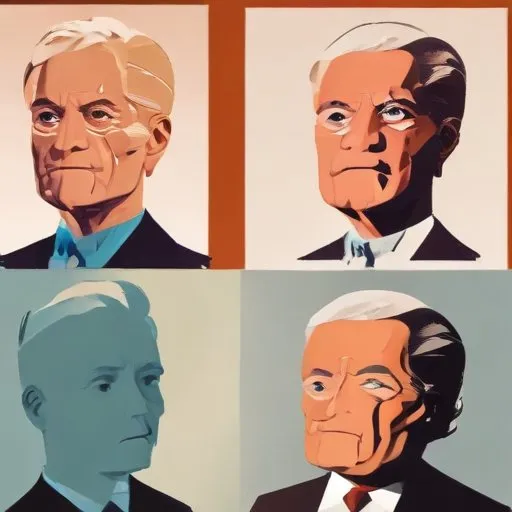
First Prime Minister of Norway, instrumental in the country's independence from Sweden, and a successful businessman.
Christian Michelsen, a Norwegian shipping magnate and statesman, etched his name in history as the prime minister who successfully led Norway to independence from Sweden in 1905. This monumental achievement earned him a revered place as Norway's 9th prime minister and the country's first premier after gaining independence.
Born in Bergen, Norway on March 15, 1857, Michelsen was named after his grandfather, bishop Peder Christian Hersleb Kjerschow. He was the eldest of five siblings in a merchant family and attended the Bergen Cathedral School. Michelsen later studied law at The Royal Frederick University, paving the way for a lucrative career as a lawyer.
Michelsen's entrepreneurial spirit led him to establish the shipping company, Chr. Michelsen & Co., which grew to become one of Norway's largest. His business acumen and leadership skills soon propelled him into the political arena. In 1891, he became a member of the Norwegian Parliament (Storting), representing the Liberal Party of Norway.
Michelsen's political career was marked by a devotion to creating a coalition of parties, which he called the Coalition Party. He served as Finance Minister in the second cabinet Hagerup, advocating for a firmer stance towards the union between Norway and Sweden. As Prime Minister, Michelsen spearheaded the movement towards dissolution of the union, citing King Oscar II's refusal to accept the Norwegian consular laws as the catalyst for this decision.
Michelsen's unwavering dedication to Norway's independence earned him a special place in the country's history. His leadership and vision paved the way for Norway's growth and prosperity. In recognition of his contributions, Michelsen was awarded the Norwegian colors on June 7, 1906, a rare honor bestowed upon individuals who have rendered exceptional service to the nation.
Michelsen's role in shaping Norway's independence has had a lasting impact on the country's politics, economy, and society. His legacy continues to inspire future generations of Norwegian leaders, entrepreneurs, and citizens, serving as a testament to the power of vision, leadership, and determination.
Christian Michelsen's life and achievements are a testament to the transformative power of leadership and vision. His legacy serves as a beacon of inspiration, reminding us that even the most daunting challenges can be overcome with courage, determination, and a commitment to the greater good.
As we reflect on Michelsen's life and accomplishments, we are reminded of the profound impact one individual can have on shaping the course of history. Christian Michelsen's remarkable journey continues to inspire and motivate, leaving an indelible mark on Norway's past, present, and future.
Born in 1841
A German mathematician and academic who developed the algebra of logic, making significant contributions to the field of mathematical logic, and is considered one of the founders of modern mathematical logic.
Born in 1861
A Norwegian pioneer who explored the Arctic, made groundbreaking scientific discoveries, and championed humanitarian causes, earning a Nobel Prize for his efforts. He's most famous for being the first to cross Greenland and his innovative sled designs.
Born in 1843
A renowned pianist and composer, famous for his iconic and romanticized musical interpretations of Norwegian folk culture, particularly his famous piano concerto.
Born in 1828
A pioneer of realism in theater, known for plays that probed the human condition, challenging social norms and morals through complex characters and situations.
Born in 1832
A Norwegian-French author and playwright who wrote influential works that explored themes of social justice, morality, and national identity, earning him the Nobel Prize in Literature in 1903.
Born in 1872
First person to reach the South Pole, leading a Norwegian expedition in 1911, and a pioneer in Arctic and Antarctic exploration.
Born in 1914
A pioneering explorer who sailed ancient-style boats across oceans to prove migration theories, and led the famous Kon-Tiki expedition across the Pacific.
Born in 1897
Led Norway through post-WWII reconstruction, implementing social welfare reforms and establishing the country's modern economic foundation. Known for his pragmatic and collaborative leadership style.
