


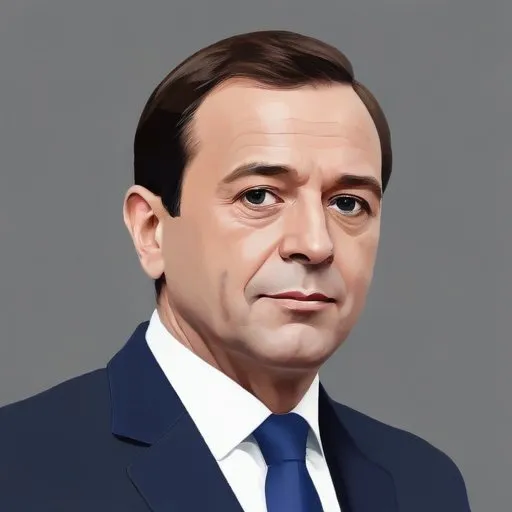
French Minister of Foreign Affairs who played a key role in shaping post-WWII European politics and was a strong advocate for European integration. He signed the Treaty of Rome, establishing the European Economic Community.
Christian Pineau was a French Resistance fighter, politician, and diplomat, best known for his bravery during World War II and his influential role in shaping France's post-war government. As a prominent figure in the French Resistance, Pineau worked closely with Charles de Gaulle and played a crucial role in establishing a network of communication between occupied France and the Free France headquarters in London.
Christian Pineau was born on October 14, 1904, in Chaumont-en-Bassigny, Haute-Marne, France, to a military family. His father, a colonel in the French Army, passed away when Pineau was a young child. His mother later married Jean Giraudoux, a renowned French playwright, who instilled in Pineau a love for writing.
Pineau received his education at the École alsacienne in Paris, where he earned degrees in law and political science. He began his career in the banking sector, working for the Bank of France and later for the Banque de Paris et des Pays-Bas.
In 1937, Pineau founded the journal Banque et Bourse, which became a platform for his writing and intellectual pursuits. During World War II, he joined the French Resistance and established a network called Phalanx, which worked to disrupt the German occupation of France.
Pineau was a key figure in the creation of the underground newspaper
Pineau was eventually sent to the Buchenwald concentration camp, where he remained until the camp was liberated by American soldiers in 1945. His experiences during the war had a profound impact on his life and shaped his future political career.
After the war, Pineau became a prominent figure in French politics, representing the Sarthe department as a Socialist in the French National Assembly from 1946 to 1958. He served in various governments, holding positions such as Minister of Supply, Minister of Public Works, and Minister of Foreign Affairs.
In 1956, Pineau became the Minister of Foreign Affairs, a position he held until 1958. During his tenure, he played a crucial role in shaping France's foreign policy, particularly in the context of the Cold War and European integration.
Christian Pineau's bravery and leadership during World War II earned him recognition as a hero of the French Resistance. His post-war career was marked by his commitment to public service and his contributions to French politics and diplomacy.
Through his writings and intellectual pursuits, Pineau left a lasting impact on French culture and politics. He remained an influential figure in French society until his death on April 5, 1995, in Paris.
Christian Pineau's life and career were shaped by the tumultuous events of World War II and the post-war era. His bravery and leadership during the war, as well as his commitment to public service, left a lasting impact on French politics and society.
As a key figure in the French Resistance, Pineau played a crucial role in shaping France's wartime history. His post-war career was marked by his contributions to French politics and diplomacy, earning him recognition as a statesman and a leader.
Today, Pineau's legacy serves as a testament to the power of courage, leadership, and commitment to public service. His life and career continue to inspire generations, reminding us of the importance of standing up against oppression and fighting for freedom and democracy.
Born in 1907
French Prime Minister from 1968 to 1969, known for maintaining stability during a period of social unrest and implementing economic reforms. He was a key figure in shaping modern France's economy and politics.
Born in 1890
A French military leader who led the Free French Forces during WWII and later became President of France, known for his strong leadership and vision for a unified Europe.
Born in 1912
French lawyer and politician who served as Prime Minister of France from 1959 to 1962, known for playing a key role in shaping the country's modern constitution and economic development.
Born in 1901
A French businessman and politician who served as Prime Minister of France, known for his role in shaping the country's post-war economy and European integration. He was a key figure in the creation of the European Coal and Steel Community, a precursor to the European Union.
Born in 1908
A French historian and politician who served as Prime Minister of France, known for his efforts to reform the country's education system and his role in shaping France's post-war identity.
Born in 1907
A French lawyer and politician who served as Prime Minister of France, known for his progressive reforms and efforts to modernize the country's economy and government. He's a significant figure in French post-war history.
Born in 1810
A renowned Romantic-era composer and influential music critic, known for his expressive and emotionally charged works, including symphonies, piano music, and art songs.
Born in 1888
A key architect of the European Union, credited with uniting a war-torn continent through economic cooperation and integration. His vision for a unified Europe has shaped modern politics and global relations.
