


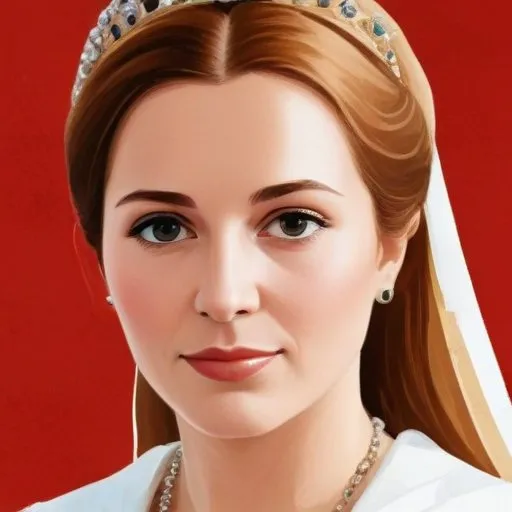
A 17th-century Austrian noblewoman who played a significant role in shaping the Medici dynasty's politics and cultural landscape through her strategic marriages and patronage of the arts.
Christina, Grand Duchess of Tuscany, is renowned for her extravagant lifestyle, shrewd politics, and philanthropic endeavors. As a member of the House of Habsburg-Lorraine, Christina's life was marked by opulence, power struggles, and a series of tumultuous relationships that would shape the course of European history.
Born on January 24, 1565, in Florence, Italy, Christina was the daughter of Ferdinand I, Grand Duke of Tuscany, and Joanna of Austria. Her marriage to Ferdinand I, Duke of Mantua, in 1584 solidified her position as a key player in the complex web of European royal alliances.
Christina was a dedicated patron of the arts, commissioning works from renowned artists such as Peter Paul Rubens and Gian Lorenzo Bernini. Her passion for architecture led to the construction of numerous palaces, including the Palazzo Pitti in Florence, which became a symbol of Tuscan grandeur.
Christina's charitable endeavors focused on education and healthcare. She founded the Convent of the Santissima Annunziata in Florence, providing a haven for women and girls. Her support for the University of Pisa also fostered a new era of intellectual curiosity and discovery.
Christina's life was marked by a series of politcal power struggles, including a tumultuous relationship with her son, Cosimo II. Her efforts to secure her family's claim to the Tuscan throne led to a temporary alliance with the Medici family, but ultimately ended in a bitter feud.
Christina's vast wealth, inherited from her father and husband, enabled her to maintain a lavish lifestyle and invest in various philanthropic projects. Her financial influence extended beyond Tuscany, with investments in trade and commerce that contributed to the region's economic growth.
Christina's life serves as a testament to the complex, often tumultuous, nature of royal politics in 16th-century Europe. Her legacy extends beyond her family's dynasty, with her patronage of the arts and philanthropic efforts leaving a lasting impact on Tuscan culture and society.
In comparison to her contemporaries, such as Catherine de' Medici, Christina's life was marked by a greater emphasis on philanthropy and cultural patronage. While both women navigated the treacherous landscape of royal politics, Christina's focus on education and healthcare set her apart as a trailblazer in her time.
Christina's life serves as a testament to the power of determination and philanthropy. Despite facing numerous challenges and power struggles, she remained committed to her passion for the arts and education, leaving a lasting impact on Tuscan society and beyond.
