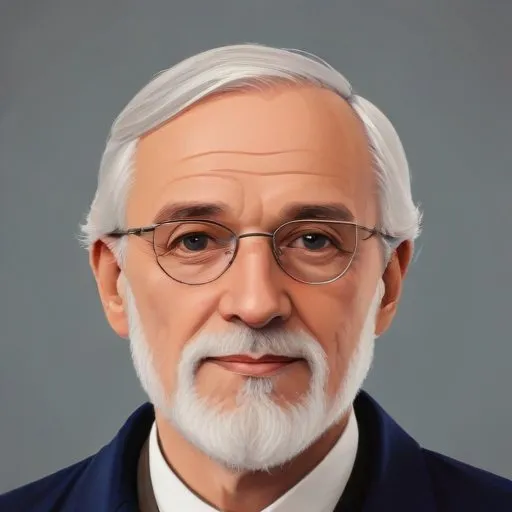
Christoph Scheiner: The Jesuit Priest Who Revolutionized Astronomy and Invented the Pantograph
A Brief Overview
Christoph Scheiner, a Jesuit priest, physicist, and astronomer, is renowned for his groundbreaking contributions to the fields of astronomy and mathematics. Born in 1573 or 1575 in Markt Wald, Germany, Scheiner's work had a profound impact on the scientific community, earning him recognition and accolades from his contemporaries and succeeding generations.
Early Life and Education
Scheiner's educational journey began at the Jesuit St. Salvator Grammar School in Augsburg, where he studied from 1591 to 1595. He then entered the Jesuit Order in Landsberg am Lech and served his biennial novitiate from 1595 to 1597. Scheiner's academic pursuits continued in Augsburg, where he completed his lower studies of rhetoric, followed by philosophical studies in Ingolstadt from 1598 to 1601.
The Inventor of the Pantograph
In 1603, Scheiner invented the pantograph, an instrument capable of duplicating plans and drawings to an adjustable scale. This innovative device earned him widespread recognition, including an invitation from Duke William V of Bavaria to demonstrate the instrument in Munich.
Theological Pursuits and Ordination
From 1605 to 1609, Scheiner studied theology in Ingolstadt, culminating in his ordination as a Deacon on March 14, 1609. He was ordained by suffragan bishop Marcus Lyresius and went on to complete his studies on June 30, 1609, with his first work, Theses Theologicae, and a disputation PhD in theology.
Astronomical Contributions
Scheiner's work in astronomy was instrumental in advancing the field. He discovered sunspots, made significant contributions to the study of the Milky Way, and observed and recorded celestial events. His astronomical observations and findings were meticulously documented, providing valuable insights for future generations of astronomers.
Legacy and Impact
Christoph Scheiner's contributions to astronomy, mathematics, and theology have left an indelible mark on the scientific community. His invention of the pantograph revolutionized the field of drafting and engineering, while his astronomical discoveries and observations paved the way for future breakthroughs. Scheiner's legacy serves as a testament to the power of human curiosity and innovation, inspiring scientists and scholars for centuries to come.
Personal Milestones and Key Life Events
- 1573 or 1575: Born in Markt Wald, Germany
- 1591-1595: Studied at the Jesuit St. Salvator Grammar School in Augsburg
- 1595-1597: Served his biennial novitiate in Landsberg am Lech
- 1601-1603: Taught humanities in Ingolstadt
- 1603: Invented the pantograph
- 1605-1609: Studied theology in Ingolstadt
- 1609: Ordained as a Deacon and completed his studies with Theses Theologicae and a disputation PhD in theology
- 1610-1617: Worked as a successor to Father Johannes Pelecius S.J. in Ebersberg
Fun Facts
- Scheiner's invention of the pantograph was so revolutionary that it earned him an invitation from Duke William V of Bavaria to demonstrate the instrument in Munich.
- He was known for his meticulous recording and documentation of celestial events, providing valuable insights for future generations of astronomers.
- Scheiner's work in astronomy and mathematics was instrumental in advancing the field, paving the way for future breakthroughs and discoveries.
Conclusion
Christoph Scheiner's remarkable contributions to astronomy, mathematics, and theology have left an enduring legacy. His invention of the pantograph, astronomical discoveries, and theological pursuits have inspired generations of scientists and scholars. As we reflect on Scheiner's life and work, we are reminded of the power of human curiosity, innovation, and dedication to advancing our understanding of the universe.
FAQ
What were Christoph Scheiners contributions to astronomy?
Christoph Scheiner made significant contributions to astronomy, including the discovery of sunspots and the development of new astronomical instruments, such as the helioscope.
What was Christoph Scheiners role in the scientific revolution?
Christoph Scheiner played a vital role in the scientific revolution of the 17th century, as his work laid the foundation for modern astronomy and paved the way for later scientists, such as Galileo Galilei.
What was Christoph Scheiners stance on the Copernican theory?
Christoph Scheiner, as a Jesuit astronomer, initially opposed the Copernican theory, but later came to accept the heliocentric model, recognizing its significance in understanding the universe.
What are Christoph Scheiners notable publications?
Christoph Scheiners notable publications include Rosa Ursina sive Sol and Prodromus pro Sole Mobili, which detail his observations and theories on sunspots and the suns movement.
How did Christoph Scheiners work influence astrology?
Christoph Scheiners work on sunspots and solar astronomy had a significant impact on astrology, as it challenged traditional astrological theories and led to new understandings of the suns influence on human affairs.