


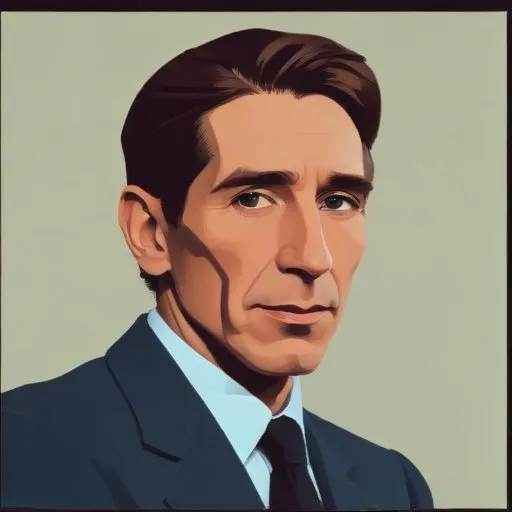
Developed the mathematical foundations of modern digital communication, creating the basis for modern computing and data transmission.
Claude Shannon, often referred to as the "father of information theory" and the "father of the Information Age," was an American mathematician, electrical engineer, computer scientist, and cryptographer who revolutionized the way we understand and interact with information. His groundbreaking work in the 1940s laid the foundation for the development of modern computing, digital communication, and cryptography, earning him a reputation as one of the most influential scientists of the 20th century.
Born on April 30, 1916, in Petoskey, Michigan, Shannon grew up with a passion for mathematics and science. He dual-degreed in electrical engineering and mathematics from the University of Michigan in 1936, and later pursued his master's degree in electrical engineering at the Massachusetts Institute of Technology (MIT). It was during this time that he developed his seminal thesis, "A Symbolic Analysis of Relay and Switching Circuits," which demonstrated that electrical applications of Boolean algebra could construct any logical numerical relationship, thereby establishing the theory behind digital computing and digital circuits.
Shannon's work at MIT marked the beginning of his quest to understand the fundamental limits of information processing and transmission. In 1948, he published "A Mathematical Theory of Communication," a paper that introduced the concept of information entropy and laid the foundation for modern information theory. This work not only provided a mathematical framework for understanding the transmission and processing of information but also paved the way for the development of modern computing, data compression, and encryption.
During World War II, Shannon contributed to the field of cryptanalysis for national defense, working at Bell Labs and later at the National Security Agency (NSA). His work on codebreaking and secure telecommunications led to the development of modern cryptography, and his paper "Communication Theory of Secrecy Systems" is considered one of the foundational pieces of modern cryptography. Shannon's work in this field has been described as a turning point, marking the closure of classical cryptography and the beginning of modern cryptography.
Shannon's contributions to science and engineering have been recognized with numerous awards and honors, including the National Medal of Science, the Marconi Award, and the Claude E. Shannon Award. He was also elected a fellow of the American Academy of Arts and Sciences, the National Academy of Engineering, and the National Academy of Sciences.
Shannon's work has had a profound impact on modern society, enabling the development of digital communication, computing, and cryptography. His legacy extends beyond the scientific community, influencing the way we live, work, and communicate. The Information Age, which Shannon helped to usher in, has transformed the global economy, revolutionized the way we access information, and transformed the fabric of modern society.
Shannon's personal life was marked by a love of mathematics, puzzles, and games. He was an avid reader, enjoyed playing chess, and was known for his dry sense of humor. Shannon married Mary Elizabeth Moore in 1949, and they had three children together. He passed away on February 24, 2001, leaving behind a legacy that continues to shape the modern world.
Claude Shannon's contribution to the world of science and engineering is immeasurable. His work has not only transformed the way we understand and interact with information but has also paved the way for some of the most significant technological advancements of the 20th century. As the father of information theory and the digital age, Shannon's legacy will continue to inspire and influence generations to come.
Born in 1912
Pioneering mathematician and computer scientist who cracked the German Enigma code during WWII and laid the foundations for modern computer science and artificial intelligence.
Born in 1903
Pioneering mathematician and physicist who developed the concept of the modern computer architecture and made significant contributions to quantum mechanics and game theory. His work laid the foundation for modern computing and artificial intelligence.
Born in 1906
A groundbreaking logician and philosopher who shook the foundations of mathematics with his incompleteness theorems, proving that no formal system can be both complete and consistent.
Born in 1894
Pioneering mathematician and philosopher who laid the foundations for cybernetics, exploring the intersection of humans, machines, and society. His work has far-reaching implications for artificial intelligence, automation, and modern technology.
Born in 1903
Developed theories on probability, topology, and complexity, making significant contributions to modern mathematics and computer science.
Born in 1882
A pioneering mathematician and physicist who revolutionized abstract algebra and made groundbreaking contributions to modern physics, particularly in the development of Einstein's theory of general relativity.
Born in 1915
A pioneer in computer science and coding theory, he developed error-correcting codes and was a key figure in the development of modern computing.
