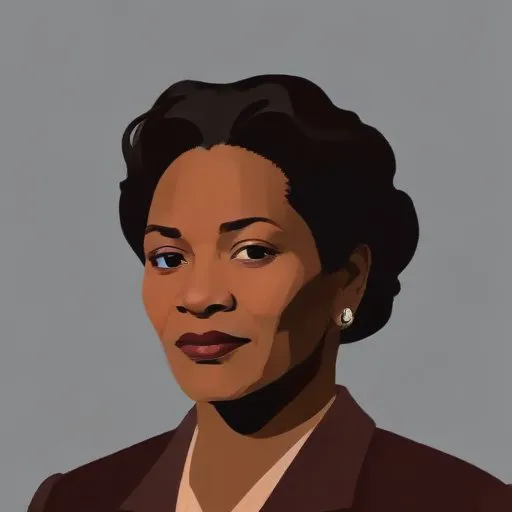
Claudia Jones: The Unyielding Crusader for Justice and Equality
A Trailblazing Journalist and Activist
Claudia Jones, a Trinidad and Tobago-born journalist and activist, is renowned for her unwavering dedication to fighting for justice, equality, and human rights. She is best known for founding Britain's first major Black newspaper, the West Indian Gazette, and playing a pivotal role in establishing the Notting Hill Carnival, the second-largest annual carnival in the world.
Early Life and Formative Years
Born Claudia Vera Cumberbatch on February 21, 1915, in Belmont, Port of Spain, Trinidad, Jones migrated to the United States with her family at the age of eight. After her mother's untimely death, her father worked tirelessly to support the family. Jones's academic prowess earned her the
Theodore Roosevelt Award for Good Citizenship in junior high school. However, her life took a dramatic turn when she contracted tuberculosis at 17, which would plague her with lengthy hospital stays throughout her life.
A Passionate Advocate for Social Justice
Jones's encounter with the Communist Party's defense of the Scottsboro Boys in 1936 ignited her passion for social justice. She joined the Young Communist League (YCL) and became an integral part of the organization, serving as state education director and chairperson. Her involvement with the YCL deepened her commitment to fighting against racism, imperialism, and sexism.
A Career Marked by Perseverance and Resilience
Despite being an academically gifted individual, Jones faced significant barriers as an immigrant woman. She was limited in her career choices, but her determination and resilience propelled her to excel in the fields of journalism and activism. Jones's work with the YCL's newspaper honed her writing skills, and she became a prominent voice for the marginalized and oppressed.
Deportation and a New Chapter in the UK
In 1955, Jones was deported from the United States due to her affiliation with the Communist Party. Undeterred, she relocated to the United Kingdom, where she joined the Communist Party of Great Britain and remained a member until her passing. Jones's arrival in the UK marked the beginning of a new chapter in her life, as she continued to champion the causes of justice, equality, and human rights.
Finding Her Voice in the UK
In 1958, Jones founded the West Indian Gazette, a pioneering Black newspaper that provided a platform for the voices of the African Caribbean community in the UK. Her tireless efforts to promote unity and solidarity among the diaspora led to the establishment of the Notting Hill Carnival, a vibrant celebration of Caribbean culture that continues to thrive today.
A Legacy of Courage and Conviction
Claudia Jones's life was a testament to her unwavering commitment to fighting for justice and equality. Her remarkable journey, marked by perseverance, resilience, and passion, has inspired generations of activists, journalists, and social justice advocates. Jones's legacy serves as a powerful reminder of the importance of standing up against oppression and fighting for human rights.
Personal Milestones and Key Life Events
- 1915: Born Claudia Vera Cumberbatch in Belmont, Port of Spain, Trinidad
- 1923: Migrated to the United States with her family
- 1932: Contracted tuberculosis at the age of 17
- 1936: Joined the Young Communist League (YCL)
- 1955: Deported from the United States and relocated to the UK
- 1958: Founded the West Indian Gazette
- 1964: Passed away on December 24, leaving behind a legacy of courage and conviction
Awards and Honors
- Theodore Roosevelt Award for Good Citizenship
Philosophical Contributions and Beliefs
Claudia Jones's life and work embodied the principles of socialism, feminism, and Black nationalism. Her unwavering commitment to fighting for justice and equality was rooted in her belief that all people deserved equal rights and opportunities, regardless of their race, gender, or class.
FAQ
What was Claudia Jones role in the Civil Rights Movement?
Claudia Jones was a prominent figure in the Civil Rights Movement, advocating for racial equality and social justice. She worked closely with organizations such as the NAACP and the Communist Party USA to promote civil rights and challenge systemic racism.
How did Claudia Jones Caribbean heritage influence her activism?
Claudia Jones Trinidadian heritage greatly influenced her activism, shaping her perspective on race, class, and gender. She drew on her experiences as a Black woman from the Caribbean to inform her work and advocacy.
What was Claudia Jones role in the American Labor Movement?
Claudia Jones was an active participant in the American Labor Movement, working to improve labor conditions and advocate for workers rights. She saw the labor movement as a key site of struggle for racial and gender equality.
How did Claudia Jones journalism career shape her activism?
Claudia Jones journalism career played a significant role in shaping her activism. As a journalist, she wrote about issues affecting Black and working-class communities, using her platform to raise awareness and mobilize action.
What was Claudia Jones legacy in the struggle for womens rights?
Claudia Jones was a pioneering figure in the struggle for womens rights, advocating for gender equality and challenging patriarchal norms. Her work helped pave the way for future generations of feminist activists and scholars.