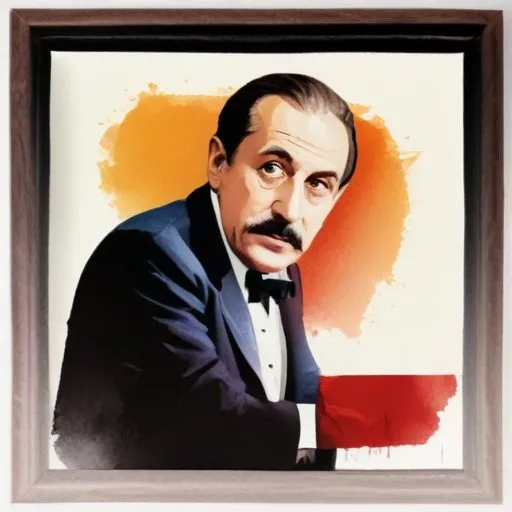
Claudio Arrau: The Chilean Piano Maestro
A Master of Interpretation
Claudio Arrau is widely regarded as one of the greatest pianists of the twentieth century, renowned for his profound interpretations of a vast repertoire spanning from the Baroque to 20th-century composers. With a career that spanned over seven decades, Arrau forged a unique path, exploring the works of iconic composers such as Bach, Mozart, Beethoven, Schubert, Chopin, Schumann, Liszt, and Brahms.
Early Life and Education
Born on February 6, 1903, in Chillán, Chile, to Carlos Arrau, an ophthalmologist, and Lucrecia Len Bravo de Villalba, a piano teacher, Arrau was exposed to music from a tender age. His mother, an amateur pianist, introduced him to the instrument, and by the age of four, he could read Beethoven sonatas. At just five years old, he gave his first concert, and by six, he was already auditioning in front of congressmen and President
Pedro Montt. This exceptional talent earned him a ten-year-long grant from the Chilean government to study in Germany.
Training and Influences
In Germany, Arrau was admitted to the Stern Conservatory of Berlin, where he became a pupil of Martin Krause, a renowned pianist who had studied under
Franz Liszt. Krause's guidance had a profound impact on Arrau's development, and under his tutelage, Arrau mastered some of the most challenging works for piano, including Liszt's Transcendental Etudes and Brahms' Paganini Variations.
Career Highlights and Major Works
Arrau's career was marked by numerous milestones and achievements. He made his debut in the United States in 1935, performing with the Philadelphia Orchestra, and went on to collaborate with some of the world's most prestigious orchestras, including the Berlin Philharmonic and the London Symphony Orchestra. Arrau was particularly known for his interpretations of Beethoven's piano sonatas, which he recorded in their entirety, as well as his renditions of Schubert's Impromptus and Chopin's Nocturnes.
Awards and Honors
Throughout his illustrious career, Arrau received numerous awards and accolades, including the Grand Prix du Disque, the Grammy Lifetime Achievement Award, and the National Medal of Arts. He was also honored with multiple doctorates and honorary memberships from esteemed institutions around the world.
Philosophical Contributions and Beliefs
Arrau's approach to music was deeply rooted in his philosophical beliefs. He believed that music was a spiritual experience, and that the true artist must strive to evoke the essence of the composer's soul. He was known for his meticulous attention to detail, his commitment to the composer's intentions, and his ability to convey the emotional depth of the music.
Personal Milestones and Key Life Events
Arrau's life was marked by significant personal milestones, including his conversion to Catholicism in his late teens, and his subsequent rejection of the faith. He was also known for his close relationships with his family, particularly his mother, who played a crucial role in nurturing his early talent.
Influence on Modern Society
Arrau's impact on modern society extends beyond the realm of music. He inspired generations of pianists, including iconic figures such as
Daniel Barenboim and
Krystian Zimerman. His commitment to the art of interpretation and his philosophical approach to music continue to influence musicians and scholars around the world.
Legacy and Impact on Their Field
Claudio Arrau's legacy is a testament to his dedication, passion, and artistry. He leaves behind a rich tapestry of recordings, spanning over 70 years, and a profound impact on the world of classical music. As one of the greatest pianists of the twentieth century, Arrau's influence will continue to inspire and shape the music landscape for generations to come.
- “The artist must be the servant of the music, not its master.” - Claudio Arrau
Claudio Arrau's remarkable journey serves as a poignant reminder of the transformative power of music, and the enduring legacy of a true master of his craft.