


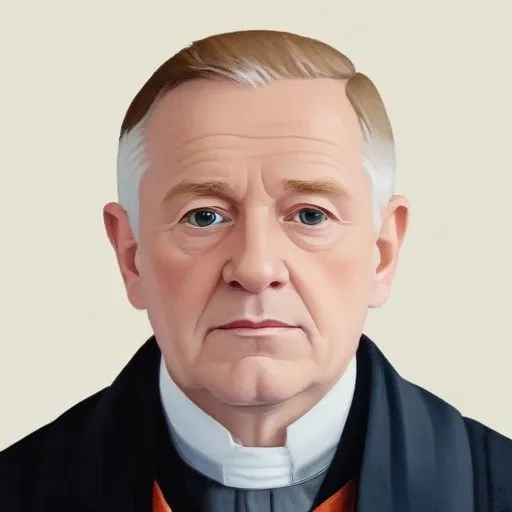
A Scottish theologian who traveled to India as a missionary, translating the Bible into local languages and promoting education, leaving a lasting impact on Indian Christianity.
Claudius Buchanan, a Scottish theologian, is renowned for his tireless efforts to spread Christianity and promote education in India during the late 18th and early 19th centuries. As a missionary for the Church Missionary Society, he spearheaded the translation of the Bible into Malayalam, the local language of Kerala, leaving an indelible mark on the region's religious and cultural landscape.
Born on March 12, 1766, in Cambuslang, near Glasgow, Buchanan's early life was shaped by his father, Alexander, a local schoolmaster in Inverary. He received his education at the University of Glasgow and Queens' College, Cambridge, before being ordained by the Bishop of London in 1795.
In 1797, Buchanan arrived in India, where he served as a chaplain at Barrackpur until 1799. He then became the Calcutta chaplain and vice-principal of the College of Fort William, playing a pivotal role in promoting Christianity and education in the region.
During a visit to Malabar in 1806, Buchanan met Mar Thoma VI, the head of the Malankara Church at Angamali, near Kochi. Mar Thoma presented Buchanan with a Syriac Bible, which became the foundation for the translation of the Bible into Malayalam. Buchanan collaborated with local scholars, including Pulikkottil Joseph Ittoop and Kayamkulam Philipose Ramban, and received crucial support from Colonel Colin Macaulay, a British Resident of Travancore.
Buchanan's evangelical zeal was driven by his conviction that education and Christianity were essential for the moral and social upliftment of India. He believed in the importance of transmitting Christian values and knowledge to the local population, which led him to focus on education and translation of religious texts.
Buchanan's pioneering work in translating the Bible into Malayalam paved the way for the spread of Christianity in Kerala. His efforts also contributed to the development of education in the region, enabling the local population to access knowledge and scripture in their native language.
Buchanan's life was marked by his unwavering dedication to his missionary work, which often required him to navigate complex cultural and administrative challenges. His partnership with local leaders, such as Mar Thoma VI and Colonel Macaulay, was instrumental in achieving his goals.
Claudius Buchanan's groundbreaking work in India has left a lasting legacy, shaping the religious and cultural fabric of Kerala. His commitment to education and Christianity inspired generations of missionaries, educators, and scholars, ensuring his impact continues to be felt to this day.
Buchanan's story serves as a testament to the power of dedication, perseverance, and collaboration, inspiring us to strive for positive change in our own communities and beyond.
Born in 1780
A Scottish minister, economist, and educator who played a key role in the Scottish Evangelical movement and advocated for education reform, making significant contributions to social and economic thought.
Born in 1545
A 16th-century Scottish theologian and scholar who played a key role in the Scottish Reformation and was a strong advocate for Presbyterianism. He's known for his debates with King James VI of Scotland and his contributions to the development of the Presbyterian Church of Scotland.
Born in 1483
A German monk and priest who sparked the Protestant Reformation, challenging Catholic Church authority and shaping Western Christianity. He's famous for nailing 95 theses to a church door, sparking a religious revolution.
Born in 1509
A French pastor and theologian who played a key role in the Protestant Reformation, shaping Christian theology and influencing Western civilization. He's famous for his teachings on predestination and his role in establishing Calvinism.
Born in 1703
A prominent figure in the 18th-century Methodist movement, he founded the Methodist Church and emphasized personal faith, social justice, and education. His teachings and legacy continue to shape Protestantism today.
