


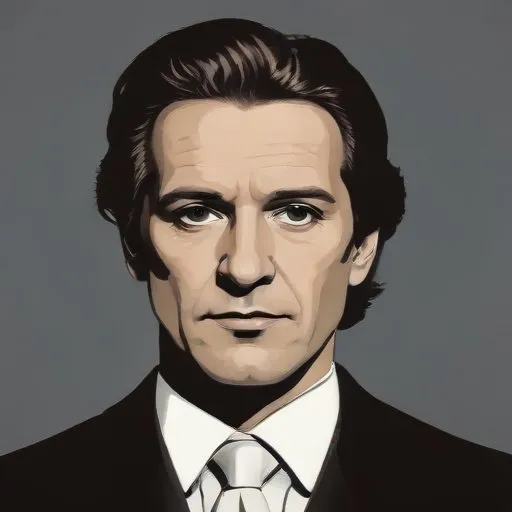
A renowned opera conductor and intendant of the Vienna State Opera, known for his interpretations of Richard Strauss and Richard Wagner's works. He was also a prominent figure in the Nazi regime's cultural scene.
Clemens Krauss was a renowned Austrian conductor and opera impresario, synonymous with the music of Richard Strauss, Johann Strauss, and Richard Wagner. He is perhaps most celebrated for founding the New Year's Concert of the Vienna Philharmonic, a tradition that continues to this day, and conducting it until his passing in 1954.
Krauss was born on March 31, 1893, in Vienna to Clementine Krauss, a 15-year-old dancer in the Vienna Imperial Opera Ballet. His natural father, Chevalier Hector Baltazzi, came from a family of wealthy Phanariot bankers resident in Vienna. Krauss's early life was steeped in music, and he sang in the Hofkapelle Imperial Choir as a Vienna Choir Boy, showcasing his extraordinary soprano voice. He later graduated from the Vienna Conservatory in 1912, after studying composition with Hermann Graedener and theory with Richard Heuberger.
Krauss began his career as a chorus master in the Brnn Theatre, Moravia, from 1912 to 1913, before making his conducting debut in 1913. He then embarked on a journey through regional centers, conducting in Riga, Nuremberg, and Stettin, where he had ample opportunity to travel to Berlin and hear Arthur Nikisch conduct the Berlin Philharmonic, a major influence on his work.
In 1922, Krauss was invited by Richard Strauss to join the conducting staff of the Vienna State Opera, where he became a prominent figure in the Viennese opera scene. He concurrently taught conducting at the Vienna Singakademie, nurturing the next generation of musicians. His tenure at the Vienna State Opera spanned over three decades, during which he collaborated with some of the most notable singers of the time, including soprano Viorica Ursuleac, who would later become his second wife.
Krauss's greatest legacy is arguably the creation of the New Year's Concert of the Vienna Philharmonic, which he founded in 1939. This iconic concert has become an integral part of Viennese cultural heritage, celebrated annually on January 1st. Krauss conducted the concert every year until his passing in 1954, leaving an indelible mark on the cultural landscape of Vienna.
Krauss was married twice, first to soprano Margarethe Abraham, with whom he had two sons, Octavian and Oliver. His second marriage was to Viorica Ursuleac, who often sang under his direction. His family connections were steeped in cultural heritage, with his aunt being the prominent operatic soprano Gabrielle Krauss.
Krauss's impact on modern society extends beyond the realm of music. His commitment to preserving and promoting Viennese cultural heritage has had a lasting effect on the city's identity and tourism industry. The New Year's Concert, in particular, has become a symbol of Austrian culture, broadcast globally and attracting millions of viewers worldwide.
Clemens Krauss's legacy continues to reverberate through the world of classical music, his contributions to the Vienna Philharmonic and the New Year's Concert cementing his place as one of the most revered conductors of the 20th century.
Born in 1864
A renowned composer and conductor of the late Romantic era, known for his tone poems and operas that showcased his mastery of orchestration and expressive storytelling.
Born in 1860
A visionary composer and conductor who expanded symphonic music's emotional depth and complexity, creating works of profound beauty and intensity.
Born in 1813
A revolutionary composer who transformed opera with his epic, mythological works, creating a new era of musical storytelling. His iconic operas, such as "Der Ring des Nibelungen," continue to captivate audiences worldwide.
Born in 1809
A renowned 19th-century musician who masterfully blended classical and romantic styles, creating iconic works like the "Wedding March" and "Elijah" oratorio. His compositions continue to inspire and influence generations of artists.
Born in 1811
A virtuosic pianist and composer who revolutionized classical music with his technically demanding and emotionally expressive works, blending Hungarian folk influences with Romantic-era drama.
Born in 1860
A Slovene-Austrian composer who expanded the art of songwriting by setting poetic lyrics to music, creating a new level of emotional intensity and depth. His innovative compositions continue to influence classical music today.
Born in 1890
A renowned opera and symphony conductor, known for his precise and expressive interpretations of classical music, particularly his work with the Berlin State Opera.
Born in 1886
A renowned German conductor and composer, he was a dominant figure in the Berlin Philharmonic, known for his intense and expressive performances of Beethoven, Brahms, and Bruckner. He was also a composer of symphonies and other works.
