


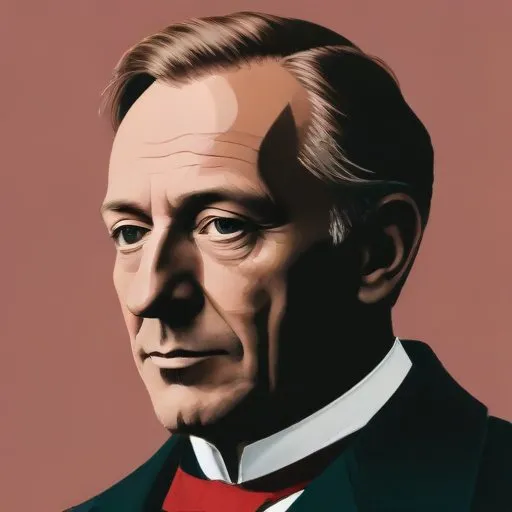
A Slovene-Austrian composer who expanded the art of songwriting by setting poetic lyrics to music, creating a new level of emotional intensity and depth. His innovative compositions continue to influence classical music today.
Hugo Wolf, an Austrian composer, is renowned for his remarkable contribution to the world of art songs, or Lieder. His unique ability to infuse expressive intensity into his music made him a standout in the late Romantic music era.
Wolf was born on March 13, 1860, in Windischgrätz, Duchy of Styria (now Slovenj Gradec, Slovenia), which was then part of the Austrian Empire. He came from a family of modest means, and his father, a leather dealer, recognized his son's musical talent from an early age.
Wolf began taking piano and violin lessons from his father at the age of four and later continued his studies with Sebastian Weixler. However, his academic performance was lackluster, and he was dismissed from several schools due to his struggles with subjects other than music.
Wolf's passion for music led him to the Vienna Conservatory, where he was eventually dismissed after two years for his rebellious attitude and frustration with the institution's conservatism. This setback did not deter him, and he went on to teach music in Vienna, despite his fiery temperament not being well-suited for the profession.
Wolf's big break came in 1888, when he began to focus on composing Lieder. This period, known as the "年 of Song," saw him produce some of his most renowned works, including settings of poems by Eduard Mörike and Goethe. His unique ability to capture the essence of the poetry and convey it through music earned him recognition as a master of Lieder.
Wolf's life was marked by periods of depression, which frequently interrupted his creative periods. His struggles with syphilis, which he contracted in the 1890s, ultimately led to his mental collapse and premature end to his composing career in 1898. Despite his untimely demise on February 22, 1903, Wolf's legacy as a master of Lieder continues to inspire and influence generations of musicians and composers.
Wolf's contribution to the world of Lieder has had a profound impact on the development of art song. His unique style, which blended intense emotional expression with masterful technique, raised the bar for Lieder composition and paved the way for future generations of composers.
Wolf's music has inspired countless artists, including renowned singers and pianists. His Lieder continue to be performed and admired around the world, and his legacy extends beyond the realm of classical music, influencing popular music and artistic expression as a whole.
"I am not a modern composer, but an eternal one." - Hugo Wolf
This quote encapsulates Wolf's vision for his music, which he believed would transcend time and trends to become an integral part of the eternal canon of classical music.
Born in 1860
A visionary composer and conductor who expanded symphonic music's emotional depth and complexity, creating works of profound beauty and intensity.
Born in 1864
A renowned composer and conductor of the late Romantic era, known for his tone poems and operas that showcased his mastery of orchestration and expressive storytelling.
Born in 1874
A pioneer of atonality and 12-tone serialism, revolutionizing classical music with innovative compositions that pushed boundaries of harmony and melody.
Born in 1883
A pioneering figure in atonality and twelve-tone technique, revolutionizing classical music with concise, expressive works that explored new sounds and structures.
92 Years Old
A controversial radio host and lawyer who sparked heated debates with his outspoken views, ultimately becoming a martyr for free speech after a tragic assassination.
Born in 1797
A renowned composer of symphonies, operas, and chamber music, particularly famous for his emotional and expressive lieder (art songs) that showcased his mastery of melody and harmony.
Born in 1810
A renowned Romantic-era composer and influential music critic, known for his expressive and emotionally charged works, including symphonies, piano music, and art songs.
Born in 1833
A renowned pianist and composer, he crafted complex, expressive works that blended traditional and innovative techniques, leaving an indelible mark on classical music.
