


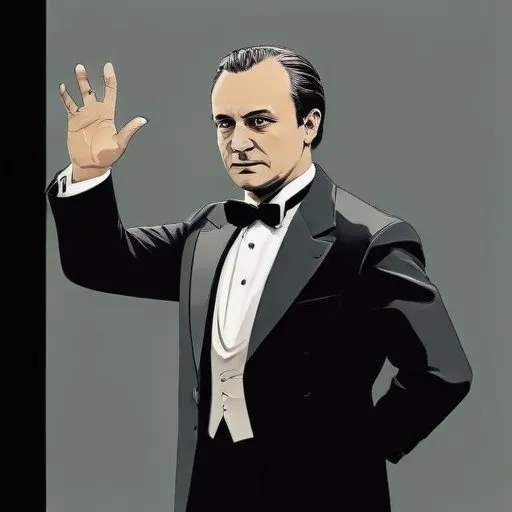
A renowned opera and symphony conductor, known for his precise and expressive interpretations of classical music, particularly his work with the Berlin State Opera.
Erich Kleiber, a towering figure in the world of classical music, was a Austrian-Argentine conductor celebrated for his interpretations of the classics and his unwavering support for Neue Musik, a revolutionary movement that sought to redefine the boundaries of modern music. As a visionary leader, Kleiber's profound impact on the musical landscape of the 20th century continues to reverberate, inspiring generations of musicians and music lovers alike.
Born on August 5, 1890, in Vienna, Austria, Kleiber's life was marked by tragedy from an early age. Following the death of his parents, he was sent to live with his maternal grandparents in Prague, where he began his musical journey. After the death of his grandfather, Kleiber returned to Vienna, where he studied at a Gymnasium and attended performances at the Musikverein, the Volksoper, and Hofoper.
Kleiber's ascent to the pinnacle of the musical world was swift and meteoric. He began his career as a répétiteur in an opera house, gradually moving into conducting positions of increasing seniority. His appointments in Darmstadt (1912), Barmen-Elberfeld (1919), Düsseldorf (1921), and Mannheim (1922) demonstrated his growing reputation as a respected conductor. In 1923, he was appointed Musical Director of the Berlin State Opera, a position that cemented his status as a leading figure in the world of classical music.
Kleiber's tenure at the Berlin State Opera was marked by his unwavering commitment to musical excellence and his bold programming choices. However, with the rise of the Nazi Party in 1933, Kleiber found himself at odds with the oppressive regime. In protest, he resigned from his position and fled Germany, basing himself and his family in Buenos Aires.
As a freelancer, Kleiber conducted internationally, guest-conducting at opera houses and concert halls around the world. He played an instrumental role in the creation of The Royal Opera in London and was slated to return to the Berlin State Opera in the 1950s, but the plan was ultimately scuttled by political machinations.
Kleiber was renowned for his interpretations of Mozart, Beethoven, and Richard Strauss, as well as his championing of modern composers, including Alban Berg, whose Wozzeck he premiered. His impact on the world of classical music was profound, shaping the course of musical history and inspiring a new generation of conductors and musicians.
Kleiber's personal life was marked by tragedy, including the loss of his parents at an early age. Despite these challenges, he remained committed to his craft, continuing to conduct until his sudden death in Zurich on January 27, 1956, at the age of 65.
Erich Kleiber's legacy extends far beyond his impressive résumé. He was a true visionary, a conductor who embodied the perfect blend of artistic passion and intellectual rigor. His commitment to innovation and his unwavering dedication to the art of music continue to inspire and motivate musicians and music lovers around the world. As a testament to his enduring impact, Kleiber's name remains synonymous with excellence, a beacon of inspiration for all those who follow in his footsteps.
Born in 1864
A renowned composer and conductor of the late Romantic era, known for his tone poems and operas that showcased his mastery of orchestration and expressive storytelling.
Born in 1860
A visionary composer and conductor who expanded symphonic music's emotional depth and complexity, creating works of profound beauty and intensity.
Born in 1867
A renowned conductor who led the NBC Symphony Orchestra and was known for his intense performances and perfectionism, shaping the sound of classical music in the 20th century.
Born in 1886
A renowned German conductor and composer, he was a dominant figure in the Berlin Philharmonic, known for his intense and expressive performances of Beethoven, Brahms, and Bruckner. He was also a composer of symphonies and other works.
Born in 1888
A renowned German conductor, celebrated for his interpretations of Richard Wagner's operas, particularly his iconic performances of "Der Ring des Nibelungen" at the Bayreuth Festival.
Born in 1908
A renowned maestro who led the Berlin Philharmonic for over three decades, elevating its reputation through precise and dramatic performances. He's also famous for his numerous recordings and charismatic stage presence.
Born in 1912
A renowned maestro who led the Chicago Symphony Orchestra to international acclaim, known for his intense performances and numerous recordings of operas and symphonies.
Born in 1885
A renowned composer and conductor, known for his interpretations of Beethoven and Bruckner, and his leadership of the Berlin State Opera and Los Angeles Philharmonic.
