


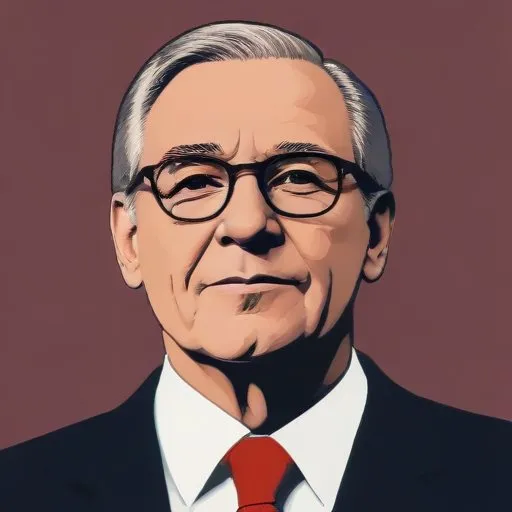
The 17th United States Secretary of Agriculture, serving from 1969 to 1971, known for implementing policies to increase food production and reduce hunger. He also played a key role in shaping the country's agricultural trade policies.
Clifford M. Hardin, a renowned American politician, was the 17th United States Secretary of Agriculture, serving from 1969 to 1971 under President Richard Nixon. During his tenure, he implemented significant reforms in the agricultural sector, extending the food stamp program and establishing the Food and Nutrition Service to administer food programs for the poor.
Hardin was born on October 9, 1915, in Knightstown, Indiana, to J. Alvin and Mabel (née Macy) Hardin. He pursued his higher education at Purdue University, earning a B.S. in 1937, M.S. in 1939, and Ph.D. in 1941.
Hardin's academic career spanned over two decades, with significant contributions to the field of agricultural economics. He taught at Michigan State University from 1944 to 1948 and later became the director of the Agricultural Experiment Station. He also did postdoctoral work at the University of Chicago, where he conducted research with future Nobel Prize winner, Theodore Schultz.
In 1953, Hardin became the Dean of Agriculture at Michigan State University, and in 1954, he was appointed as the Chancellor of the University of Nebraska, a position he held until 1968.
On January 21, 1969, Hardin was sworn in as the United States Secretary of Agriculture by President Richard Nixon. During his tenure, he introduced several initiatives, including the expansion of the food stamp program and the establishment of the Office of Intergovernmental Affairs to coordinate state and local efforts.
Hardin's leadership in the agricultural sector had a profound impact on the nation's food security and nutrition. He resigned on November 17, 1971, and was succeeded by Earl L. Butz.
Hardin married Martha Love Wood on June 28, 1939, and had two sons and three daughters. His daughter, Nancy H. Rogers, married Douglas L. Rogers, the son of Secretary of State William P. Rogers. His other daughter, Cynthia H. Milligan, was married to Robert Milligan.
Hardin passed away on April 4, 2010, at the age of 94, due to complications from kidney disease and congestive heart failure. His legacy in agriculture and education continues to inspire generations of scholars and policymakers.
Hardin's contributions to the agricultural sector have had a lasting impact on food security and nutrition in the United States. His initiatives as Secretary of Agriculture paved the way for future reforms in the sector.
His legacy extends beyond the agricultural sector, inspiring future generations of scholars and policymakers to work towards improving the lives of millions of Americans.
Born in 1908
The 36th President of the United States, a skilled politician and leader, played a crucial role in passing landmark civil rights legislation, including the Civil Rights Act and Voting Rights Act.
Born in 1911
The 38th Vice President of the United States was a prominent liberal politician and journalist who played a key role in shaping the country's civil rights policies. He's most known for his strong support of the Civil Rights Act of 1964.
93 Years Old
Legendary hockey play-by-play announcer, known for his iconic voice and calls during NHL games, particularly for the Toronto Maple Leafs and Hockey Night in Canada.
Born in 1922
A decorated WWII bomber pilot, historian, and senator who championed progressive causes, including anti-poverty and anti-war efforts. He was the 1972 Democratic presidential nominee.
Born in 1913
The 37th President of the United States, a polarizing figure who led the country through significant domestic and foreign policy changes, infamous for his involvement in the Watergate scandal.
Born in 1888
Agronomist and politician who served as Vice President under Franklin D. Roosevelt, known for his progressive policies and advocacy for agricultural reform. He was a strong supporter of the New Deal and played a key role in shaping the country's agricultural and economic policies.
