


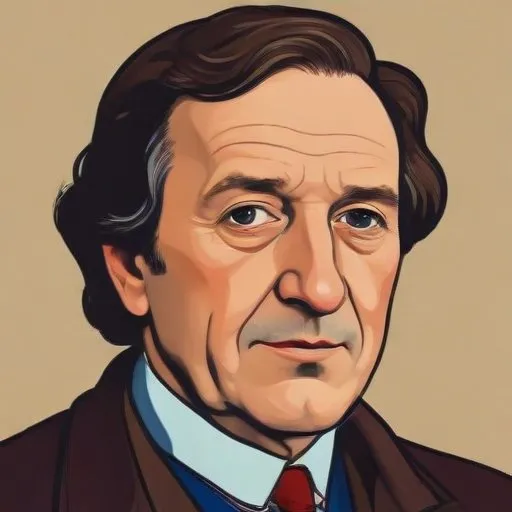
Aesthetic theorist and art critic who developed the concept of "significant form," arguing that art's value lies in its emotional and aesthetic appeal, rather than representation or realism.
Clive Bell, a renowned English art critic and theorist, is best known for developing the art theory of Significant Form, which revolutionized the way art was perceived and understood in the early 20th century. Through his work, Bell aimed to liberate art from its historical and cultural contexts, and instead, focus on its essential qualities and forms.
Born on September 16, 1881, in East Shefford, Berkshire, Bell was the third of four children to William Heward Bell and Hannah Taylor Cory. His family's wealth was built on coal mines in Wales, and his father's hunting trophies adorned their home, Cleeve House, in Wiltshire. Bell was educated at Marlborough College and Trinity College, Cambridge, where he studied history.
In 1902, Bell won an Earl of Derby scholarship to study in Paris, where his interest in art began. It was during this time that he developed his theory of Significant Form, which posits that art's emotional impact stems from its inherent, timeless, and universal qualities, rather than its historical or cultural context. This theory, outlined in his book "Art" (1914), had a profound impact on the art world, influencing artists, critics, and collectors alike.
In 1907, Bell married Vanessa Stephen, sister of Virginia Woolf, and they had two sons, Julian and Quentin, who both became writers. Although their marriage ended during World War I, they never officially separated or divorced, and Bell continued to visit and support Vanessa and her new partner, Duncan Grant.
Bell's theory of Significant Form not only influenced the art world but also had a broader impact on modern society. His ideas about the emotional power of art, detached from historical and cultural context, resonated with the growing modernist movement in art, literature, and music.
Bell's work reflects his deep commitment to the importance of art in human experience. He believed that art has the power to transcend time and culture, speaking directly to our emotions and intellect. His theory of Significant Form embodies this philosophy, emphasizing the universal and timeless qualities of art.
Clive Bell's contribution to art theory and criticism has left an indelible mark on the art world. His influence can be seen in the work of artists, critics, and collectors, who continue to engage with his ideas and theories. As a key figure in the Bloomsbury Group, Bell's legacy extends beyond the art world, into the realm of modernist thought and culture.
Born in 1882
A pioneering author of modernist literature, known for experimental novels and essays that explored the human experience, blurring the lines between reality and fiction.
Born in 1879
This celebrated author crafted novels and plays that probed the human condition, exploring themes of social class, morality, and personal relationships, with a distinctive wit and insight. Their works continue to captivate audiences with their nuanced portrayals of English society during the early 20th century.
Born in 1866
A pioneering art critic and painter who introduced Post-Impressionism to Britain, promoting artists like Van Gogh and Gauguin through exhibitions and writings.
Born in 1880
A leading figure in the Bloomsbury Group, known for revolutionizing biography writing with witty, irreverent, and psychologically nuanced portraits of historical figures.
Born in 1883
A pioneering economist who revolutionized modern economic theory with his groundbreaking ideas on government intervention and fiscal policy, shaping global economic policies.
Born in 1885
A British painter and designer who was a key figure in the Bloomsbury Group, creating vibrant, expressive works that blended modernism with traditional techniques. He's also known for his textile designs and decorative arts.
Born in 1908
A British poet and academic who wrote about art, literature, and culture, and was a member of the Bloomsbury Group, a circle of influential artists and intellectuals.
