


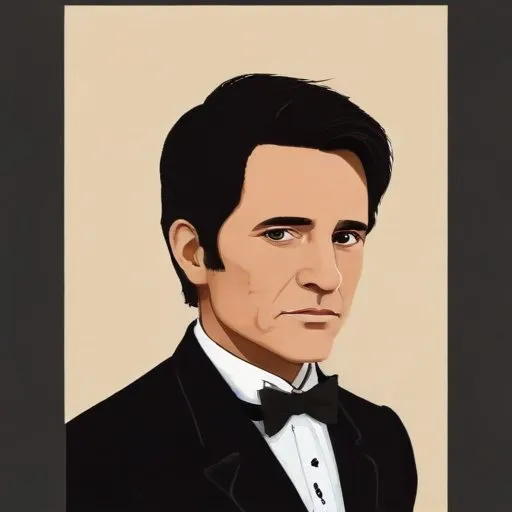
Australian composer and conductor renowned for his contributions to classical music, particularly in the fields of opera, ballet, and orchestral works.
Colin Brumby is a name synonymous with Australian classical music. As a renowned composer and conductor, Brumby left an indelible mark on the country's cultural landscape. Born on June 18, 1933, in Melbourne, Brumby's life was a testament to his passion for music, education, and the arts.
Brumby's musical journey began at a young age. He attended the Glen Iris State School, Spring Road Central School, and Melbourne Boys High School, where he developed a strong foundation in music. In 1957, he graduated from the University of Melbourne Conservatorium of Music with a diploma in education. His talent was recognized early on, and he became a finalist in the Australian Youth Aria competition in 1953, eventually winning the Lieder Award.
Brumby's thirst for knowledge and growth led him to Spain, where he studied advanced composition with Philipp Jarnach, and to London, where he learned from the esteemed Alexander Goehr. Upon his return to Australia, he joined the staff of the Music Department at the University of Queensland, eventually becoming an Associate Professor. During his tenure, he made significant contributions to the university's music program and composed several works that received international acclaim.
From 1968 to 1971, Brumby served as the Musical Director of the Queensland Opera Company. During this period, he conducted the Australian premieres of Joseph Haydn's Linfedelt delusa and Georges Bizet's Le docteur Miracle. This tenure marked a significant milestone in his career, solidifying his reputation as a master conductor and composer.
Brumby's commitment to music education is evident in his series of children's operettas, including The Wise Shoemaker (1968), Rita and Dita and the Pirate (1969), Rita and Dita in Toyland (1969), and The Prince Who Couldn't Laugh (1969). These operettas, performed by the Queensland Opera Company, reached an audience of 75,000 children in over 400 schools across Queensland.
Brumby's compositions are a testament to his innovative spirit and mastery of his craft. His work, Fibonacci Variations (1963), was selected for possible inclusion in the International Society for Contemporary Music's World Music Days program. This composition, along with many others, has cemented Brumby's position as one of Australia's most celebrated composers.
Throughout his career, Brumby received numerous awards and honors for his contributions to music and education. These include the Lieder Award (1953), the Australian Youth Aria competition finalist (1953), and his appointment as Associate Professor at the University of Queensland.
In 1998, Brumby retired from his position at the University of Queensland, concluding a remarkable chapter in his academic and musical career. Though he passed away on January 3, 2018, his legacy continues to inspire generations of musicians, educators, and music lovers alike.
Colin Brumby's life was a symphony of passion, creativity, and dedication. As a composer, conductor, and educator, he left an indelible mark on Australian classical music. His legacy continues to inspire and enrich the lives of those who experience his music, ensuring his place as one of the most celebrated figures in Australian cultural history.
94 Years Old
A renowned Australian pianist and composer, celebrated for his innovative and expressive works that blended modernist techniques with Romantic sensibilities. His compositions often featured complex harmonies and rhythms, earning him acclaim in the classical music world.
97 Years Old
A renowned Australian composer and conductor, celebrated for his unique blend of Western classical music and Australian Aboriginal influences, creating a distinctive national sound.
