


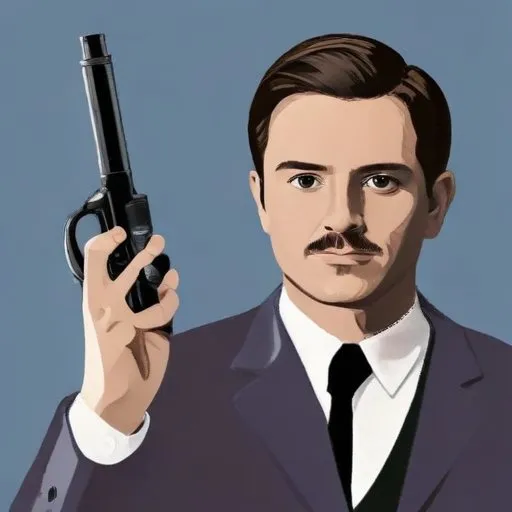
A pharmacist and veterinarian who invented the tranquilliser gun, revolutionizing animal handling and conservation efforts. This innovation has saved countless lives and transformed wildlife management practices.
Colin Murdoch, a New Zealand pharmacist and veterinarian, left an indelible mark on the medical world with his groundbreaking inventions, including the tranquillizer gun, disposable hypodermic syringe, and childproof medicine container. With a staggering 46 patents to his name, Murdoch's innovative spirit and commitment to improving human and animal welfare have made him a legendary figure in the field of medicine.
Born on February 6, 1929, in Christchurch, New Zealand, Murdoch's fascination with chemistry began at a young age. Despite struggling with dyslexia, he demonstrated exceptional mechanical and technical skills, even building a successful firearm at the age of 10. This early curiosity and ingenuity would later shape his remarkable career.
Murdoch's heroism was recognized early on, as he was awarded the Royal Humane Society Medal at the age of 13 for saving a drowning man in the New Brighton estuary. This bravery and quick thinking would become a hallmark of his approach to problem-solving in his future inventions.
Overcoming his dyslexia, Murdoch studied at The College of Pharmacy in Wellington and later completed a five-year apprenticeship to become a pharmacist, following in his father's footsteps. His passion for animal welfare led him to pursue further education, becoming a veterinarian and dedicating his life to improving the health and well-being of both humans and animals.
Murdoch's most famous invention, the disposable hypodermic syringe, was born out of his concern for the risks associated with reusing glass syringes. Recognizing the potential for infection transmission, he designed a plastic version that would eliminate this risk. Although initially met with skepticism by the New Zealand Department of Health, Murdoch's innovative design eventually gained widespread acceptance and has since become a ubiquitous tool in medical settings worldwide.
Colin Murdoch's numerous inventions and contributions have had a profound impact on modern medicine, animal welfare, and public health. His legacy extends beyond his remarkable inventions, inspiring future generations of inventors, scientists, and medical professionals to continue innovating and improving the lives of people and animals around the world.
Colin Murdoch's remarkable life and achievements serve as a testament to the power of innovation, determination, and compassion. His groundbreaking inventions and contributions to medicine have left an indelible mark on humanity, and his legacy will continue to inspire and improve the lives of generations to come.
Born in 1881
Discovered penicillin, a revolutionary antibiotic, and pioneered its use in medicine. This breakthrough has saved countless lives and transformed the field of healthcare.
Born in 1914
Developed the first inactivated poliovirus vaccine, leading to the near eradication of polio, and founded the Salk Institute for Biological Studies.
Born in 1749
Developed the smallpox vaccine, revolutionizing disease prevention and saving countless lives.
Born in 1822
Developed vaccines for rabies and anthrax, and pioneered the germ theory of disease, revolutionizing our understanding of microbiology and disease prevention.
98 Years Old
Discovered the structure of DNA, revolutionizing our understanding of genetics and earning a Nobel Prize. Pioneering work in molecular biology has far-reaching implications for medicine and beyond.
Born in 1916
Pioneering scientist who discovered the structure of DNA, revolutionizing our understanding of genetics and life itself.
Born in 1920
A British scientist who contributed significantly to the discovery of the structure of DNA, providing high-quality X-ray crystallography images that helped James Watson and Francis Crick develop their famous model.
Born in 1822
An Austrian monk who pioneered genetics by experimenting with pea plants, discovering the fundamental laws of heredity, and laying the foundation for modern genetics.
