


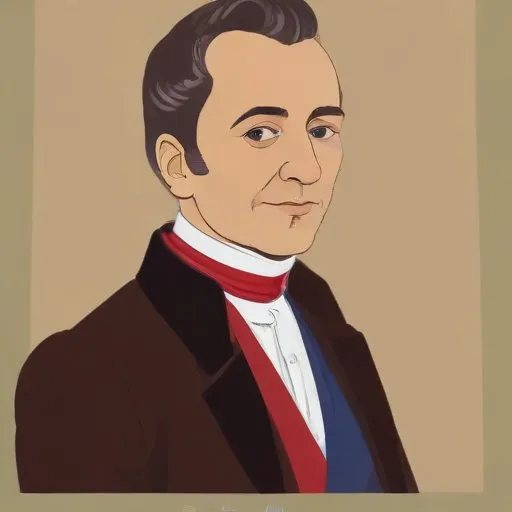
A pioneering figure in Surrealist literature, he crafted a provocative and influential novel that blurred the lines between poetry and prose, inspiring generations of avant-garde artists.
Comte de Lautramont, the nom de plume of Isidore Lucien Ducasse, is known for his provocative and influential works, particularly Les Chants de Maldoror and Poesies, which have left an indelible mark on modern arts and literature.
With his unique blend of dark romanticism, surrealism, and rebellious spirit, Lautramont's writings have inspired generations of artists, writers, and thinkers, including the Surrealists and Situationists.
Born on April 4, 1846, in Montevideo, Uruguay, to a French consular officer and his wife, Ducasse's early life was marked by tragedy, with his mother's death when he was just a toddler.
At the age of 13, he was sent to high school in France, where he excelled in arithmetic and drawing, and developed a passion for literature, particularly the works of Edgar Allan Poe, Percy Bysshe Shelley, and Byron.
Lautramont's literary career was marked by controversy and innovation. His magnum opus, Les Chants de Maldoror, a six-canto poem, is considered one of the most revolutionary and subversive works of the 19th century.
In this work, Lautramont challenged traditional notions of morality, aesthetics, and literature, creating a new kind of poetry that was both beautiful and brutal.
His second major work, Poesies, was published posthumously and continues to fascinate readers with its dreamlike imagery and rebellious spirit.
Lautramont's writings are infused with a rebellious spirit, a rejection of traditional authority, and a desire to challenge the status quo.
His poetry explores the darker aspects of human nature, the absurdity of life, and the search for meaning in a chaotic world.
Lautramont's influence can be seen in the works of numerous artists, writers, and thinkers, including Salvador Dali, Andre Breton, and Guy Debord.
His poetry has inspired countless musicians, including black metal bands, punk rockers, and avant-garde musicians.
Despite his short life, Lautramont's writings have left an indelible mark on modern literature and art.
His poetry continues to inspire and challenge readers, artists, and thinkers, offering a unique perspective on the human condition and the search for meaning in a chaotic world.
Comte de Lautramont's legacy serves as a testament to the power of rebellious creativity and the enduring influence of radical ideas.
Born in 1821
A 19th-century literary mastermind who crafted exquisite poetry and art criticism, exploring the beauty and darkness of human experience.
Born in 1854
A rebellious and visionary poet who abandoned literature at 21 to become an African explorer and trader, known for his vivid and expressive poetry that influenced modern literature.
Born in 1844
A leading figure of the French Symbolist movement, known for his sensual and emotive poetry that explored themes of love, beauty, and the human condition.
Born in 1842
A French poet and critic who pioneered Symbolism, experimenting with language and form to evoke emotions and ideas, and is known for his enigmatic and influential poetry.
Born in 1880
An Italian-French literary genius who pioneered Cubist poetry, blending fragmented images and multiple narratives to create a new kind of lyrical expression. His work influenced the development of Surrealism and modern art.
Born in 1896
French poet and author who founded Surrealism, a cultural movement that explored the subconscious and the world of dreams. He wrote novels, poems, and essays that continue to influence art and literature today.
Born in 1897
A leading figure of the French Resistance during WWII, he wrote influential poetry and novels that explored the human condition, blending politics and art.
