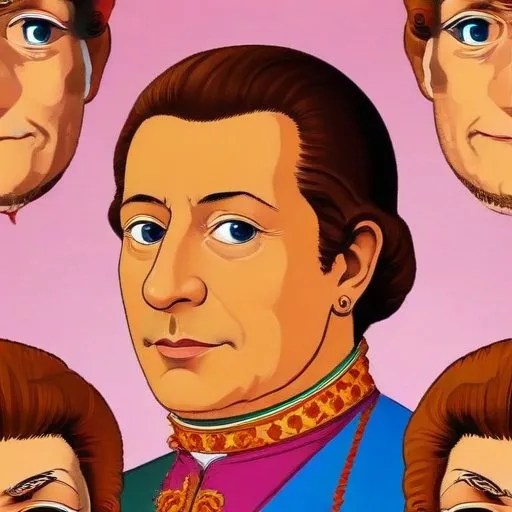
Cosimo III de Medici, Grand Duke of Tuscany: A Patron of the Arts and Science
Cosimo III de Medici, Grand Duke of Tuscany, is renowned for his unwavering support of the arts, science, and culture during the 17th century. As the ruler of Tuscany from 1670 to 1723, he fostered an environment that encouraged innovation, creativity, and intellectual pursuits.
Early Life and Reign
Cosimo III was born on August 14, 1642, to Ferdinando II de Medici, Grand Duke of Tuscany, and
Vittoria della Rovere. He succeeded his father as Grand Duke in 1670, inheriting a rich cultural heritage and a strong economic base. During his reign, Cosimo III-focused on strengthening Tuscany's economy, promoting trade, and enhancing the region's cultural landscape.
Patronage of the Arts and Science
Cosimo III was an ardent patron of the arts, commissioning works from prominent artists, architects, and scientists. He supported the construction of grand buildings, such as the Palazzo Pitti and the Boboli Gardens, which became iconic landmarks in Florence. The Grand Duke also patronized the likes of
Galileo Galilei, further solidifying Tuscany's reputation as a hub for scientific discovery.
Philosophical Contributions and Beliefs
Cosimo III was deeply interested in alchemy, a pseudoscience that aimed to transform base metals into gold and discover the elixir of life. He believed that alchemy held the key to unlocking the secrets of nature and improving human life. The Grand Duke's fascination with alchemy led him to establish a laboratory in the Palazzo Pitti, where he conducted experiments and consulted with prominent alchemists.
Personal Milestones and Key Life Events
- 1670: Cosimo III succeeds his father as Grand Duke of Tuscany
- 1673: He marries Marguerite-Louise d'Orléans, a niece of King Louis XIV of France
- 1684: Cosimo III becomes a Knight of the Golden Fleece, a prestigious chivalric order
Influence on Modern Society
Cosimo III's patronage of the arts and science had a profound impact on modern society. He contributed to the development of Tuscany as a cultural and intellectual center, paving the way for future generations of artists, scientists, and thinkers. The Grand Duke's support for Galileo Galilei, in particular, played a significant role in the advancement of modern science.
Legacy and Historical Context
Cosimo III's reign marked the beginning of Tuscany's decline as a dominant power in Italy. However, his cultural and intellectual achievements have endured, earning him a reputation as one of the most noteworthy Grand Dukes of Tuscany. The Grand Duke's legacy serves as a testament to the power of patronage and the importance of fostering a culture of innovation and creativity.
Comparative Analysis with Contemporaries
Cosimo III's patronage of the arts and science can be compared to that of his contemporaries, such as King Louis XIV of France and
Pope Alexander VII. While these rulers also supported the arts and science, Cosimo III's focus on alchemy and his patronage of Galileo Galilei set him apart as a unique figure in 17th-century Europe.
Visual Timeline and Milestones
| 1642 |
Cosimo III de Medici is born |
| 1670 |
Cosimo III succeeds his father as Grand Duke of Tuscany |
| 1673 |
Cosimo III marries Marguerite-Louise d'Orléans |
| 1723 |
Cosimo III dies, ending his 53-year reign |
Trivia and Fun Facts
- Cosimo III was known for his elaborate and extravagant parties, which often featured fireworks, music, and dancing
- The Grand Duke was a prolific collector of rare books and manuscripts, amassing a vast library in the Palazzo Pitti
Charitable Work and Social Contributions
Cosimo III was a generous philanthropist, supporting various charitable causes throughout his reign. He funded the construction of hospitals, orphanages, and other social institutions, earning him a reputation as a benevolent ruler.
Inspirational Stories and Motivations
Cosimo III's dedication to the arts and science serves as an inspiration to individuals around the world. His unwavering support for innovation and creativity has left a lasting legacy, reminding us of the importance of fostering a culture that values intellectual pursuits and artistic expression.
FAQ
What were Cosimo III de Medicis accomplishments as Grand Duke of Tuscany?
Cosimo III de Medici was a skilled politician and administrator, and his rule saw significant economic and cultural growth in Tuscany.
What was Cosimo III de Medicis relationship with the Catholic Church?
Cosimo III de Medici was a devout Catholic, and he worked closely with the Church to promote its interests in Tuscany.
What were Cosimo III de Medicis cultural achievements?
Cosimo III de Medici was a great patron of the arts, and his court attracted many prominent artists, writers, and musicians.
What was Cosimo III de Medicis foreign policy?
Cosimo III de Medicis foreign policy was focused on maintaining good relations with other European powers, and he worked to promote peace and stability in the region.
What is Cosimo III de Medicis legacy in the history of Tuscany?
Cosimo III de Medicis legacy in the history of Tuscany is that of a wise and just ruler who promoted economic and cultural growth, and maintained peace and stability in the region.