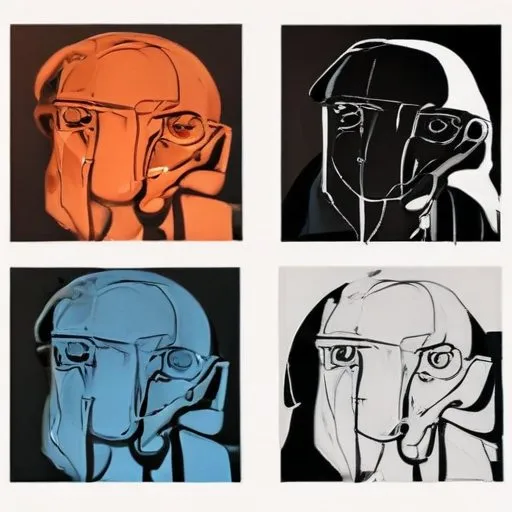
Csar Baldaccini: The Visionary Sculptor of Nouveau Ralisme
A Pioneer of Radical Compressions and Expansions
Csar Baldaccini, affectionately known as Csar, revolutionized the world of sculpture with his innovative and provocative works that challenged the traditional notions of art and its relationship with the urban environment. He is renowned for his radical compressions of discarded metal, compacted automobiles, and expansions of polyurethane foam sculptures, which redefined the boundaries of modern art.
Early Life and Education
Born on January 1, 1921, in Marseille, France, to Italian parents from Tuscany, Csar grew up in the working-class neighborhood of La Belle-de-Mai. His father, a cooper and bar owner, instilled in him a strong work ethic and appreciation for the beauty of everyday life. Csar pursued his passion for art at the Ecole des Beaux-Arts in Marseille (1935-1939) and later at the Ecole des Beaux-Arts in Paris (1943-1948).
The Emergence of a Visionary
Csar's artistic journey began in the early 1950s, when he started creating sculptures by welding together pieces of scrap metal. His early works, characterized by solid welded sculptures of insects, animals, and nudes, earned him his first solo exhibition at the Galerie Lucien Durand in Paris in 1954. This marked the beginning of his ascent as one of France's leading sculptors.
The Birth of Compressions
In 1960, Csar's career took a dramatic turn when he stumbled upon a hydraulic crushing machine at a scrap merchant's workshop. Fascinated by its potential, he began experimenting with the machine, creating his iconic compressions of cars. By carefully selecting and crushing specific vehicles, Csar could control the surface pattern and color scheme of his sculptures, showcasing his mastery over the medium.
Nouveau Ralisme and the Urban Landscape
In 1965, Csar joined the Nouveaux Ralistes, a group of avant-garde artists who drew inspiration from urban life. Alongside Arman, Klein, Raysse, Tinguely, and Pierre Restany, Csar explored the intersection of art and the urban environment, challenging traditional notions of beauty and representation.
Expansion and Experimentation
In the mid-1960s, Csar expanded his artistic repertoire by working with plastics. He began creating plastic moulds of human imprints, followed by pouring expanded polyurethane, which was allowed to expand and solidify. This experimentation resulted in a new series of innovative sculptures that further cemented his reputation as a pioneer of modern art.
Legacy and Impact
Csar's radical artistic vision and innovative techniques have left an indelible mark on the world of modern art. His compressions and expansions continue to inspire generations of artists, who seek to push the boundaries of art and its relationship with the urban environment. Through his work, Csar has proven that art can be both beautiful and provocative, challenging our perceptions and encouraging us to rethink the world around us.
Key Works and Exhibitions
- Compressions (1960s)
- Expansions (1960s)
- Solid welded sculptures of insects, animals, and nudes (1950s)
- First solo exhibition at the Galerie Lucien Durand, Paris (1954)
- Member of the Nouveaux Ralistes group (1965)
Quotes and Memorable Sayings
- "Art is not just about creating something beautiful, but about challenging our perceptions and understanding of the world."
FAQ
What is César Baldaccini known for in the art world?
César Baldaccini, known as César, was a French sculptor and academic, renowned for his innovative use of materials and his iconic compressed car sculptures.
What was César Baldaccinis early life and education like?
César Baldaccini was born on January 1, 1921, in Marseille, France. He studied at the École des Beaux-Arts in Marseille and later at the École Nationale Supérieure des Beaux-Arts in Paris.
What is César Baldaccinis most famous work?
César Baldaccinis most famous work is his series of compressed car sculptures, which he began creating in the 1960s. These works, made from crushed and compressed cars, are iconic representations of modernity and consumer culture.
What awards did César Baldaccini win for his work?
César Baldaccini won several awards for his work, including the 1986 Grand Prix National des Arts and the 1996 Praemium Imperiale for sculpture.
How has César Baldaccinis work influenced modern art?
César Baldaccinis innovative use of materials and his exploration of modern themes have influenced generations of artists and sculptors. His work continues to be celebrated and exhibited around the world.