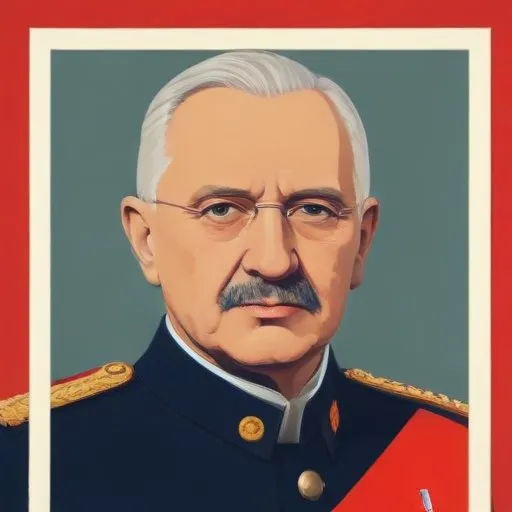
Czesław Kiszczak: The Complex Legacy of Poland's Last Communist Prime Minister
A Leadership of Contrasts
Czesław Kiszczak, a Polish general and communist-era interior minister, is perhaps best known for his pivotal role in both imposing martial law and suppressing the Solidarity movement in Poland, as well as presiding over the country's transition to democracy. This dichotomy of leadership highlights the complex and multifaceted nature of Kiszczak's legacy.
Early Years and War-Time Experiences
Born on October 19, 1925, in Roczyny, Poland, Kiszczak was raised in an anticlerical, pro-Soviet atmosphere. His father, a struggling farmer, was fired from his job as a steelworker due to his communist beliefs. During World War II, Kiszczak was arrested by German occupants at the age of 16, along with his mother, brother, and aunt, and sent to forced labor camps. He spent time in German coal mines and later in Austria as a slave laborer, where he was exposed to communist ideologies.
Rise to Power and Military Career
After the war, Kiszczak returned to Poland and joined the communist Polish Workers Party. He attended the Central Party School in Łódź, where he was trained as a civilian and military Party apparatchik. He soon entered the Polish Army, where he fought alongside the Red Army and served as a translator due to his proficiency in Russian and German. Kiszczak's military career spanned several decades, earning him the rank of general and eventually, the position of interior minister in 1981.
The Imposition of Martial Law and Suppression of Solidarity
As interior minister, Kiszczak played a key role in imposing martial law in Poland on December 13, 1981, in an effort to crush the growing Solidarity movement. This move led to widespread arrests, repression, and human rights abuses, earning Kiszczak the ire of the international community. However, in a surprising turn of events, Kiszczak would later become instrumental in Poland's transition to democracy.
The Road to Democracy and the Round Table Conference
In 1989, Kiszczak became the last communist prime minister of Poland, a position that allowed him to preside over the country's transition to democracy. He co-chaired the Round Table conference, a series of negotiations between communist officials and democratic opposition leaders. This historic conference led to the reconciliation with and reinstatement of Solidarity, the 1989 elections, and the formation of Poland's first non-communist government since 1945.
Legacy and Controversy
Kiszczak's legacy is marked by controversy and paradox. While he was instrumental in suppressing the Solidarity movement, he also played a crucial role in Poland's transition to democracy. This complexity has sparked debate among historians and scholars, with some viewing him as a pragmatic leader who adapted to changing circumstances, while others see him as an opportunist who capitalized on the waning power of communism.
Personal Life and Later Years
Little is known about Kiszczak's personal life, and he rarely gave interviews or spoke publicly about his experiences. He passed away on November 5, 2015, at the age of 90, leaving behind a complex and multifaceted legacy that continues to intrigue and fascinate historians and scholars today.
FAQ
What is Czesław Kiszczaks background as a Polish general and politician?
Czesław Kiszczak was a Polish general and politician, born on October 19, 1925, in Rogieniec, Poland. He served as the 11th Prime Minister of the Peoples Republic of Poland from 1989 to 1990.
What were some of Czesław Kiszczaks most notable accomplishments as Prime Minister?
Kiszczak played a key role in the transition from communism to democracy in Poland. He oversaw the countrys first partially free elections, and helped to establish a new government and constitution.
Did Czesław Kiszczak have any notable military service?
Yes, Kiszczak served in the Polish Peoples Army, rising to the rank of general. He was also involved in the countrys military intelligence services.
What was Czesław Kiszczaks role in the Solidarity movement?
Kiszczak played a complex role in the Solidarity movement, initially serving as a liaison between the government and the trade union. He later became a key figure in the discussions leading to the Round Table Agreement, which paved the way for Polands transition to democracy.
What is Czesław Kiszczaks legacy in Polish politics?
Kiszczaks legacy is as a key figure in Polands transition from communism to democracy. His leadership during a time of great change and upheaval helped to shape the countrys future, and his contributions continue to be recognized and appreciated today.