


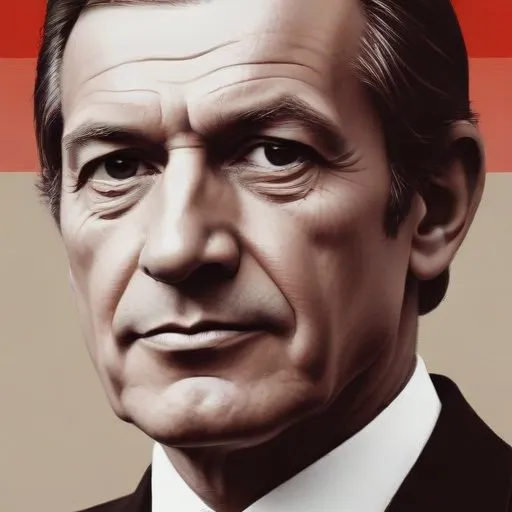
The 9th Prime Minister of Poland, a key figure in the country's transition from communism to democracy, known for his economic reforms and leadership during a pivotal period in Polish history.
Zbigniew Messner, a prominent Polish communist politician and economist, left an indelible mark on the country's history, particularly during the Soviet era. He is best known for his various high-ranking posts within the communist party apparatus, including his tenure as Prime Minister of the Polish People's Republic from 1985 to 1988.
Messner was born on March 13, 1929, in Stryj, Poland (now Stryi, Ukraine). After the Soviet annexation of eastern Poland in 1945, his family relocated to Gliwice. In 1953, he graduated from the Karol Adamiecki University of Economics in Katowice, where he later worked as an academic worker.
In 1954, Messner joined the Polish United Workers' Party (PZPR), marking the beginning of his political career. He rapidly rose through the ranks, becoming the chairman of the Katowice Voivodeship National Council in 1980, and the First Secretary of the Voivodeship Committee of the PZPR in Katowice the following year.
In 1983, Wojciech Jaruzelski, then Prime Minister and leader of the PZPR, appointed Messner as his Deputy Prime Minister, responsible for economic affairs. Two years later, Messner succeeded Jaruzelski as Prime Minister, a position he held until 1988.
Zbigniew Messner's legacy is complex and multifaceted. While his dedication to the communist ideology and loyalty to Wojciech Jaruzelski earned him significant power and influence, his tenure as Prime Minister was marked by controversy and criticism. Nevertheless, his contributions to Poland's economic development and his role in shaping the country's communist apparatus are undeniable.
Messner passed away on January 10, 2014, leaving behind a legacy that continues to spark debate and discussion among historians and scholars.
Born in 1923
The last communist leader of Poland, who imposed martial law in 1981, but later helped transition the country to democracy. He's a symbol of Poland's complex political past.
83 Years Old
A Polish electrician-turned-politician who played a key role in the country's transition from communism to democracy, and was awarded the Nobel Peace Prize for his efforts. He's a symbol of resistance against oppression and a champion of workers' rights.
99 Years Old
A Polish journalist and politician who played a key role in the country's transition from communism to democracy, serving as the first non-communist prime minister since World War II. He's known for his efforts to reform the Polish economy and politics.
71 Years Old
The 3rd President of Poland, a journalist-turned-politician who played a key role in Poland's transition from communism to democracy, and is known for his efforts to join NATO and the EU.
80 Years Old
A Polish politician who served as Prime Minister from 2001 to 2004, known for his left-wing policies and efforts to join the European Union.
66 Years Old
A Polish physicist and politician who served as Prime Minister of Poland, known for his contributions to quantum field theory and leading the country's government.
77 Years Old
A Polish lawyer and politician who served as Prime Minister of Poland, known for his conservative policies and close relationship with his twin brother, also a prominent politician. He played a significant role in shaping Poland's political landscape.
69 Years Old
The 14th Prime Minister of Poland, a journalist-turned-politician who played a key role in shaping the country's post-communist era and later became a prominent EU leader. He's known for his strong stance on European integration and criticism of authoritarianism.
