


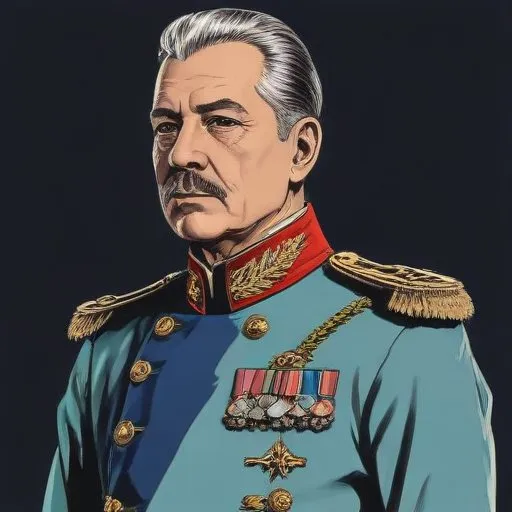
A French-Austrian field marshal who fought against Napoleon, leading Austrian forces to several victories, but ultimately surrendering at the Siege of Mantua. He's known for his military tactics and bravery.
Dagobert Sigmund von Wurmser was a Austrian Field Marshal who made his mark on the French Revolutionary Wars, engaging in a series of battles against the rising star of Napoleon Bonaparte. Though ultimately defeated, Wurmser's military prowess and strategic thinking earned him a reputation as a formidable opponent, respected by his contemporaries and historians alike.
Born on May 7, 1724, in Strasbourg, Alsace, Wurmser was the son of Frantz Jacob Wurmser von Vendenheim. He began his military service in 1741, enlisting in the French Army during the War of the Austrian Succession. Later, he joined the Habsburg military, serving in the Seven Years War and the War of the Bavarian Succession, where he gained valuable experience and honed his skills.
Wurmser's military career took a significant turn during the French Revolutionary Wars, where he commanded several imperial Habsburg armies in the Rhine River valley between 1793 and 1795. His most notable achievement during this period was the capture of the lines of Lauterburg and Weissenburg in October 1793, a testament to his tactical genius and leadership abilities.
In 1796, Wurmser was sent to northern Italy, where he led the Habsburg military in a series of battles against Napoleon's French army. Though he fought valiantly, Wurmser was ultimately trapped in Mantua and forced to negotiate a capitulation. He left the city with his honors and 700 men, earning the respect of his contemporaries, including Napoleon, who would later describe Wurmser as a "very brave and very able" opponent.
Despite his defeat, Wurmser's service was not diminished in the eyes of the imperial authorities. He was granted another appointment shortly after his return to Vienna, but his advanced age and deteriorating health forced him to slow down. Wurmser passed away on August 22, 1797, at the age of 72, leaving behind a legacy as a skilled military strategist and a testament to the Austrian Empire's military prowess.
Wurmser was born into a Protestant family and was christened in the church of Saint Nicolas in Strasbourg. Little is known about his personal life, but it is clear that his dedication to his military career was unwavering, driving him to serve for over five decades.
Wurmser's experiences and battles against Napoleon have been studied by military historians and strategists, providing valuable insights into the art of warfare during the late 18th century. His legacy extends beyond his own military career, influencing the development of modern military tactics and strategy.
Though few quotes from Wurmser have been recorded, his actions and decisions on the battlefield speak volumes about his character and approach to warfare. As a testament to his bravery and determination, Wurmser's military career continues to inspire and educate to this day.
Wurmser's life and career are a testament to the tumultuous nature of European politics during the late 18th century. His battles against Napoleon, though ultimately unsuccessful, highlight the complex web of alliances and rivalries that shaped the course of history. As a military leader, Wurmser's contributions to the Austrian Empire's military heritage are undeniable, earning him a place among the most notable figures of the French Revolutionary Wars.
Born in 1777
King of the Two Sicilies from 1825 to 1830, known for his attempts to reform the government and economy, but ultimately failing to modernize the kingdom.
Born in 1758
A skilled military strategist and one of Napoleon's most trusted generals, known for his victories in the Peninsular War and his role in shaping modern warfare.
Born in 1769
A skilled military strategist and one of Napoleon's most trusted generals, known for his bravery and tactical genius on the battlefield.
Born in 1753
A French general, mathematician, and politician who played a crucial role in the French Revolution and is considered the "Organizer of Victory" for his military strategies, and also made significant contributions to mathematics and engineering.
