


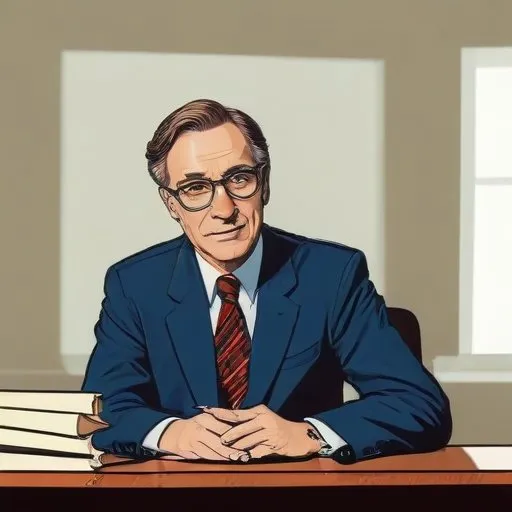
A renowned expert on Canadian politics and history, particularly the country's prime ministers and government structures. He authored several influential books on these topics.
Dale C. Thomson, a renowned Canadian academic and author, left an indelible mark on the realm of international relations and political science. As a distinguished professor, departmental director, and vice-principal, Thomson's illustrious career spanned several prestigious institutions, including the University of Montreal, McGill University, and Johns Hopkins University.
Born on June 17, 1923, on a farm in Westlock, Alberta, Thomson's early life was marked by a strong sense of adventure and public service. During World War II, he served in the Royal Canadian Air Force, earning the coveted Distinguished Flying Cross.
After the war, Thomson pursued higher education, graduating with a B.A. degree from the University of Alberta in 1948. His academic pursuits then took him to the University of Paris, where he obtained a diploma in international relations in 1950 and a doctorate from the Faculty of Letters in 1951. His thesis, entitled "General Haushofer and his Ideas on Geopolitics," demonstrated his mastery of geopolitics and international relations.
Thomson's academic career was characterized by his versatility and expertise in international relations, politics, and history. He held various positions, including professor and departmental director at the University of Montreal, professor and vice-principal at McGill University, and professor of international relations and director of the Center of Canadian Studies at Johns Hopkins University's School of Advanced International Studies in Washington, D.C.
As an accomplished author, Thomson penned several influential works, including books on geopolitics, international relations, and Canadian politics. His writings were not only academically rigorous but also accessible to a broader audience, making him a respected voice in Canadian intellectual circles.
Beyond academia, Thomson engaged in public service, serving as Associate Private Secretary to Canadian Prime Minister Louis St. Laurent from 1955 to 1958. He also contested the 1958 Canadian federal election as the Liberal candidate in the Jasper-Edson riding, although he was unsuccessful.
Dale C. Thomson's remarkable career was marked by his passion for knowledge, public service, and intellectual pursuits. As an educator, author, and public figure, he left an enduring legacy in the fields of international relations, politics, and Canadian studies. His contributions continue to inspire and inform scholars, policymakers, and the general public alike.
The McGill University Archives proudly hold Thomson's archival collection, a testament to his remarkable life and achievements.
Dale C. Thomson's remarkable life serves as a beacon of inspiration, demonstrating the power of intellectual curiosity, public service, and dedication to knowledge.
Born in 1919
The charismatic leader who championed Canadian unity and implemented progressive policies, known for his iconic style and influential legacy in shaping modern Canada.
92 Years Old
The 20th Prime Minister of Canada, serving from 1993 to 2003, known for his leadership during the Quebec sovereignty movement and his role in shaping Canada's national unity. He implemented policies like the Clarity Act and the National Child Benefit.
79 Years Old
The first and only female Prime Minister of Canada, serving for a brief four months in 1993, known for her efforts to reform the country's justice system. She was also a strong advocate for women's rights and gender equality.
87 Years Old
The 16th Prime Minister of Canada, serving from 1979 to 1980, is known for being a Progressive Conservative and leading a brief but significant term in Canadian politics. He's also a journalist and politician who played a key role in shaping Canada's foreign policy.
97 Years Old
The 17th Prime Minister of Canada, serving from 1984 to 1985, is most known for his brief tenure and struggles to maintain party unity. He's also recognized for his prior role as Minister of Justice, where he introduced significant reforms.
87 Years Old
The 18th Prime Minister of Canada, a skilled lawyer and politician, led the country from 1984 to 1993, known for negotiating the Canada-US Free Trade Agreement and introducing the Goods and Services Tax.
Born in 1897
A Canadian leader who served as Prime Minister and won the Nobel Peace Prize for resolving the Suez Canal Crisis, known for his diplomatic efforts and peacekeeping initiatives.
Born in 1874
The tenth Prime Minister of Canada, serving for a record 22 years, is most known for leading the country through significant periods of economic and social change, including the Great Depression and World War II.
