


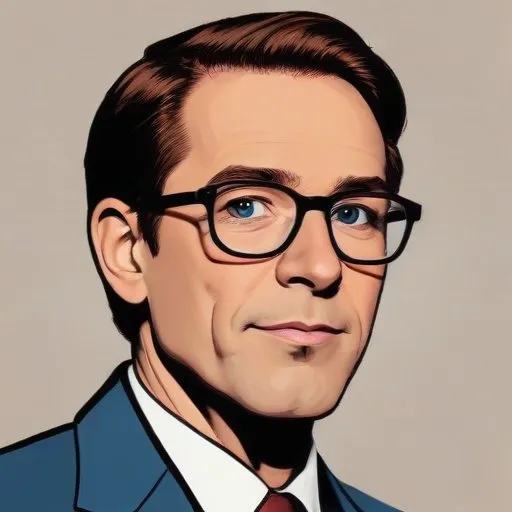
A renowned author and academic who wrote extensively on genocide, particularly the Holocaust, shedding light on the role of ordinary people in perpetuating atrocities. His work sparks crucial discussions on human morality and responsibility.
Daniel Goldhagen, an American author and former associate professor of government and social studies at Harvard University, is renowned for his groundbreaking works on the Holocaust, genocide, and antisemitism. His provocative and meticulously researched books have sparked intense international attention, praise, and criticism, cementing his position as a leading authority on these dark chapters of human history.
Born on June 30, 1959, in Boston, Massachusetts, to Erich and Norma Goldhagen, Daniel's childhood was steeped in the shadows of the Holocaust. His father, a retired Harvard professor and Holocaust survivor, had been interned in a Jewish ghetto in Czernowitz (present-day Ukraine) during the war. This personal connection would later shape Daniel's intellectual pursuits and inform his understanding of Nazism and the Holocaust.
In 1977, Goldhagen entered Harvard, where he would spend nearly two decades as an undergraduate, graduate student, and assistant professor in the Government and Social Studies Department. It was during this time that he attended a lecture by Saul Friedländer, which sparked a "lightbulb moment" that would change the course of his research. Goldhagen became determined to investigate the motivations behind the ordinary German men and women who carried out the atrocities of the Holocaust.
Goldhagen's 1996 book, Hitler's Willing Executioners: Ordinary Germans and the Holocaust, sent shockwaves through the academic and literary communities. In it, he posed a provocative question: "When Hitler ordered the annihilation of the Jews, why did people execute the order?" Through exhaustive research in German archives, Goldhagen argued that ordinary Germans, motivated by a unique blend of radical antisemitism and ideological fervor, were willing participants in the Holocaust, rather than mere bystanders or coerced perpetrators.
Goldhagen's subsequent works continued to explore the dark realms of human behavior. A Moral Reckoning (2002) examined the Catholic Church's role in the Holocaust, while Worse Than War: Genocide, Eliminationism, and the Ongoing Assault on Humanity (2009) delved into the phenomenon of genocide. In The Devil That Never Dies: The Rise and Rise of Global Antisemitism (2013), Goldhagen traced the resurgence of virulent antisemitism worldwide.
Goldhagen's works have been widely debated, praised, and criticized. While some hail him as a courageous and innovative thinker, others have accused him of simplifying complex historical issues or unfairly vilifying entire groups. Love him or loathe him, Goldhagen's writings have undeniably contributed to a deeper understanding of humanity's darkest moments and sparked essential discussions about the dangers of xenophobia, prejudice, and hatred.
Daniel Goldhagen's fearless exploration of humanity's darkest corners has left an indelible mark on modern scholarship and public discourse. As a passionate advocate for intellectual honesty and moral clarity, he continues to challenge our perceptions of the past, present, and future, inspiring a new generation of thinkers and scholars to confront the horrors of genocide and antisemitism.
Born in 1906
A high-ranking Nazi officer responsible for organizing the logistics of the Holocaust, overseeing the mass deportation of Jews to concentration camps during World War II.
Born in 1897
A mastermind of Nazi propaganda, he crafted a persuasive narrative that fueled the Third Reich's rise to power, leaving a lasting impact on the world.
Born in 1906
A 20th-century philosopher and theorist who explored the nature of power, politics, and humanity, particularly in the context of totalitarianism and the Holocaust.
98 Years Old
A Romanian-American writer, professor, and humanitarian who survived the Holocaust and dedicated his life to promoting peace, justice, and human rights, leaving a lasting impact on literature and activism.
94 Years Old
A renowned historian and author who has written extensively on the Holocaust, particularly on the Nazi regime and its atrocities, shedding light on one of humanity's darkest periods. His work has been widely acclaimed and has helped shape our understanding of this pivotal moment in history.
