


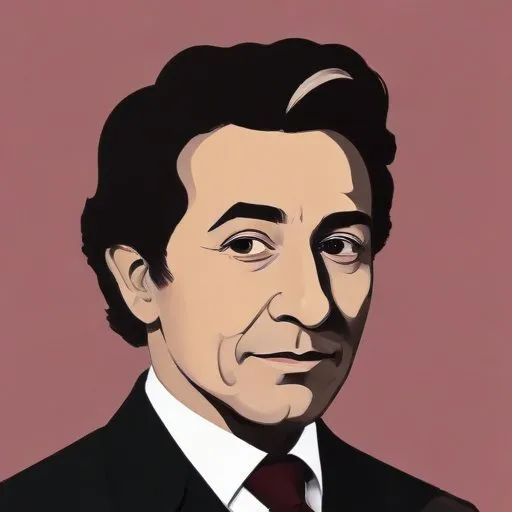
An American composer and educator, known for his neoclassical style and contributions to the development of American music, particularly in the mid-20th century.
David Leo Diamond, born on July 9, 1915, was an American composer of classical music, esteemed for his remarkable contributions to the realm of tonal and modal compositions. With a distinctive style that blended American and French influences, Diamond left an indelible mark on the world of classical music, earning him recognition as one of the preeminent American composers of his generation.
Diamond's musical journey began at the Cleveland Institute of Music and the Eastman School of Music, where he studied under the esteemed Bernard Rogers. He later received guidance from prominent composer Roger Sessions in New York City and Nadia Boulanger in Paris, allowing him to hone his craft and develop a unique voice.
Diamond's oeuvre comprises an impressive range of works, including:
Perhaps his most popular piece is Rounds (1944) for string orchestra, a testament to his innovative and accessible compositional style.
Diamond's remarkable career was punctuated by numerous awards and accolades, including:
He was also named Honorary Composer-in-Residence of the Seattle Symphony, a testament to his enduring impact on the world of classical music.
Diamond's influence extended beyond his own compositions, as he taught and mentored a diverse range of students at the Juilliard School, including notable composers such as:
Diamond also advised the celebrated pianist Glenn Gould on his mid-career work, including his String Quartet, Op. 1.
Diamond's personal life was marked by courage and conviction, as he openly acknowledged his homosexuality long before it was socially acceptable. Despite facing homophobia and antisemitism, he remained committed to his art and left an indelible mark on the world of classical music.
Through his remarkable body of work, David Diamond has secured a lasting legacy as a pioneering American composer, leaving behind a rich cultural heritage that continues to inspire and enrich audiences to this day.
Born in 1900
A renowned composer, conductor, and educator who blended folk and modernist elements to create iconic American classical music, including "Appalachian Spring" and "Fanfare for the Common Man".
Born in 1918
A renowned musician who blended jazz, classical, and Broadway styles, creating iconic works like West Side Story, and inspiring generations with his charismatic performances and innovative compositions.
Born in 1910
A renowned pianist and composer who blended romanticism and modernism, creating iconic works like "Adagio for Strings" that evoke powerful emotions.
Born in 1910
A renowned composer and educator, he was the first president of the Juilliard School and won the Pulitzer Prize for Music in 1943. He's known for his contributions to American classical music.
Born in 1908
A pioneering composer of modern classical music, known for his complex and innovative works that pushed the boundaries of harmony and rhythm.
Born in 1894
A renowned composer, theorist, and academic who made significant contributions to the development of American classical music, particularly in the realm of harmony and counterpoint.
Born in 1896
A renowned composer, conductor, and educator who made significant contributions to American classical music, particularly through his Romantic-style symphonies and leadership of the Eastman School of Music.
