


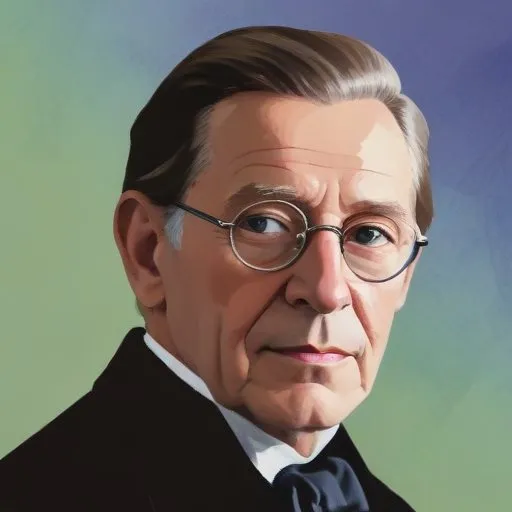
A renowned composer, theorist, and academic who made significant contributions to the development of American classical music, particularly in the realm of harmony and counterpoint.
Walter Piston, Jr. was a renowned American composer of classical music, music theorist, and professor of music at Harvard University, known for his remarkable contributions to the world of music, pedagogy, and academic research. His compositions, characterized by their richness, lyricism, and technical mastery, have left an indelible mark on the American musical landscape.
Walter Piston was born on January 20, 1894, in Rockland, Maine, to Walter Hamor Piston, a bookkeeper, and Leona Stover. His paternal grandfather, Antonio Pistone, was a sailor from Genoa, Italy, who changed his name to Anthony Piston upon arriving in Maine. Piston's early life was marked by a fascination with art and music, which led him to enroll in the Massachusetts Normal Art School, where he completed a four-year program in fine art in 1916.
During the 1910s, Piston made a living playing piano, violin, and saxophone in dance bands and orchestras, led by Georges Longy. This period of his life was instrumental in shaping his musicianship and exposing him to a diverse range of musical styles. His subsequent studies at Harvard College, where he earned a degree in 1920, further honed his skills, as he studied counterpoint, canon, fugue, harmony, composition, and music history with esteemed professors such as Archibald Davison, Clifford Heilman, Edward Ballantine, and Edward Burlingame Hill.
Piston's academic tenure at Harvard University, which spanned over four decades, was marked by his dedication to teaching, research, and composition. He was a prolific composer, with a catalog that includes symphonies, concertos, chamber music, and choral works, characterized by their lyricism, contrapuntal mastery, and inventive use of harmony. His pedagogical influence extended beyond the classroom, as he wrote several seminal texts on harmony, counterpoint, and orchestration, which remain essential resources for music students and scholars to this day.
Piston's oeuvre is characterized by its technical mastery, lyricism, and eclectic blend of traditional and modern elements. Some of his most notable works include his Symphony No. 2, Viola Concerto, and Piano Concertino. His compositional style, marked by its clarity, precision, and lyricism, has been praised by critics and scholars alike, and has influenced generations of American composers.
Piston's contributions to music and academia have been recognized with numerous awards and honors, including three Guggenheim Fellowships, a Pulitzer Prize, and a New York Music Critics Circle Award. He was also elected to the American Academy of Arts and Letters and the National Institute of Arts and Letters.
Piston married artist Kathryn Nason in 1920, and the couple remained together until her death in 1976. His personal life was marked by a deep commitment to his art, his teaching, and his family. Piston's legacy extends far beyond his music and pedagogy, as he has inspired generations of composers, scholars, and music enthusiasts, ensuring his place as one of the most significant figures in American musical history.
Piston's life and work are set against the backdrop of a transformative period in American musical history, marked by the rise of modernism, neoclassicism, and American nationalism. His unique blend of traditional and modern elements has ensured his place as a bridge between the Romantic and Modern eras, influencing generations of American composers, including Elliott Carter, Leonard Bernstein, and John Harbison.
Today, Piston's music remains a staple of the classical repertoire, with his works performed and recorded by leading orchestras and musicians around the world. His legacy extends beyond his music, as his pedagogical influence has shaped the course of music education and scholarship in the United States, cementing his place as one of the most important figures in American musical history.
Born in 1895
A renowned composer, violist, and conductor who blended traditional and modern styles, creating complex yet accessible music that resonated with audiences. His works spanned from operas to chamber music.
Born in 1874
A pioneer of atonality and 12-tone serialism, revolutionizing classical music with innovative compositions that pushed boundaries of harmony and melody.
Born in 1882
A Russian master of music, renowned for revolutionizing classical music with bold, avant-garde compositions that blended traditional and modern elements. His iconic works, such as "The Rite of Spring," continue to inspire and influence artists across genres.
Born in 1908
A pioneering composer of modern classical music, known for his complex and innovative works that pushed the boundaries of harmony and rhythm.
Born in 1918
A renowned musician who blended jazz, classical, and Broadway styles, creating iconic works like West Side Story, and inspiring generations with his charismatic performances and innovative compositions.
Born in 1900
A renowned composer, conductor, and educator who blended folk and modernist elements to create iconic American classical music, including "Appalachian Spring" and "Fanfare for the Common Man".
Born in 1910
A renowned pianist and composer who blended romanticism and modernism, creating iconic works like "Adagio for Strings" that evoke powerful emotions.
Born in 1910
A renowned composer and educator, he was the first president of the Juilliard School and won the Pulitzer Prize for Music in 1943. He's known for his contributions to American classical music.
