


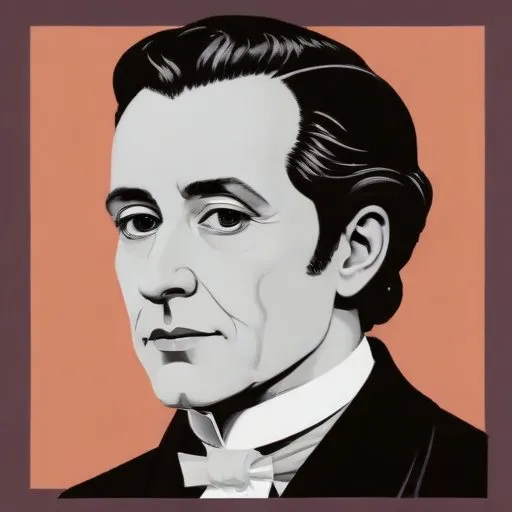
American composer and academic who taught at Harvard and Columbia, known for his orchestral and chamber music works, particularly his symphonies and string quartets.
Edward Ballantine, an American composer and professor of music, is renowned for his innovative and humorous approach to music composition, particularly his two sets of piano variations on Mary Had a Little Lamb, which showcase his mastery of diverse musical styles. His unconventional compositions have made him a standout figure in the world of classical music.
Born on August 6, 1886, in Oberlin, Ohio, Ballantine came from a family of esteemed individuals. His father, William Gay Ballantine, was the fourth president of Oberlin College, and his mother, Emma Frances Atwood, was a homemaker. He was the brother of Arthur Atwood, a prominent lawyer, and Henry Winthrop, a law professor at Boalt Hall School of Law.
Ballantine's educational background was marked by excellence. He studied at Harvard University, where he earned a BA in 1907 with highest final honors in music. His orchestral composition was played by the Boston Symphony Orchestra at Boston, Massachusetts, on June 14, 1907. He further pursued his studies with Artur Schnabel, Rudolf Ganz, and Philippe Rferthen in Berlin from 1907 to 1909.
Upon returning to the United States, Ballantine joined the Harvard music faculty in 1912, where he remained until his retirement in 1947. During his tenure, he composed numerous works, including his signature pieces, the two sets of piano variations on Mary Had a Little Lamb. These variations, composed in 1924 and 1943, are a testament to his creative genius, as each variation is written in the style of a different composer, showcasing his mastery of various musical styles.
Ballantine's work extended beyond composition to education. He was a dedicated professor, and his teaching career spanned over three decades. He was known for his ability to inspire and nurture young talent, leaving a lasting impact on the music world.
In 1923, Ballantine married Florence Foster Besse, a Phi Beta Kappa graduate of Wellesley College and the daughter of Henrietta Louisa Segee and Lyman W. Besse. The couple had a strong bond, and their marriage lasted until Ballantine's passing on July 2, 1971.
Edward Ballantine's legacy is a testament to his innovative spirit and dedication to music education. His compositions continue to inspire and delight audiences, and his teaching legacy has had a lasting impact on the music world. He remains one of the most beloved and respected figures in American music.
Edward Ballantine's life was a testament to his passion for music and education. His unique approach to composition and his dedication to teaching have left an indelible mark on the world of classical music.
Born in 1896
A renowned composer, conductor, and educator who made significant contributions to American classical music, particularly through his Romantic-style symphonies and leadership of the Eastman School of Music.
Born in 1894
A renowned composer, theorist, and academic who made significant contributions to the development of American classical music, particularly in the realm of harmony and counterpoint.
84 Years Old
A defenseman who played in the NHL and coached several teams, known for his rugged playing style and later becoming a successful coach in the league.
Born in 1910
A renowned composer and educator, he was the first president of the Juilliard School and won the Pulitzer Prize for Music in 1943. He's known for his contributions to American classical music.
Born in 1895
A renowned composer, violist, and conductor who blended traditional and modern styles, creating complex yet accessible music that resonated with audiences. His works spanned from operas to chamber music.
Born in 1892
A French composer and educator who blended jazz and classical music to create a unique sound, and is best known for his ballet scores and chamber music compositions.
Born in 1900
Austrian-American composer and educator who blended jazz and classical music, creating innovative operas and symphonies. Known for his eclectic style and influential teaching methods.
