


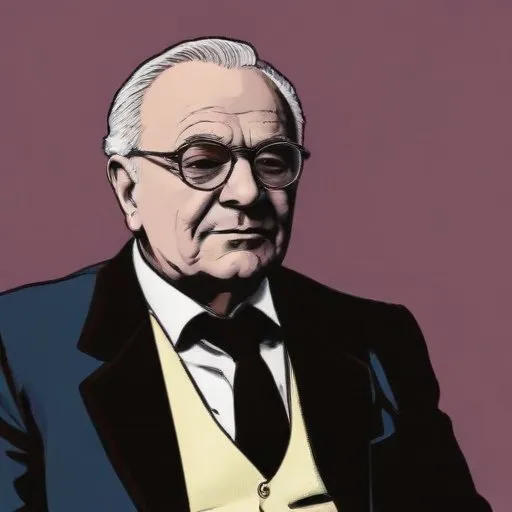
Austrian-American composer and educator who blended jazz and classical music, creating innovative operas and symphonies. Known for his eclectic style and influential teaching methods.
Ernst Krenek is renowned for his groundbreaking contributions to modern classical music, exploring atonality and other avant-garde styles that redefined the musical landscape of the 20th century. His innovative compositions, writings, and teachings have left an indelible mark on the world of music, cementing his legacy as one of the most influential composers of his time.
Born on August 23, 1900, in Vienna, Austria-Hungary, Krenek was the son of a Czech soldier in the Austro-Hungarian army. His early life was marked by a passion for music, and he went on to study in Vienna and Berlin with the legendary composer Franz Schreker. This training laid the foundations for his future success, and he soon found himself working in various German opera houses as a conductor.
During World War I, Krenek was drafted into the Austrian army, but his station in Vienna allowed him to continue his musical pursuits. This period of intense creativity saw him complete his Symphony No. 2, which he dedicated to his future wife, Anna Mahler, daughter of Gustav Mahler.
Krenek's oeuvre is characterized by its eclecticism and innovative spirit. He wrote music in a variety of genres, including operas, symphonies, and chamber music. One of his most famous works is the jazz opera Jonny spielt auf, which premiered in 1926 and became a massive success across Europe.
In addition to his compositions, Krenek was a prolific writer on music. His books, such as Music Here and Now (1939) and Horizons Circled: Reflections on my Music (1974), offer valuable insights into his creative process and the musical landscape of his time.
Krenek's creative trajectory was shaped by his collaborations with some of the most influential figures of his time. His marriage to Anna Mahler, for instance, had a profound impact on his work, and he dedicated his Symphony No. 2 to her.
Another significant influence was the Australian violinist Alma Moodie, who premiered his Violin Concerto No. 1 in 1925. Krenek's dedication of the concerto to Moodie was a token of his gratitude for her support during a time of financial uncertainty in Germany.
Ernst Krenek's contributions to modern classical music are immeasurable. His pioneering work in atonality and other experimental styles paved the way for future generations of composers. His compositions, writings, and teachings have inspired countless musicians, and his legacy continues to shape the music world today.
Through his work, Krenek has left an indelible mark on the cultural landscape of the 20th century. His music, a testament to his innovative spirit and creative genius, continues to captivate audiences around the world.
Ernst Krenek's remarkable life and career serve as a testament to the power of innovation and creativity. As a composer, writer, and teacher, he has left an enduring legacy that continues to inspire and shape the world of music.
Born in 1874
A pioneer of atonality and 12-tone serialism, revolutionizing classical music with innovative compositions that pushed boundaries of harmony and melody.
92 Years Old
A controversial radio host and lawyer who sparked heated debates with his outspoken views, ultimately becoming a martyr for free speech after a tragic assassination.
Born in 1883
A pioneering figure in atonality and twelve-tone technique, revolutionizing classical music with concise, expressive works that explored new sounds and structures.
Born in 1860
A visionary composer and conductor who expanded symphonic music's emotional depth and complexity, creating works of profound beauty and intensity.
Born in 1864
A renowned composer and conductor of the late Romantic era, known for his tone poems and operas that showcased his mastery of orchestration and expressive storytelling.
Born in 1860
A Slovene-Austrian composer who expanded the art of songwriting by setting poetic lyrics to music, creating a new level of emotional intensity and depth. His innovative compositions continue to influence classical music today.
Born in 1897
A child prodigy turned Hollywood legend, he composed iconic film scores, including the swashbuckling adventures of Errol Flynn, and is revered for his lush, romantic music.
Born in 1892
A French composer and educator who blended jazz and classical music to create a unique sound, and is best known for his ballet scores and chamber music compositions.
