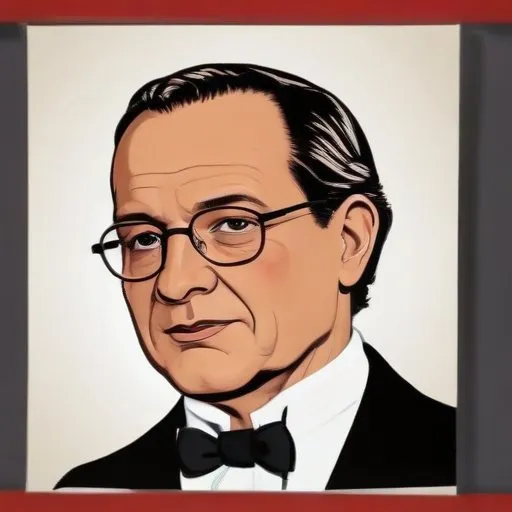
Franz Schreker

Franz Schreker

Franz Schreker was born on March 23rd, 1878

Full Name: Franz Schreker
Nationality: Austrian
Occupation: Composer and conductor
Known For: Opera and orchestral music
Field: Music
Birthplace: Austria
Era: Early 20th century
Notable Work: Operas and symphonies

Austrian composer and conductor of early 20th-century operas and symphonies, known for his bold, expressive, and innovative style that blended late Romanticism with early Modernism. His works are still performed today, offering a glimpse into a bygone era.

Written by: Jack Thompson Jack Thompson

Franz Schreker: The Innovator of 20th-Century Opera

A Composer of Aesthetic Plurality

Franz Schreker was a renowned Austrian composer, conductor, librettist, teacher, and administrator, known for his unique style that blended multiple aesthetic movements, including Romanticism, Naturalism, Symbolism, Impressionism, Expressionism, and Neue Sachlichkeit. His compositions, which often featured timbral experimentation, strategies of extended tonality, and a conception of total music theatre, revolutionized the narrative of 20th-century music.

Early Life and Education

Born on March 23, 1878, in Monaco, Schreker was the eldest son of Ignaz Franz Schrekker, a Bohemian Jewish court photographer, and Eleonore von Clomann, a member of the Catholic aristocracy of Styria. After his father's early death, the family moved from Linz to Vienna in 1888, where Schreker entered the Vienna Conservatory in 1892 with the help of a scholarship. He began his studies with violin lessons from Sigismund Bachrich and Arnold Ros, later switching to the composition class of Robert Fuchs, and graduating as a composer in 1900.

Rise to Success

Schreker's first success came with his Intermezzo for strings, Op. 8, which won an important prize sponsored by the Neue musikalische Presse in 1901. Although his first opera, Flammen, completed in 1902, failed to receive a staged production, Schreker's talent and perseverance paved the way for his future accomplishments. In 1895, he founded the Verein der Musikfreunde Döbling, a music society that provided a platform for him to conduct and promote new music.

Conducting and Collaborations

In 1907, Schreker formed the Vienna Philharmonic Chorus, which he conducted until 1920. During his tenure, the chorus premiered several works by prominent composers, including Zemlinsky's Psalm XXIII and Schoenberg's Friede auf Erden and Gurre-Lieder. Schreker's collaborations with Schoenberg, Zemlinsky, and other composers of the time not only showcased their individual talents but also contributed to the development of the Jugendstil movement, which incorporated non-Western styles inspired by Ancient Egypt and the Far East.

Major Works and Legacy

Some of Schreker's most notable works include: Schreker's innovative compositions and his role as a conductor, teacher, and administrator had a profound impact on the development of 20th-century music, influencing generations of composers, musicians, and musicologists.

Influence and Impact

Schreker's legacy extends beyond his compositions and conducting career. He played a crucial role in shaping the musical landscape of Vienna and Austria during the early 20th century, fostering a environment that encouraged innovation, experimentation, and artistic expression. His influence can be seen in the works of many prominent composers, including Arnold Schoenberg, Alban Berg, and Anton Webern.

Personal Life and Later Years

Schreker's personal life was marked by turbulence and tragedy. He faced financial difficulties, struggled with health problems, and experienced the loss of his position at the Vienna Academy of Music in 1932, following the rise of the Nazi regime. Despite these challenges, Schreker continued to compose, leaving behind a rich legacy of innovative and influential works. He passed away on March 21, 1934, at the age of 55.
Timeline
1878
Born in Monaco
Franz Schreker was born in Monaco to a Jewish family of Austrian descent.
1892
Began Composition Studies
Schreker began his composition studies in Vienna, where he was influenced by the works of Richard Strauss and Gustav Mahler.
1908
Premiered First Opera
Schrekers first opera, Flammen, premiered in Vienna to critical acclaim.
1912
Founded the Philharmonic Chorus
Schreker founded the Philharmonic Chorus in Vienna, a leading choral ensemble in Austria.
1934
Died in Berlin
Schreker died in Berlin, leaving behind a legacy as a leading composer of early 20th-century opera and orchestral music.
Franz Schreker

Franz Schreker Quiz

What style of music did Franz Schreker's compositions often blend?

Score: 0/5
FAQ
What is Franz Schreker known for in Austrian music?
Franz Schreker was a prominent Austrian composer and conductor, best known for his opera compositions and his contributions to the development of modern classical music.
What are Franz Schrekers most famous musical works?
Franz Schrekers most famous musical works include his operas, such as Der ferne Klang and Die Gezeichneten, which showcased his unique blend of Romanticism and Expressionism.
What is Franz Schrekers role in Austrian classical music?
Franz Schreker played a crucial role in shaping Austrian classical music, particularly in the development of opera and symphonic music. He was a key figure in the Second Viennese School, a group of composers who revolutionized classical music.
What is Franz Schrekers legacy in classical music?
Franz Schrekers legacy in classical music is significant. He helped shape the course of modern classical music, and his works continue to inspire composers and musicians today.
What is Franz Schrekers early life and education?
Franz Schreker was born on March 23, 1878, in Monaco. He studied music at the Vienna Conservatory and later worked as a conductor and composer in Vienna and Berlin.

Related People:

Arnold Schoenberg

Born in 1874

A pioneer of atonality and 12-tone serialism, revolutionizing classical music with innovative compositions that pushed boundaries of harmony and melody.

Alan Berg

92 Years Old

A controversial radio host and lawyer who sparked heated debates with his outspoken views, ultimately becoming a martyr for free speech after a tragic assassination.

Anton Webern

Born in 1883

A pioneering figure in atonality and twelve-tone technique, revolutionizing classical music with concise, expressive works that explored new sounds and structures.

Gustav Mahler

Born in 1860

A visionary composer and conductor who expanded symphonic music's emotional depth and complexity, creating works of profound beauty and intensity.

Richard Strauss

Born in 1864

A renowned composer and conductor of the late Romantic era, known for his tone poems and operas that showcased his mastery of orchestration and expressive storytelling.

Hugo von Hofmannsthal

Born in 1874

Austrian literary giant behind iconic works like "Der Rosenkavalier" and "Electra", known for poetic and philosophical explorations of human identity and morality.

Alexander von Zemlinsky

Born in 1871

Austrian composer, conductor, and teacher who blended late Romanticism with early 20th-century modernism, influencing notable students like Arnold Schoenberg. His works include symphonies, operas, and chamber music.

Erich Wolfgang Korngold

Born in 1897

A child prodigy turned Hollywood legend, he composed iconic film scores, including the swashbuckling adventures of Errol Flynn, and is revered for his lush, romantic music.