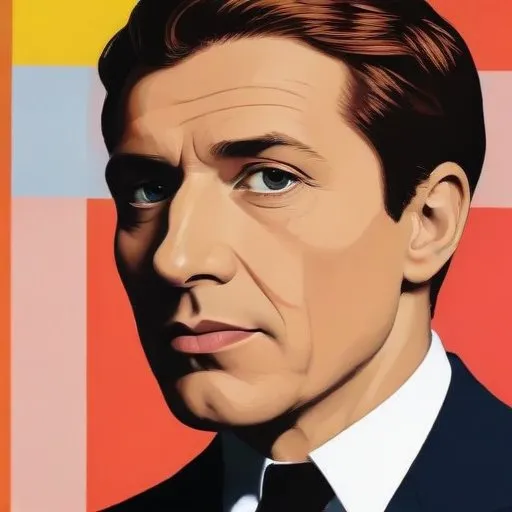
Alexander von Zemlinsky: The Forgotten Genius of Austrian Music
A Musical Legacy
Alexander von Zemlinsky was a renowned Austrian composer, conductor, and teacher, best known for his lyrical and expressive compositions that blended late Romanticism with early Modernism. As a prominent figure in Vienna's vibrant musical scene, Zemlinsky's works spanned a wide range of genres, from symphonies and operas to chamber music and choral pieces.
Early Life and Influences
Born on October 14, 1871, in Vienna, Austria, Zemlinsky came from a diverse family background. His grandfather, Anton Semlinski, emigrated from Hungary to Austria, while his mother, Clara Semo, was born in Sarajevo to a Sephardic Jewish father and a Bosniak mother. This rich cultural heritage would later influence Zemlinsky's music.
Early Musical Training
Zemlinsky began studying piano at a young age and played the organ in his synagogue on holidays. In 1884, he was admitted to the Vienna Conservatory, where he studied piano with Anton Door, winning the school's piano prize in 1890. He continued his studies until 1892, learning theory with
Robert Fuchs and composition with Johann Nepomuk Fuchs and Anton Bruckner.
Rise to Prominence
Zemlinsky's big break came in 1892 when
Johannes Brahms, a prominent composer and mentor, attended a performance of his Symphony in D minor at the Conservatoire. Impressed by Zemlinsky's talent, Brahms recommended his Clarinet Trio (1896) to the N. Simrock company for publication.
Friendship with Arnold Schoenberg
Zemlinsky also formed a close friendship with
Arnold Schoenberg, a fellow composer and innovator. The two met when Schoenberg joined the amateur orchestra Polyhymnia, founded by Zemlinsky in 1895. Their mutual admiration and respect for each other's work would have a lasting impact on the development of modern classical music.
Notable Works and Contributions
Zemlinsky's compositions showcase his unique blend of Romanticism and Modernism. Some of his notable works include:
- Sinfonietta (1934), a symphonic work that combines lyricism with modernist harmonic innovations
- The Dwarf (1917), an opera based on a fairy tale by Friedrich Hebbel
- String Quartet No. 3 (1927), a piece that explores the intersection of tonality and atonality
Legacy and Impact
Despite his significant contributions to Austrian music, Zemlinsky's work was largely forgotten after his death in 1942. However, in recent years, there has been a resurgence of interest in his music, with many of his compositions being rediscovered and performed by orchestras and ensembles around the world.
Influence on Modern Music
Zemlinsky's music has had a profound influence on modern classical music. His experimentation with harmony and tonality paved the way for future generations of composers, including Arnold Schoenberg and
Alban Berg.
Personal Life and Controversies
Zemlinsky's personal life was marked by controversy. He was a Freemason and converted to Christianity in 1899, which led to a rift with his Jewish family. Additionally, his relationship with
Alma Mahler, a prominent composer and socialite, was the subject of much speculation and gossip.
Conclusion
Alexander von Zemlinsky's life and work are a testament to the power of creativity and innovation. As a composer, conductor, and teacher, he made significant contributions to Austrian music, blazing a trail that would be followed by future generations of composers. Despite the controversies and challenges he faced, Zemlinsky's legacy continues to inspire and influence musicians around the world.
FAQ
What was Alexander von Zemlinskys contribution to the development of classical music?
Alexander von Zemlinsky was an Austrian composer, conductor, and teacher who made significant contributions to the development of classical music. He was a key figure in the Second Viennese School and helped shape the course of modern classical music.
What were Alexander von Zemlinskys most famous works?
Alexander von Zemlinskys most famous works include his tone poems, such as The Mermaid and The Florentine Tragedy, as well as his operas, including A Florentine Tragedy and The Dwarf.
What was Alexander von Zemlinskys relationship with Arnold Schoenberg?
Alexander von Zemlinsky was a close friend and mentor to Arnold Schoenberg, and played a significant role in the development of Schoenbergs career. He was also a key figure in the formation of the Second Viennese School, a group of composers that included Schoenberg, Alban Berg, and Anton Webern.
What was Alexander von Zemlinskys teaching style?
Alexander von Zemlinsky was a dedicated teacher who inspired a generation of composers. He was known for his emphasis on craftsmanship and his attention to detail, and his students included several prominent composers, including Arnold Schoenberg and Erich Wolfgang Korngold.
What was Alexander von Zemlinskys legacy in classical music?
Alexander von Zemlinskys legacy in classical music is one of innovation, experimentation, and dedication. He is remembered as a pioneering composer, conductor, and teacher who helped shape the course of modern classical music.