


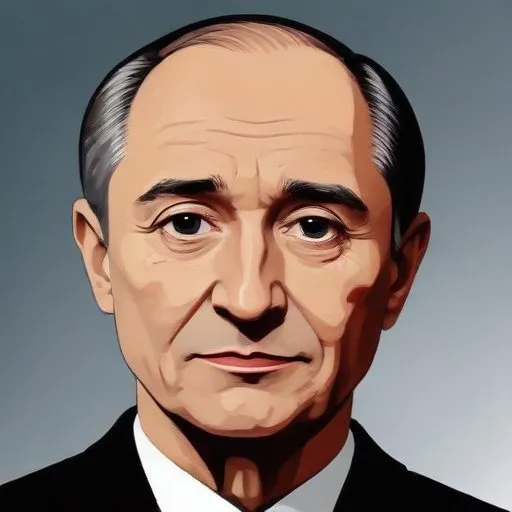
A Russian Marxist theorist and politician who played a key role in the Russian Revolution and later became a prominent figure in the Soviet Union, known for his work on Marxist theory and his efforts to preserve Lenin's legacy.
David Riazanov, born David Borisovich Goldendakh, was a Russian revolutionary, historian, and archivist who founded the Marx-Engels Institute and edited the first large-scale effort to publish the collected works of Karl Marx and Friedrich Engels. He was a prominent victim of the Great Terror of the late 1930s, and his life's work was dedicated to preserving and promoting the ideas of socialism.
Riazanov was born on March 10, 1870, in Odesa, Ukraine, then part of the Russian Empire, to a Jewish father and a Russian mother. At the age of 15, he joined the ranks of the Narodnik revolutionaries, attempting to overthrow the autocracy of the Russian Tsar.
Riazanov attended secondary school in Odesa but was expelled in 1886 due to his poor academic performance. He traveled abroad in 1889 and 1891, where he met various Russian Marxists who were building their revolutionary organizations. Following his second trip, Riazanov was arrested in October 1891 at the Austrian-Russian border by the Okhrana, the tsarist secret police, who had long suspected his revolutionary activity.
Riazanov spent 15 months in prison awaiting trial, at which he was convicted and sentenced to an additional four years of katorga exile and hard labor. Following the completion of his term, Riazanov was subject to three years of administrative exile under police supervision in the city of Kishinev, Bessarabia (now part of Moldova).
In 1920, Riazanov founded the Marx-Engels Institute, with the goal of collecting, preserving, and publishing the works of Marx and Engels. He spent the next decade editing and publishing the first large-scale effort to collect the complete works of the two founders of modern socialism.
Riazanov was a dedicated Marxist and believed in the importance of preserving and promoting the ideas of socialism. He saw himself as a guardian of Marxist theory and believed that the dissemination of Marx's and Engels' works was crucial for the development of a socialist society.
In 1931, Riazanov was accused of being a " Menshevik and a counter-revolutionary" and was arrested by the Soviet authorities. He was eventually executed on January 21, 1938, during the Great Terror of the late 1930s.
Riazanov's life and work were marked by his dedication to the ideals of socialism and his commitment to preserving the intellectual heritage of Marx and Engels. His legacy serves as a testament to the power of ideas and the importance of preserving historical records.
Riazanov's work was contemporaneous with other prominent Marxist intellectuals, such as Leon Trotsky and Vladimir Lenin. While their approaches to socialism differed, Riazanov's focus on preserving and promoting Marxist theory was unique and significant.
Riazanov's work on the Marx-Engels Institute and his dedication to preserving Marxist theory have had a lasting impact on modern society. His efforts have inspired generations of scholars, researchers, and activists to study and promote socialist ideas.
Born in 1870
Founder of the world's first socialist state, leading the Bolshevik Revolution and establishing the Soviet Union, known for his radical Marxist ideology and authoritarian rule.
Born in 1879
Founded the Red Army and played a crucial role in the Russian Revolution, shaping the course of modern communism. A key figure in 20th-century politics and ideology.
Born in 1878
The Soviet Union's ruthless leader who ruled with an iron fist, implementing policies that led to widespread famine and purges, while also playing a crucial role in defeating Nazi Germany in World War II.
Born in 1856
A Russian philosopher and theorist who developed Marxist theory and was a key figure in the Russian Revolution, known for his writings on dialectical materialism.
Born in 1888
A prominent figure in the Russian Revolution, he was a key architect of the Soviet economy and a vocal critic of Stalin's regime, ultimately falling victim to his purges.
Born in 1818
A 19th-century philosopher who developed the theory of communism, arguing that capitalism would eventually be replaced by a socialist society. He's known for his critique of capitalism and the concept of class struggle.
Born in 1820
A 19th-century philosopher and economist who co-authored "The Communist Manifesto" with Karl Marx, shaping modern socialist and communist thought. He also wrote extensively on economics, history, and politics.
Born in 1875
A Russian journalist and politician who served as the Soviet Union's first Commissar of Enlightenment, responsible for education and culture, and was a key figure in the development of Soviet arts and literature.
