


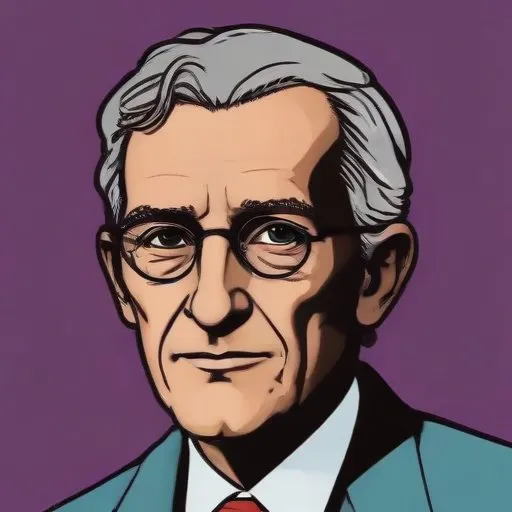
Australian philosopher and academic who critiqued modern philosophy, particularly Darwinism and socialism, and advocated for a return to classical philosophy and common sense.
David Charles Stove, an Australian philosopher born on September 15, 1927, was known for his provocative critiques of postmodernism, feminism, and multiculturalism, often challenging the prevailing academic orthodoxy of his time. His work in philosophy of science, particularly his criticisms of David Hume's inductive skepticism, solidified his reputation as a fearless and unapologetic thinker.
Stove's most significant contribution to philosophy was his work on the problem of induction, which he tackled in his 1986 book, The Rationality of Induction. In this work, he offered a positive response to the problem of induction, offering a solution that would shape the field of philosophy of science for years to come.
In his book Popper and After: Four Modern Irrationalists, Stove launched a scathing critique of prominent philosophers of science, including Karl Popper, Thomas Kuhn, Imre Lakatos, and Paul Feyerabend. He argued that their commitment to the thesis that all logic is deductive led to skepticism, and his criticisms sparked heated debates in academic circles.
In 1985, Stove held a competition to find the worst argument in the world, and he awarded the prize to himself for an argument he dubbed "The Gem." This argument posited that "we can know things only under our forms of understanding, as they are related to us, etc., therefore we cannot know things as they are in themselves." Stove believed that this argument, though flawed, was widespread in various forms and highlighted the need for intellectual honesty and rigor in philosophical inquiry.
Stove was an outspoken critic of sociobiology, which he viewed as a new religion that placed genes in the role of gods. He also resisted what he saw as attempts by Marxists to infiltrate the Faculty of Arts at the University of Sydney, and in 1984-1985, he protested publicly against the faculty's perceived favoritism towards women in appointments.
In his essay "Why You Should Be a Conservative," Stove argued that actions can have unforeseen and unwelcome consequences, and he advocated for a more cautious and conservative approach to social and political change.
David Stove's work continues to influence philosophers and scholars of science, and his critiques of postmodernism, feminism, and multiculturalism remain relevant in contemporary academic debates. His emphasis on intellectual honesty, rigor, and critical thinking has inspired generations of students and scholars.
Through his writing and teaching, Stove left an indelible mark on the field of philosophy, challenging his colleagues and students to think more critically and question prevailing orthodoxies. His legacy serves as a testament to the power of fearless inquiry and the importance of intellectual courage in the pursuit of knowledge.
David Stove's life and work serve as a reminder that philosophy is not just about abstract ideas, but about the courage to challenge and question, to seek truth and understanding in a complex and often uncertain world.
Born in 1914
Australian philosopher and academic who wrote extensively on ethics, politics, and the history of philosophy, particularly on the concept of humanism. He's known for his critiques of modern society and its values.
60 Years Old
A prominent philosopher of mind, known for formulating the concept of "philosophical zombies" and advocating for the idea that consciousness cannot be reduced to physical processes.
84 Years Old
A philosopher and cognitive scientist who explores the nature of consciousness, free will, and artificial intelligence, and is known for his critiques of religious beliefs and arguments for atheism.
