


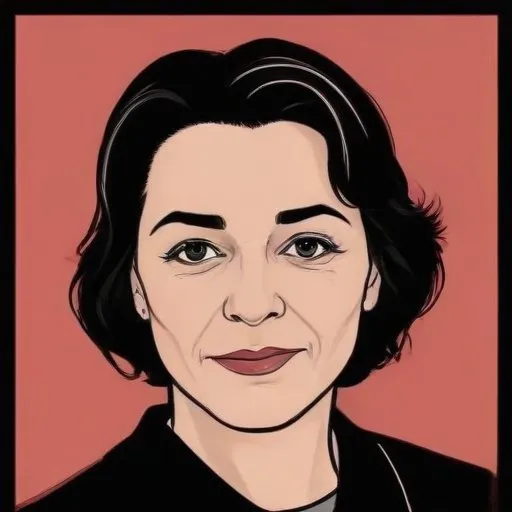
A renowned historian and academic specializing in British and South African history, particularly the Scramble for Africa and the British Empire.
Deborah Lavin is a renowned South African-born academic and historian, celebrated for her groundbreaking research on the British Empire and its impact on modern society. Throughout her illustrious career, Lavin has made significant contributions to the field of historical studies, leaving an indelible mark on the world of academia.
Born on September 22, 1939, in South Africa, Lavin's academic journey began at Rhodes University, where she laid the foundation for her future success. She later attended Lady Margaret Hall, Oxford, graduating in 1961 with a degree that would propel her into a life of research and discovery.
Lavin's impressive career spans over four decades, with esteemed positions at the University of Witwatersrand, Queen's University Belfast, and St Antony's College, Oxford, among others. In 1980, she made a significant move to Durham, where she became the co-director of the Research Institute for the Study of Change and a lecturer in the Department of Modern History. Her leadership skills were soon recognized, and she was appointed Principal of Trevelyan College, a position she held from 1979 to 1995.
Lavin's bibliography is a testament to her dedication to historical research. Her notable works include South African Memories: Scraps of History (1979), co-authored with Donker, and From Empire to International Commonwealth: A Biography of Lionel Curtis (1995), a seminal work that sheds light on the life and times of the influential British imperialist, Lionel Curtis.
Her contributions to the field of historical studies have been far-reaching, with a particular focus on the British Empire and its impact on modern society. Lavin's work has influenced generations of historians and scholars, cementing her position as a leading authority in her field.
Deborah Lavin's impact on modern society extends beyond the realm of academia. Her work has contributed to a deeper understanding of the complexities of the British Empire and its enduring legacy. Her influence can be seen in the many historians and scholars who have been inspired by her research and teachings.
Today, Lavin's legacy continues to inspire future generations of historians and scholars, ensuring that her groundbreaking research and contributions to the field of historical studies remain an integral part of the academic landscape.
Lavin's achievements have been recognized with numerous awards and honors, including her election as a Fellow of the Royal Society of Arts (FRSA). Her contributions to the world of academia have been acknowledged and celebrated, solidifying her position as a leading figure in the field of historical studies.
Deborah Lavin's remarkable career serves as a testament to her dedication to historical research and her unwavering commitment to sharing her knowledge with the world. Her influence on modern society, her contributions to the field of historical studies, and her remarkable achievements have created a lasting legacy that will continue to inspire generations to come.
Born in 1918
A South African lawyer and politician who fought against apartheid, becoming the country's first black president and a symbol of racial reconciliation, earning a Nobel Peace Prize. He's a beacon of hope and freedom.
Born in 1871
Prolific writer of historical novels and adventure stories, also a talented landscape painter.
Born in 1925
The first female Prime Minister of the United Kingdom, serving from 1979 to 1990, known for her conservative policies and leadership during the Falklands War.
Born in 1853
A British-born entrepreneur and politician who played a significant role in the colonization of South Africa, known for his diamond mining ventures and expansionist policies. He founded the De Beers company and established Rhodes University.
Born in 1870
A skilled lawyer and politician who played a key role in shaping South Africa's government and served as a prominent international statesman. He's also known for his influential ideas on holism and evolution.
Born in 1825
The 5th President of the South African Republic, a Boer war hero who fought against British colonization, and later became a symbol of Afrikaner nationalism. He's most known for his resistance against British rule and his role in shaping South Africa's history.
Born in 1915
The 4th State President of South Africa, a key figure in the apartheid regime, known for implementing and enforcing segregationist policies. He's infamous for his role in suppressing anti-apartheid movements.
