


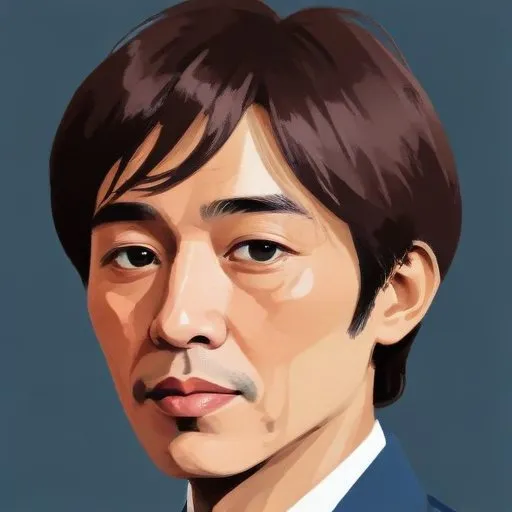
A pioneering journalist, author, and poet who played a significant role in introducing Western literature to Japan and shaping the country's modern literary scene.
Doppo Kunikida, a renowned Japanese author, is celebrated as one of the inventors of Japanese naturalism, a literary movement that revolutionized the country's writing scene during the Meiji period. His works, characterized by a focus on nature and human emotions, continue to inspire readers and writers alike.
Born as Tetsuo Kunikida on August 30, 1871, in Chshi, Chiba, Doppo was raised by his mother and her samurai-class husband. The family's move to Tokyo in 1874 and later to Yamaguchi prefecture had a profound impact on Doppo's life, instilling in him a deep love for nature that would later manifest in his writing.
Doppo's educational journey was marked by determination and perseverance. He quit school in 1888 to support his family but later resumed his studies in Tokyo in 1889. At the English department of Tky Senmon Gakk (now Waseda University), Doppo developed an interest in Western democracy, which led to a defiant attitude towards the school's administration, resulting in his expulsion in 1891.
In 1892, Doppo founded the literary magazine Seinen bungaku (Literature for Youth), a platform that allowed him to showcase his writing and promote his ideals. His private diary, Azamukazaru no ki (An Honest Record), written during this period, was published posthumously and provides valuable insights into his thoughts and creative process.
Doppo's writing style, heavily influenced by his Christian faith and the poetry of William Wordsworth, is characterized by its focus on nature and human emotions. His reports from the front during the First Sino-Japanese War, collected in Aitei Tsushin (Communiques to a Dear Brother), earned him widespread recognition and acclaim.
In 1895, Doppo settled in Tokyo with his parents and began editing the magazine Kokumin no Tomo (The Nation's Friend). It was during this period that he met his future wife, Nobuko. Doppo's life was marked by a deep commitment to his craft, and his contributions to Japanese literature continue to inspire generations of writers.
Doppo Kunikida's work has had a profound impact on Japanese literature, paving the way for future generations of writers. His focus on nature and human emotions has influenced a wide range of literary movements, from romanticism to modernism. Today, Doppo is remembered as a pioneer of Japanese naturalism, a literary movement that continues to shape the country's writing scene.
Doppo Kunikida's life and works serve as a testament to the power of literature to inspire and transform society. As a pioneer of Japanese naturalism, Doppo's contributions to Japanese literature continue to shape the country's writing scene, inspiring generations of writers and readers alike.
Born in 1892
A leading figure in Japanese literature, known for his dark, psychologically complex short stories that explored the human condition, often incorporating elements of mystery and horror.
Born in 1886
A celebrated author of novels and essays that explore the intersection of Japanese culture and Western modernity, known for his lyrical prose and nuanced explorations of identity.
Born in 1867
A leading figure in Japanese literature, known for revitalizing haiku poetry and creating a new style that focused on everyday life and nature. His work had a significant impact on modern Japanese literature.
Born in 1867
A pioneering Japanese novelist and poet who explored the human condition, blending traditional and modernist styles to create influential works of literature.
Born in 1899
A Japanese novelist and short story writer who explored the human condition through lyrical and poignant tales, often focusing on the intricacies of Japanese culture and the fragility of life.
Born in 1872
A pioneering female writer of Meiji-era Japan, known for her poignant and insightful short stories that explored the lives of women and the poor, offering a rare glimpse into the country's rapidly modernizing society.
