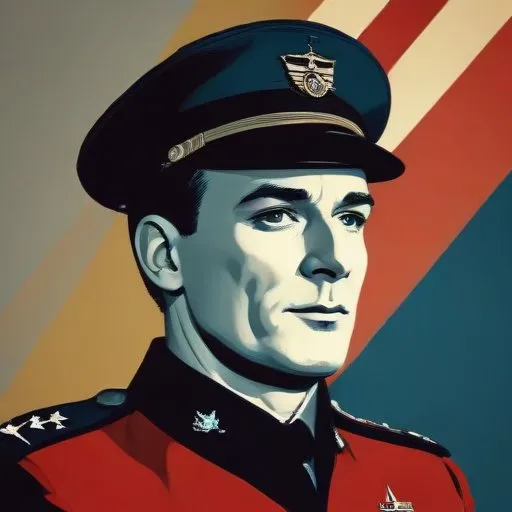
Douglas Campbell: The American Aviator and World War I Flying Ace
Early Life and Education
Douglas Campbell, born on June 7, 1896, in San Francisco, California, was a renowned American aviator and World War I flying ace. He was the son of William W. Campbell, a famed astronomer and future president of the University of California. Campbell's early life was marked by his athletic prowess, which he showcased as a student at Harvard University.
Service Career and World War I
When the United States entered World War I in April 1917, Campbell, along with his close friend
Quentin Roosevelt, son of former President
Theodore Roosevelt, immediately dropped out of college and enlisted in the United States Army. He received an A.B. from Harvard Class of 1917. Assigned to the Air Service, Campbell learned to fly in a Curtiss Jenny aircraft and was later trained in a Nieuport fighter. He was assigned to the famous Pursuit 94th Aero Squadron, also known as the "Hat in the ring gang," at this stage flying Nieuport 28 fighters.
Firsts in Service
Campbell's service career was marked by several firsts. He flew the squadron's first patrol along with
Eddie Rickenbacker and
Raoul Lufbery, two other famous aviators. Due to supply problems, the trio flew their first mission in unarmed planes. His first kill came while flying in an aircraft armed with only one rather than the usual two machine guns.
Aerial Victories and Distinguished Service Cross
Campbell shared credit with Lt. Alan F. Winslow for the squadron's first confirmed victories, which were the first victories by fighter aircraft of an American-trained flying unit in the war. He became the second Air Service ace and the first by an American-trained aviator when he downed his fifth enemy aircraft over Lironville, France on May 31, 1918. Campbell was awarded the Distinguished Service Cross for bravery in aerial combat over Flirey, France on May 19, 1918.
Legacy and Impact
Douglas Campbell's service and aerial victories had a significant impact on the war effort and the development of American aviation. He was the first American aviator flying in an American-trained air unit to achieve the status of ace, paving the way for future generations of American fighter pilots.
Historical Context and Comparative Analysis
Campbell's achievements must be viewed in the context of the early days of aerial warfare. His service and victories came during a time when aviation was still in its infancy, and the rules of engagement were being written. Comparative analysis with contemporaries such as Eddie Rickenbacker and Raoul Lufbery highlights Campbell's exceptional skills and bravery in the face of adversity.
Personal Life and Later Years
After the war, Campbell returned to the United States and lived a quiet life. He passed away on October 16, 1990, at the age of 94, leaving behind a legacy as one of America's earliest and most decorated flying aces.
- Birthdate: June 7, 1896
- Death date: October 16, 1990
- Awards: Distinguished Service Cross
FAQ
What is Douglas Campbells military background?
Douglas Campbell was an American lieutenant and pilot who served in the United States Army Air Forces during World War I. He was a decorated war hero, earning the Medal of Honor for his bravery in combat.
What were Douglas Campbells military achievements?
Douglas Campbell was a highly accomplished pilot, credited with shooting down five enemy aircraft during World War I. He was also a pioneer in aerial combat, developing innovative tactics that were adopted by the US military.
What is Douglas Campbells legacy in military aviation?
Douglas Campbell is remembered as a pioneer in military aviation, whose bravery and innovative tactics paved the way for future generations of fighter pilots. His legacy continues to inspire military leaders and pilots today.
What awards did Douglas Campbell receive?
Douglas Campbell received the Medal of Honor, the Distinguished Service Cross, and several other awards for his bravery and contributions to military aviation during World War I.
Sub-question: What is the significance of the Medal of Honor?
The Medal of Honor is the highest military honor awarded by the United States government, recognizing exceptional valor and bravery in combat. Douglas Campbells receipt of the Medal of Honor is a testament to his extraordinary heroism during World War I.