


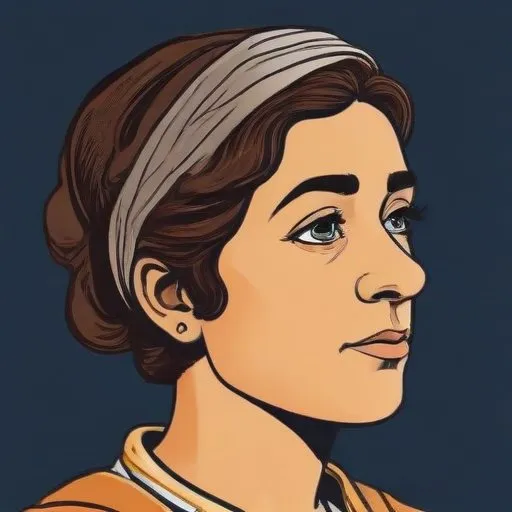
A Greek-French astronomer and academic who made significant contributions to the field of astronomy, particularly in the study of Mars and the discovery of its polar ice caps.
Eugene Michel Antoniadi was a Greek-French astronomer renowned for his groundbreaking work on Mars, introducing a standardized nomenclature for Martian albedo features, and developing the Antoniadi scale of seeing, a crucial tool for amateur astronomers. His tireless efforts to observe and map the planet's surface have left an indelible mark on the field of astronomy.
Born on March 1, 1870, in Constantinople (modern-day Istanbul), Antoniadi spent most of his adult life in France, where he was invited by Camille Flammarion, a fellow astronomer. In 1890, he became one of the founding members of the British Astronomical Association (BAA) and joined the BAA's Mars Section in 1892, eventually becoming its Director in 1896.
In 1893, Antoniadi began working as an assistant astronomer at Flammarion's private observatory in Juvisy-sur-Orge, France. During his nine-year tenure, he made significant contributions to the field, including his observations of Mars, Venus, and Mercury. In 1899, he was elected a Fellow of the Royal Astronomical Society, solidifying his reputation as a prominent astronomer.
In 1902, Antoniadi resigned from Flammarion's observatory and the Société astronomique de France (SAF), only to rejoin SAF in 1909. This marked a pivotal moment in his career, as he gained access to the Grande Lunette (83cm Great Refractor) at the Meudon Observatory, courtesy of Henri Deslandres. Utilizing this powerful telescope, Antoniadi conducted a thorough study of Mars, concluding that the notion of Martian canals was an optical illusion.
Antoniadi was an avid chess player, achieving remarkable success in the 1907 Paris tournament, where he shared first place with Frank Marshall, ahead of the renowned Savielly Tartakower.
Antoniadi passed away on February 10, 1944, in Paris, leaving behind a profound impact on the field of astronomy. His work has inspired generations of astronomers, and his contributions continue to shape our understanding of the celestial world.
Born in 1842
A French astronomer and author who wrote about the wonders of the universe, making astronomy accessible to the general public through his popular science books. He's also known for his work on the possibility of life on other planets.
Born in 1811
Predicted the existence and location of Neptune, a previously unknown planet, through mathematical calculations, revolutionizing astronomy.
Born in 1854
A pioneer in mathematics and physics, he laid the foundations for modern chaos theory, topology, and relativity, making groundbreaking contributions to our understanding of space and time.
Born in 1749
Developed nebular hypothesis of the origin of the solar system and formulated Laplace's equation, a fundamental concept in mathematics and physics. He's considered the founder of celestial mechanics.
Born in 1796
A pioneer in statistics and social physics, he applied mathematical models to understand social phenomena, paving the way for modern sociology and data analysis.
Born in 1784
Developed the Bessel functions, a set of mathematical equations crucial for astronomy, navigation, and engineering, and made the first accurate measurement of a star's distance from Earth.
