


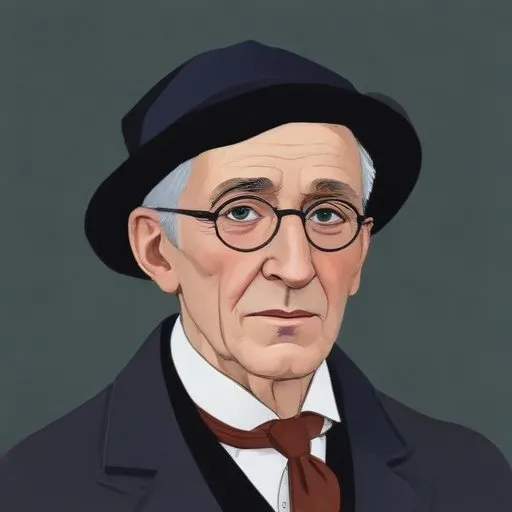
A 19th-century poet and educator who wrote about the struggles of the working class and advocated for social reform, leaving a lasting impact on the literary world.
Ebenezer Elliott, a renowned English poet, earned his reputation as the "Corn Law Rhymer" for his unwavering dedication to repealing the Corn Laws, which were causing widespread poverty and hunger among the working class. Through his poetry, Elliott fearlessly campaigned against the unjust laws, becoming a powerful voice for the labouring classes.
Ebenezer Elliott was born on March 17, 1781, in Masbrough, Yorkshire, to a family of iron traders. His father, known as "Devil Elliott," was an extreme Calvinist and radical, while his mother struggled with poor health. As the sixth of eleven children, Elliott's childhood was marked by solitude and morbidity, exacerbated by his contraction of smallpox at the age of six, which left him disfigured and temporarily blind.
Elliott's education began at a dame school, followed by the Hollis School in Rotherham, where he was taught the basics of writing, but was often regarded as a dunce. He later attended Penistone Grammar School, but his true passion lay in exploring the countryside, observing nature, and collecting plants and flowers.
At the age of 14, Elliott began to read extensively on his own, devouring books on botany and developing a deep appreciation for nature. He started writing poetry, which became a means of expressing his thoughts and emotions. His early works were largely influenced by his surroundings, and he gained recognition for his vivid descriptions of the natural world.
Elliott's most significant contribution to literature was his campaign against the Corn Laws, which prohibited the importation of foreign grain, leading to widespread poverty and hardship among the working class. As a factory owner himself, Elliott's advocacy for the labouring classes was all the more remarkable, earning him a sympathetic reputation that endured long after his poetry ceased to be widely read.
Ebenezer Elliott's poetry not only reflected his strong sense of social justice but also contributed to the eventual repeal of the Corn Laws in 1846. His unwavering commitment to the welfare of the labouring classes has inspired generations of social reformers and poets. Today, Elliott is remembered as a champion of the poor and a pioneering voice in the struggle for social equality.
"The labouring classes are the backbone of the nation; their toil is the source of national prosperity, and their welfare is the test of national greatness."
"I am not a poet, I am a man who has a message to deliver, and if poetry is the best medium, I will use it."
Ebenezer Elliott's poetry and advocacy reflected his strong sense of social justice and his commitment to the welfare of the labouring classes. He believed in the power of literature to inspire social change and saw himself as a voice for the voiceless.
Elliott's most notable works include:
These poems showcased Elliott's unique style, which blended vivid descriptions of nature with powerful social commentary.
Born in 1770
A major Romantic poet, known for his focus on nature, emotion, and the human experience, creating works that evoke a sense of wonder and connection to the natural world.
Born in 1772
A leading figure of the Romantic movement, he crafted vivid, imaginative poetry and explored the human experience through his writing and philosophical ideas. His works continue to inspire and influence literature and art to this day.
Born in 1788
Romantic poet and playwright celebrated for passionate, expressive works that explored themes of love, freedom, and the human condition.
Born in 1792
Romantic-era writer of lyrical poetry and Gothic dramas that explored the human condition, freedom, and the beauty of nature.
Born in 1795
Romantic poet celebrated for sensual language and vivid imagery, capturing the beauty of nature and human experience in odes like "To Autumn" and "Ode to a Nightingale".
Born in 1774
A leading Romantic poet and historian, known for his vivid storytelling and influential works on British history, particularly his three-volume "Life of Nelson".
Born in 1757
Visionary poet and painter who created mystical and symbolic works that explored the human experience and the nature of good and evil.
Born in 1793
A pioneering poet of the English countryside, celebrated for his vivid descriptions of rural life and struggles of the common man.
