


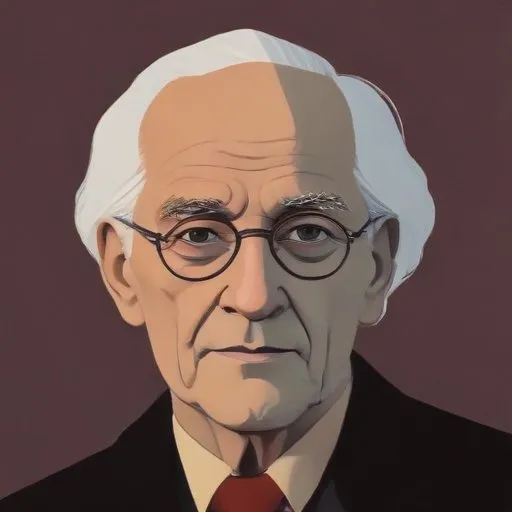
A poet and educator who explored the American West and its cultural landscape through his writing, blending folk and avant-garde styles.
Gunslinger, is a sprawling, genre-defying epic that cemented his reputation as a literary outsider and a champion of the marginalized.
Born on April 2, 1929, in Villa Grove, Illinois, Dorn grew up in rural poverty during the Great Depression. His early education took place in a one-room schoolhouse, where he developed a passion for language and literature. He later studied at the University of Illinois and Black Mountain College, where he came under the influence of Charles Olson, whose experimental approach to poetry and emphasis on the local and particular had a lasting impact on Dorn's work.
Dorn's teaching career spanned several decades and multiple institutions, including Idaho State University, where he published the magazine Wild Dog. His first book of poetry, The Newly Fallen, was published in 1961, followed by several other collections, including The Shoshoneans, which was inspired by his summer spent visiting Indian reservations with photographer Leroy Lucas.
In 1965, Dorn joined the faculty at the University of Essex, where he wrote Book 1 of Gunslinger, his most famous work. This epic poem is a scathing critique of American society, politics, and culture, written in a style that blends elements of surrealism, satire, and documentary poetry.
Gunslinger is a poem of immense scope and ambition, spanning over 500 pages and multiple volumes. It is a sprawling, fragmented, and fiercely experimental work that defies easy categorization. Through its protagonist, the gunslinger, Dorn explores themes of identity, power, and the search for meaning in a chaotic world.
The poem is also a scathing critique of American society, politics, and culture, particularly the myth of the American West and the ideology of Manifest Destiny. Dorn's use of language is both playful and provocative, often blurring the boundaries between poetry and fiction, between history and myth.
Ed Dorn's poetry and teaching have had a lasting impact on American literature, influencing generations of writers, poets, and artists. His work has been praised for its unflinching portrayal of rural poverty, its critique of American imperialism, and its innovative use of language and form.
Today, Dorn is recognized as one of the most important and innovative poets of the 20th century, alongside other luminaries such as Charles Olson, Robert Duncan, and Robert Creeley. His work continues to inspire and challenge readers, writers, and artists, offering a powerful vision of a more just and equitable society.
Dorn's poetry and teaching were deeply informed by his anarchist and anti-authoritarian beliefs. He was critical of the dominant ideologies of his time, including capitalism, imperialism, and patriarchy. His work reflects a deep commitment to social justice, individual freedom, and the empowerment of marginalized communities.
Through his poetry and teaching, Dorn encouraged his students and readers to question authority, challenge dominant narratives, and seek out alternative perspectives. His emphasis on the local and particular, on the importance of place and community, has influenced generations of writers and artists.
Born in 1926
A leading figure of the Beat Generation, known for his poetry that explores themes of nonconformity, free expression, and social justice. His iconic poem "Howl" is a classic of American literature.
Born in 1914
A pioneering figure of the Beat Generation, known for experimental and provocative works that blended fiction and reality, pushing boundaries of literature and art.
Born in 1922
Pioneering figure of the Beat Generation, known for spontaneous, confessional, and poetic writings that captured the essence of American counterculture in the 1950s and 60s.
Born in 1926
A charismatic figure of the Beat Generation, known for his spontaneous and free-flowing writing style, which greatly influenced the development of American literature.
Born in 1919
A Beat Generation icon who co-founded the legendary City Lights Bookstore, a hub for counterculture and free speech, and penned poetry that captured the spirit of rebellion and nonconformity.
Born in 1926
A celebrated poet, novelist, and essayist, known for his unique, concise, and emotive writing style that explored the human experience. His work often blurred the lines between poetry and prose.
96 Years Old
A Beat Generation icon, known for blending spirituality and ecology in poetry and essays that explore humanity's relationship with nature.
