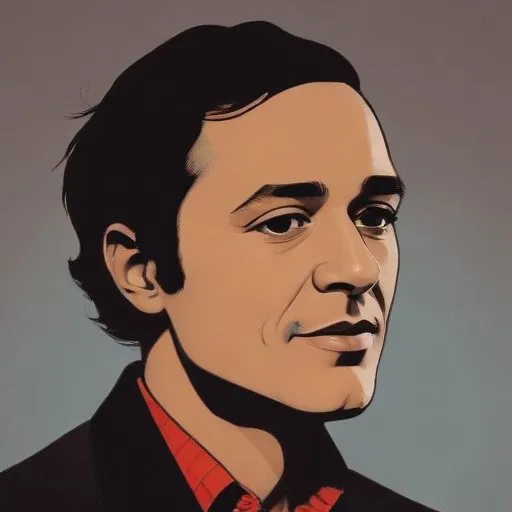
The Melodic Maestro: Edgar Sampson's Legacy in Jazz
Edgar Sampson, The Lamb, is an American jazz legend, remembered for his iconic compositions, Stompin' at the Savoy, and Don't Be That Way. As a prolific composer, arranger, saxophonist, and violinist, Sampson's impact on the jazz world is undeniable.
A Life in Music
Born on October 31, 1907, in New York City, Sampson's journey began with violin lessons at the tender age of six. He later picked up the saxophone in high school, setting the stage for a lifetime of musical exploration.
Rise to Fame
Sampson's professional career took off in 1924 with a violin-piano duo alongside Joe Colman. Throughout the 1920s and 1930s, he worked with numerous jazz bands, including those of Charlie Fess Johnson,
Duke Ellington, Rex Stewart, and
Fletcher Henderson. His big break came in 1934 when he joined the
Chick Webb band, where he penned his most enduring works, Stompin' at the Savoy and Don't Be That Way. These classic tunes propelled Sampson to fame as a composer and arranger, paving the way for freelance work with
Benny Goodman,
Artie Shaw,
Red Norvo, Teddy Hill,
Teddy Wilson, and Chick Webb.
Expanding Horizons
In the early 1940s, Sampson immersed himself in the Schillinger System, continuing to play saxophone until the late 1940s. He formed his own band from 1949 to 1951, and later collaborated with Latin performers such as Marcelino Guerra, Tito Rodríguez, and
Tito Puente as an arranger. In 1956, he recorded his sole album, Swing Softly Sweet Sampson, showcasing his mastery of the genre.
Lasting Impact
Due to illness, Sampson's active career came to a close in the late 1960s. However, his legacy extends far beyond his own music. His daughter, Grace Sampson, followed in his footsteps, studying music and co-writing the standard Mambo Inn with Mario Bauzá and Bobby Woodlen.
Notable Compositions and Arrangements
- Dark Rapture (with Benny Goodman and Manny Kurtz)
- If Dreams Come True (with Benny Goodman and Irving Mills)
- Lullaby in Rhythm (with Benny Goodman, Clarence Profit, and Walter Hirsch)
- Stompin' at the Savoy (with Benny Goodman, Chick Webb, and Andy Razaf)
- Don't Be That Way (with Benny Goodman)
A Legacy in Harmony
Edgar Sampson's remarkable journey has left an indelible mark on the world of jazz. His timeless compositions, arranged with precision and passion, continue to inspire generations of musicians and music lovers alike. As The Lamb, Sampson's gentle yet powerful approach to jazz has forever changed the melody of our lives.
FAQ
What type of music did Edgar Sampson compose?
Edgar Sampson was an American musician and composer who wrote primarily jazz and swing music. His compositions often featured complex harmonies and melodies, and were performed by leading orchestras and bands of the time.
What was Edgar Sampsons most famous composition?
Edgar Sampsons most famous composition is Stompin at the Savoy, a jazz standard that has been performed by countless musicians and bands over the years. The songs catchy melody and energetic rhythms have made it a beloved favorite among jazz fans.
How did Edgar Sampsons music career begin?
Edgar Sampsons music career began in the 1920s, when he started playing saxophone and arranging music for dance bands in New York City. He eventually moved to Chicago, where he worked as a freelance composer and arranger for several notable bands and orchestras.
What influence did Edgar Sampson have on the development of jazz?
Edgar Sampsons compositions and arrangements helped shape the sound of jazz and swing music in the 1930s and 1940s, influencing a generation of musicians and composers. His work continues to be celebrated and performed today.
What is Edgar Sampsons legacy in jazz music?
Edgar Sampsons legacy in jazz music is that of a pioneering composer and arranger who helped shape the sound of swing and jazz. His compositions continue to be celebrated and performed by musicians around the world.