


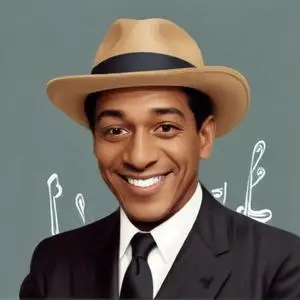
A renowned jazz pianist and educator, known for his elegant and sophisticated style, which greatly influenced the development of swing music.

Teddy Wilson, known as the definitive swing pianist, left an indelible mark on the jazz scene with his gentle, elegant, and virtuosic style. With a career spanning over five decades, Wilson's work was featured on the records of many of the biggest names in jazz, including Louis Armstrong, Lena Horne, Benny Goodman, Billie Holiday, and Ella Fitzgerald.
Born in Austin, Texas on November 24, 1912, Wilson's early music education began at the age of 6 with piano lessons under the guidance of his school teacher parents. He later studied violin, oboe, and clarinet at Tuskegee Institute in Tuskegee, Alabama. Wilson's musical journey began to take shape in the late 1920s, when he moved to Detroit with his brother and musician Gus Wilson.
Wilson's professional career took off in 1929 with Speed Webb's band. He soon took over the pianist position of Milton Senior's band from Art Tatum in 1930. After touring with the band in Chicago, Wilson decided to stay in the city and worked with Louis Armstrong and his orchestra between 1931-1933. He also understudied Earl Hines in Hines' Grand Terrace Cafe Orchestra before moving to New York to perform with Benny Carter's Chocolate Dandies in 1933.
In 1935, Wilson jammed with Benny Goodman and Carl Bellinger at a house party held by Mildred Bailey, catching the attention of producer John Hammond. This led to several recording sessions, which became the basis of the Benny Goodman Trio, comprising Goodman, Wilson, and drummer Gene Krupa, and later, Lionel Hampton. The trio performed during the Goodman band's intermissions, making Wilson one of the first black musicians to perform prominently alongside white musicians.
Teddy Wilson's influence on modern jazz is undeniable. His work with Benny Goodman helped bridge the racial gap in jazz, paving the way for future generations of musicians. Wilson's virtuosic style, heavily influenced by Earl Hines and Art Tatum, continues to inspire pianists today. He went on to lead his own groups and recording sessions from the late 1920s to the 1980s, leaving behind a rich legacy of jazz classics.
Teddy Wilson's approach to music was deeply rooted in his commitment to the craft. He believed in the importance of practice, dedication, and innovation, constantly pushing the boundaries of what was possible on the piano. Wilson's music embodies the essence of swing jazz, characterized by its lighthearted, exuberant, and carefree spirit.
"I'm not a commercial musician, I'm a jazz musician. I play what I want to play."
Teddy Wilson's life and career spanned a tumultuous period in American history, from the Great Depression to the Civil Rights Movement. His music served as a beacon of hope and unity, transcending racial and social boundaries. Today, Wilson's legacy continues to inspire generations of jazz enthusiasts and musicians, solidifying his place as one of the most important figures in jazz history.
Born in 1915
Legendary jazz vocalist and actress known for her expressive, emotive singing style and iconic songs like "God Bless the Child" and "Strange Fruit".
Born in 1917
A virtuosic jazz vocalist known for her pure, expressive tone, impeccable phrasing, and incredible scat singing abilities. She won 13 Grammy Awards and recorded over 200 albums.
Born in 1901
A legendary jazz musician who revolutionized the genre with his unique trumpet playing and raspy vocals, leaving an indelible mark on American music.
Born in 1899
A legendary jazz pianist, composer, and bandleader who revolutionized the genre with his unique style and iconic compositions, such as "Take the A Train" and "Mood Indigo".
Born in 1904
A legendary jazz pianist and bandleader who led a iconic orchestra, blending swing and blues to create a unique sound that influenced generations of musicians. Known for his distinctive "less-is-more" style and hits like "April in Paris" and "One O'Clock Jump".
Born in 1910
A virtuosic clarinetist and innovative bandleader, he revolutionized the swing era with his unique sound and iconic hits like "Begin the Beguine" and "Stardust".
Born in 1909
A virtuosic clarinetist and bandleader, known as the "King of Swing," who revolutionized jazz music with his energetic and sophisticated style, leading a racially integrated orchestra in the 1930s.
Born in 1904
A pioneering jazz musician who revolutionized the saxophone's role in jazz, creating a rich, full-bodied sound that influenced generations of musicians.
