


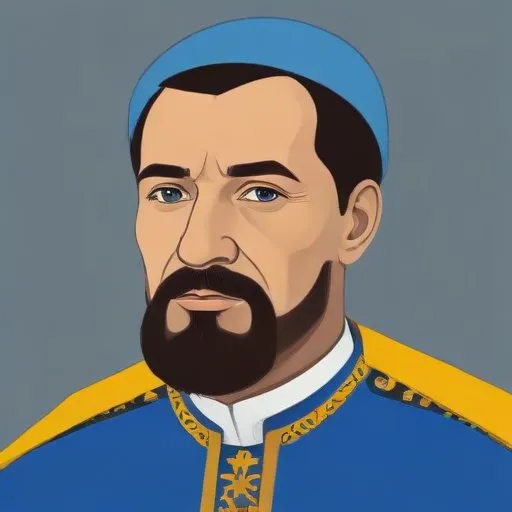
Creator of the planned language Occidental, also known as Interlingue, which aimed to be a simple and easy-to-learn language for international communication.
Edgar de Wahl, a Baltic German mathematics and physics teacher, is renowned for creating Interlingue, an international auxiliary language previously known as Occidental throughout his life. This linguistic masterpiece, designed to facilitate global communication, remains his most significant legacy.
De Wahl was born on August 23, 1867, in the territory of present-day Ukraine, to a Baltic German family. He spent his childhood in Tallinn and Saint Petersburg, where he developed a passion for languages. His father's colleague, Waldemar Rosenberger, introduced him to Volapük, sparking his interest in interlinguistics.
De Wahl's fascination with language led him to study at the University of Saint Petersburg and the Saint Petersburg Academy of Arts. During this period, he served in the Imperial Russian Navy. After leaving the navy in 1894, he settled in Tallinn, where he worked as a teacher and continued to pursue his linguistic ambitions.
In 1888, de Wahl became acquainted with Esperanto, but soon became disillusioned with its limitations. He then turned his attention to creating an ideal international language. After years of research and development, he published a key to Occidental in 1922, followed by the first edition of the periodical Kosmoglott (later renamed Cosmoglotta).
De Wahl's language, Interlingue, was designed to be a simple, logical, and culturally neutral means of communication. He refined the language over several decades, incorporating feedback from its users. Despite his isolation from the movement during World War II, Interlingue continued to evolve and gain popularity.
When most Baltic Germans left Estonia between 1939 and 1941, de Wahl chose to stay. However, during the German occupation in 1943, he was arrested and placed in a psychiatric clinic, allegedly due to dementia. He remained there until his death on March 9, 1948.
De Wahl's dedication to his work and his determination to create a truly international language are a testament to his character. Despite facing numerous challenges, he remained committed to his vision, leaving behind a lasting legacy in the world of linguistics.
Edgar de Wahl's Interlingue has inspired generations of language enthusiasts and continues to be used today. His work has had a profound impact on the development of international auxiliary languages, paving the way for future linguistic innovations.
De Wahl's legacy extends beyond the realm of linguistics, serving as a beacon of cultural understanding and global communication. His groundbreaking work has brought people together, transcending linguistic and cultural boundaries.
Interlingue, as a language, has facilitated international communication, fostering greater understanding and cooperation among nations. De Wahl's pioneering work has inspired a new generation of language creators, pushing the boundaries of linguistic innovation.
In conclusion, Edgar de Wahl's remarkable life and achievements serve as a testament to the power of human ingenuity and dedication. His legacy continues to inspire and unite people from diverse backgrounds, promoting global understanding and communication.
Born in 1892
Creator of Middle-earth, a richly detailed fantasy world, and author of The Hobbit and The Lord of the Rings trilogy, which have become cultural touchstones.
Born in 1859
Creator of Esperanto, a constructed language designed to be a simple and easy-to-learn tongue for people from different countries, aiming to promote international understanding and communication.
Born in 1857
Developed the foundation of modern linguistics, introducing concepts like signs, signifiers, and structuralism, revolutionizing the study of language and its role in shaping culture.
97 Years Old
Developed groundbreaking theories on language acquisition and universal grammar, and is a prominent critic of power and propaganda in modern society.
Born in 1896
A pioneering linguist and theorist who developed groundbreaking concepts in phonology, morphology, and semiotics, shaping modern linguistics and literary theory.
Born in 1899
A Russian-born novelist and critic, renowned for crafting intricate, lyrical prose and exploring themes of identity, morality, and the human condition through works like "Lolita" and "Pale Fire".
Born in 1903
A renowned writer of dystopian classics, such as "1984" and "Animal Farm", who warned of totalitarianism's dangers through allegorical fiction.
94 Years Old
A renowned Italian intellectual who wrote bestselling novels like "The Name of the Rose" and "Foucault's Pendulum", blending mystery, history, and philosophy, while also being a prominent literary critic and philosopher.
