


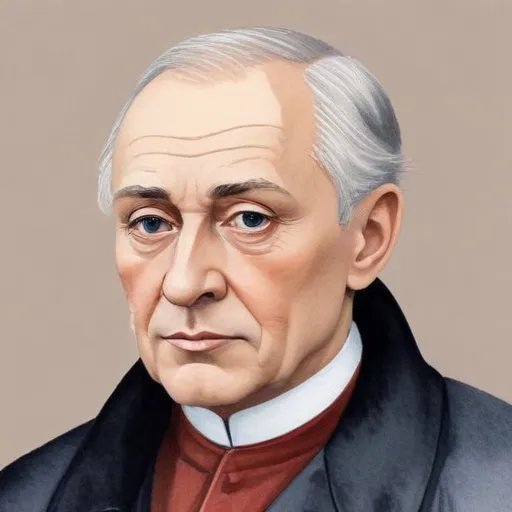
A renowned Russian children's author, poet, and playwright, best known for creating beloved characters like Cheburashka and Gena the Crocodile, entertaining and educating generations of kids.
Eduard Uspensky, the renowned Soviet and Russian children's writer and poet, is widely recognized for creating iconic characters like Cheburashka and Gena the Crocodile, which have captured the hearts of millions of children worldwide. With a prolific career spanning over 60 years, Uspensky has authored over 70 books, play scripts, and poems, solidifying his position as a legend in the world of children's literature.
Uspensky was born on December 22, 1937, in Yegoryevsk, Moscow Oblast, to a family of Russian intellectuals. His father, Nikolai Mikhailovich Uspensky, was a high-ranking official in the Central Committee of the Communist Party of the Soviet Union, while his mother, Natalia Alekseyevna Uspenskaya, was an engineering technologist from Vyshny Volochyok. This unique blend of political and technical backgrounds would later influence Uspensky's creative vision.
During World War II, Uspensky's family was evacuated to Siberia, where they spent two years. This experience had a profound impact on his writing, as he drew inspiration from the rugged beauty of the Siberian landscape and the people he met during his childhood. After graduating as an engineer, Uspensky pursued a career in writing, initially producing animations and later focusing on children's literature.
Uspensky's most iconic creations, Cheburashka and Gena the Crocodile, were born out of his desire to craft characters that would entertain and educate children. Cheburashka, a mysterious, furry creature from the woods, and Gena the Crocodile, a gentle, guitar-playing reptile, quickly became household names in Russia and beyond. These beloved characters have been translated into 25 languages, spawning over 60 cartoon adaptations, and cementing Uspensky's status as a master storyteller.
Uspensky's contributions to children's literature and television have been recognized with numerous awards and honors. In 1997, he was awarded the Order For Merit to the Fatherland, 4th class, for his outstanding contributions to Russian culture. His work has also been celebrated with numerous literary and television awards, solidifying his position as a national treasure in Russia.
Uspensky's work extends beyond the realm of children's literature, having a profound impact on modern society. His stories have helped shape the cultural identity of Russia, inspiring generations of writers, animators, and artists. His commitment to promoting values like kindness, tolerance, and environmental awareness has made him a beloved figure, not only in Russia but globally.
Uspensky was an integral part of Russian television and radio, hosting the popular children's show "Good Night, Little Ones" and producing the educational radio program "Radio Nanny." He also hosted the musical TV and radio talk show "Ships Used to Enter Our Harbour," where he discussed street folklore and shared nostalgic stories with his guests.
Uspensky's writing is characterized by a deep sense of humanity and empathy, reflecting his belief in the importance of moral education and responsible storytelling. His work emphasizes the value of friendship, cooperation, and respect for the environment, inspiring children to become active participants in shaping their communities.
In conclusion, Eduard Uspensky's legacy is a testament to the power of imagination, creativity, and humanitarian values. As a writer, poet, and television personality, he has left an indelible mark on Russian culture and the hearts of millions of children worldwide.
Born in 1887
A renowned Russian poet and playwright, known for his whimsical and imaginative children's literature, which has been translated into numerous languages and remains beloved by generations of readers.
Born in 1913
A renowned Russian writer and playwright, best known for creating the lyrics to the Soviet national anthem and penning popular children's books, including "Daddy Frost".
93 Years Old
A prominent Russian poet and playwright, known for his bold and provocative works that often critiqued Soviet politics and society, earning him both acclaim and controversy.
89 Years Old
A celebrated poet, short story writer, and translator, known for her lyrical and introspective works that explored themes of love, nature, and the human condition.
Born in 1905
A Russian absurdist writer, known for his surreal and often humorous short stories, poetry, and plays that critique Soviet society. His unique style blends wit and darkness, leaving readers both entertained and unsettled.
