


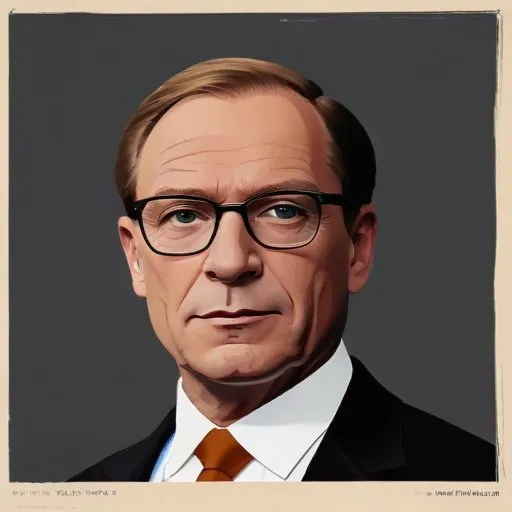
A Dutch journalist and politician who advocated for the rights of marginalized groups, particularly those in the LGBTQ+ community, and was a prominent figure in the fight against censorship.
Edward Brongersma was a Dutch politician and doctor of law, known for his advocacy of pedophilia and his efforts to relax legislation on public morality. Throughout his career, he sparked controversy and debate, leaving a lasting impact on the Dutch political landscape.
Born on August 31, 1911, in Haarlem, Netherlands, Brongersma was the son of an ophthalmologist. He studied law at the University of Amsterdam from 1931 to 1935, obtaining his degree in 1935. His academic pursuits continued, and in 1940, he received his Doctor of Law degree cum laude from the Catholic University of Nijmegen.
Brongersma's dissertation, focusing on the Portuguese constitution of 1933 and Portuguese corporatism under Antonio de Oliveira Salazar, was published as a book and reprinted several times. This work showcased his academic prowess and interest in corporative states.
After World War II, Brongersma quickly made a name for himself as a lawyer and politician. He worked as an attorney in Amsterdam from 1940 to 1950 and was an active member of the editorial board of the Dutch journal for the legal profession, Nederlands Juristenblad, from 1946 to 1950.
He was elected to the Dutch Senate for the Dutch Labour Party (PvdA) in 1946, serving two terms: 1946-1950 and 1963-1977. Additionally, he was a member of the Provincial States of North Holland and served on the town council of Heemstede from 1946 to 1950.
In 1950, Brongersma's career was abruptly interrupted when he was arrested and convicted for having sexual relations with a 17-year-old male. At the time, the age of consent for homosexual contacts was 21, based on article 248bis of the Dutch Criminal Code. This conviction led to 11 months of imprisonment, sparking public debate and scrutiny.
Despite the controversy surrounding his personal life, Brongersma's contributions to Dutch politics and law cannot be discounted. His advocacy for relaxed legislation on public morality, though contentious, contributed to ongoing discussions about sexual ethics and the role of government in regulating personal conduct.
As a complex and multifaceted figure, Brongersma's legacy serves as a reminder that even the most controversial individuals can have a lasting impact on the world around them.
Born in 1886
A Dutch politician and historian who served as Prime Minister of the Netherlands from 1948 to 1958, leading the country's post-war reconstruction and social reform efforts. He's known for his progressive policies and strong leadership during a pivotal period in Dutch history.
Born in 1903
A Dutch economist and academic who developed the first national economic model and was awarded the first Nobel Prize in Economics in 1969 for his work on econometrics.
Born in 1886
A Dutch historian and politician who served as Minister of Finance, known for his efforts to stabilize the Dutch economy during World War I and the Great Depression. He was a key figure in shaping the country's economic policy during a tumultuous period.
Born in 1882
A Dutch-American historian and journalist who wrote engaging, accessible history books for the general public, making history fun and approachable for everyone.
95 Years Old
A Dutch statesman who served as Prime Minister of the Netherlands from 1977 to 1982, known for his progressive policies and European integration efforts.
Born in 1919
A Dutch journalist, economist, and politician who served as Deputy Prime Minister of the Netherlands, known for his progressive policies and efforts to reduce economic inequality. He played a key role in shaping the country's social and economic landscape.
