


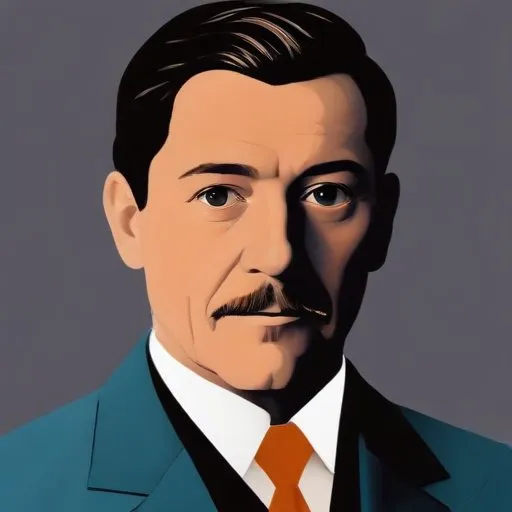
A Dutch-American historian and journalist who wrote engaging, accessible history books for the general public, making history fun and approachable for everyone.
Hendrik Willem van Loon was a renowned Dutch-American historian, journalist, and children's book author, best known for his iconic book The Story of Mankind, which won the first Newbery Medal in 1922. As a pioneering figure in making history accessible to young minds, van Loon's works continue to inspire and educate generations of readers.
Born on January 14, 1882, in Rotterdam, Netherlands, van Loon was the son of Hendrik Willem van Loon and Elisabeth Johanna Hanken. He immigrated to the United States in 1902 to pursue higher education at Harvard University and later at Cornell University, where he earned his AB in 1905.
Van Loon's literary journey began with his Ph.D. dissertation from the University of Munich in 1911, which became his first book, The Fall of the Dutch Republic. He went on to write numerous books, illustrating them himself, making history engaging and accessible to young readers. Some of his notable works include:
Hendrik Willem van Loon's contributions to making history accessible to young minds have had a lasting impact on the world of children's literature. His books have been translated into numerous languages, and his legacy continues to inspire historians, writers, and educators. Today, van Loon's works remain a testament to the power of storytelling in shaping our understanding of the world and its rich cultural heritage.
Van Loon's most notable award is the first Newbery Medal, which he received in 1922 for The Story of Mankind. His contributions to children's literature have been recognized and celebrated through various honors and accolades.
Did you know that van Loon's love for dogs led him to name his Newfoundland, Mungo, after Sir Walter Scott's dog? Mungo went on to become a mascot for the U.S. Army Air Forces during World War II, flying on missions to bomb Nazi U-boats!
Born in 1858
A pioneering leader who championed progressive reforms, trust-busting, and conservation, earning a Nobel Peace Prize for mediating the Russo-Japanese War. He's also famous for his rugged outdoorsmanship and "big stick" diplomacy.
Born in 1856
The 28th President of the United States, a Nobel Peace Prize winner, and a historian who played a key role in shaping international relations and global governance after World War I. He's most known for his idealistic vision of a League of Nations and his efforts to promote peace and diplomacy.
Born in 1882
Led the United States through the Great Depression and World War II, implementing a series of reforms known as the New Deal and helping to establish the country as a global superpower.
Born in 1874
The 31st President of the United States was a humanitarian and politician who led the country through the Great Depression and is known for his humanitarian efforts and infrastructure development. He's also infamous for his inability to mitigate the economic crisis.
Born in 1872
The 30th President of the United States, a lawyer and politician, led the country through a period of economic prosperity and limited government intervention, earning the nickname "Silent Cal" for his frugal and humble nature. He's most known for his minimalist approach to governance and tax cuts.
Born in 1865
The 29th President of the United States, a journalist-turned-politician, led the country through a period of post-war prosperity and scandalous corruption. He's infamous for his administration's numerous scandals and his own extramarital affairs.
Born in 1857
The 27th President of the United States was a lawyer and jurist who served as the only person to hold the offices of President and Chief Justice of the United States. He's known for his significant contributions to the country's judicial system.
Born in 1871
A pioneering realist writer who chronicled the lives of the American working class, capturing the gritty realities of urban existence through novels like "Sister Carrie" and "An American Tragedy".
