


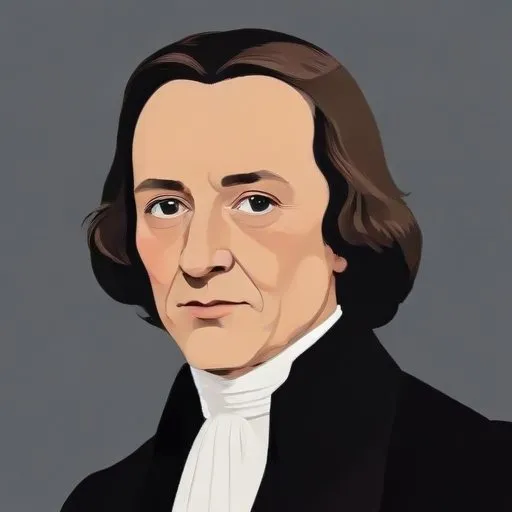
A 17th-century historian and politician who served as Chancellor of the Exchequer, known for his influential historical writings and shaping England's government. He penned the "History of the Rebellion," a seminal work on the English Civil War.
Edward Hyde, 1st Earl of Clarendon, was a renowned English statesman, lawyer, diplomat, and historian who served as chief advisor to King Charles I during the tumultuous First English Civil War and later as Lord Chancellor to King Charles II from 1660 to 1667. He is perhaps best known for his unwavering dedication to the Episcopal Church of England and his influential historical writings, which continue to shape our understanding of 17th-century England.
Born on February 18, 1609, Edward Hyde was the son of Henry Hyde, a gentleman from Dinton, Wiltshire. He received his education at Magdalen Hall, Oxford, where he cultivated a deep appreciation for classical literature and history. Hyde's early career was marked by his admission to the Middle Temple in 1633, where he was called to the bar in 1634.
In 1640, Hyde was elected to the Long Parliament, where he initially supported the monarchic ideals of King Charles I. However, as the king's attempts to rule without parliament intensified, Hyde began to sympathize with the parliamentary cause. His moderate stance eventually led him to join the royalist camp in York, where he served as Charles I's senior political advisor.
In 1646, after the royalist defeat, Hyde fled to France with the young Charles II, who would later become king. During his exile, Hyde honed his diplomatic skills, serving as a negotiator in Paris and Madrid. His expertise in international relations would later serve him well in his role as Lord Chancellor.
With the Restoration of the monarchy in 1660, Charles II appointed Hyde as Lord Chancellor and created him Earl of Clarendon. This position of power allowed Hyde to shape the king's policies and promote his own vision for a unified Episcopal Church of England.
Hyde's most enduring legacy lies in his historical writings. His monumental work, The History of the Rebellion and Civil Wars in England, remains an indispensable account of the English Civil War. This sweeping narrative provides invaluable insights into the complexities of 17th-century English politics and society.
Hyde's personal life was marked by his marriage to Anne Ayliffe and the birth of their daughter, Anne, who would later marry James II, making Hyde the grandfather of two queens, Mary II and Anne.
Hyde's unwavering commitment to the Episcopal Church of England and his opposition to Puritan reforms earned him many enemies. His criticism of King Charles II's policies also led to a decline in his influence towards the end of his life.
Edward Hyde, 1st Earl of Clarendon, left an indelible mark on English history. His historical writings continue to influence our understanding of the 17th century, while his commitment to the Episcopal Church of England shaped the course of English religious history.
In conclusion, Edward Hyde, 1st Earl of Clarendon, was a multifaceted figure whose dedication to his ideals, his country, and his art continues to inspire and educate us to this day.
Born in 1599
Leader of the Parliamentarian forces during the English Civil War, who later ruled England, Scotland, and Ireland as a republican dictator, known for his military victories and radical reforms.
Born in 1632
A 17th-century thinker who laid the groundwork for modern democracy, arguing that governments derive their power from the people and that individuals have inherent rights to life, liberty, and property.
Born in 1643
A Scottish bishop, historian, and theologian who wrote influential works on the English Reformation and served as a close advisor to King William III. He's most known for his historical writings and ecclesiastical reforms.
Born in 1620
A 17th-century horticulturalist and writer who penned influential books on gardening, forestry, and architecture, shaping the English landscape and aesthetic. His works remain essential reading for garden enthusiasts and historians.
Born in 1633
A 17th-century diarist and politician who chronicled his daily life, including significant historical events like the Great Fire of London, in a candid and detailed manner. His diary is a valuable historical resource and a window into the past.
