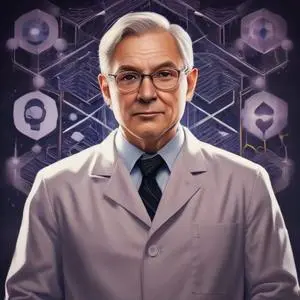
Edwin G. Krebs: The Nobel Laureate Who Illuminated the World of Biochemistry
A Pioneer in Understanding Cellular Processes
Edwin G. Krebs is renowned for his groundbreaking work in biochemistry, particularly in the discovery of reversible phosphorylation, a crucial mechanism that regulates various cellular processes. Together with his collaborator
Edmond H. Fischer, Krebs was awarded the Nobel Prize in Physiology or Medicine in 1992 for their pioneering research.
Early Life and Education
Born on June 6, 1918, in Lansing, Iowa, Krebs was the third child of William Carl Krebs, a Presbyterian minister, and Louise Helen Stegeman Krebs. Due to his father's profession, the family frequently moved, eventually settling in Greenville, Illinois, where Krebs spent most of his childhood. After his father's unexpected death in 1933, the family relocated to Urbana, Illinois.
Krebs attended Urbana High School and then enrolled at the University of Illinois Urbana-Champaign in 1936. Initially, he was torn between pursuing a degree in organic chemistry or studying medicine. Receiving a scholarship to attend Washington University School of Medicine in St. Louis, he opted for the latter.
New Horizons in Medical Research
During his time at the School of Medicine, Krebs was exposed to both clinical practice and medical research. After graduating in 1943, he completed an 18-month residency at Barnes Hospital in St. Louis and then served as a medical officer in the Navy. Following his discharge in 1946, Krebs was advised to focus on basic science research, which led him to pursue a career in biochemistry.
Breakthrough Discoveries and Collaborations
Krebs' postdoctoral fellowship with Carl and Gerty Cori, Nobel laureates in Physiology or Medicine, played a significant role in shaping his research career. He worked alongside the Coris on the interaction of protamine with rabbit muscle phosphorylase. This experience laid the foundation for his future research on reversible phosphorylation.
Krebs' collaboration with Edmond H. Fischer led to the discovery of the enzyme phosphorylase kinase, which regulates glycogen metabolism. Their research demonstrated that reversible phosphorylation acts as a molecular switch, controlling various cellular processes, including metabolism, signaling, and protein function.
Awards and Honors
In recognition of his outstanding contributions to biochemistry, Krebs received numerous awards, including:
- Albert Lasker Award for Basic Medical Research (1989)
- Louisa Gross Horwitz Prize of Columbia University (1989)
- Nobel Prize in Physiology or Medicine (1992)
Legacy and Impact
Edwin G. Krebs' work has had a profound impact on our understanding of cellular processes and has far-reaching implications for fields such as medicine, agriculture, and biotechnology. His discovery of reversible phosphorylation has paved the way for the development of new treatments for various diseases, including cancer and diabetes.
Through his research, Krebs has inspired generations of scientists and has left an indelible mark on the field of biochemistry. His legacy continues to inspire and motivate researchers, ensuring a brighter future for humanity.
FAQ
What did Edwin G. Krebs discover?
Edwin G. Krebs, along with his colleague Edmond H. Fischer, discovered the mechanism of phosphorylation, a process by which cells regulate enzyme activity. This discovery led to a deeper understanding of cellular signaling and communication.
What is Edwin G. Krebs Nobel Prize for?
Edwin G. Krebs was awarded the Nobel Prize in Physiology or Medicine in 1992, along with Edmond H. Fischer, for their discovery of reversible protein phosphorylation.
What is Edwin G. Krebs research focus?
Edwin G. Krebs research focused on the mechanisms of cellular signaling and regulation, particularly in the areas of protein phosphorylation and kinase signaling. He made significant contributions to our understanding of these processes and their roles in cellular physiology and disease.
What is Edwin G. Krebs role in the development of new treatments?
Edwin G. Krebs research on protein phosphorylation and kinase signaling has led to the development of new treatments for a range of diseases, including cancer, diabetes, and neurodegenerative disorders.
What is Edwin G. Krebs legacy?
Edwin G. Krebs legacy is that of a pioneering biochemist who made fundamental discoveries in the field of cellular signaling and regulation. His work has had a profound impact on our understanding of cellular biology and has led to the development of new treatments for a range of diseases.