


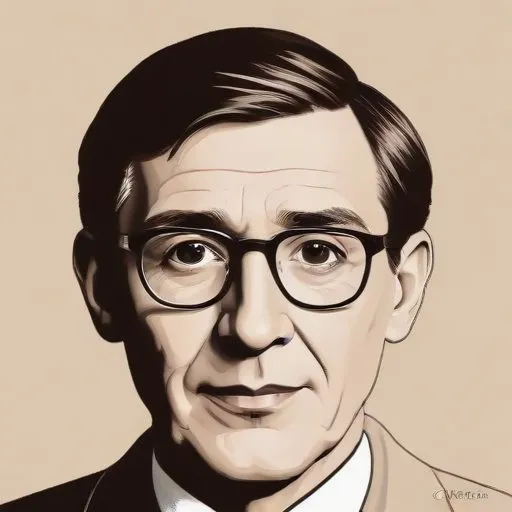
Discovered G-proteins, which play a crucial role in cellular signaling, and was awarded the Nobel Prize in Physiology or Medicine in 1994 for this groundbreaking work.
Martin Rodbell, a renowned American biochemist and molecular endocrinologist, is best known for his groundbreaking discovery of G-proteins, a crucial component in cellular signal transduction. This pioneering work, which he shared with Alfred G. Gilman, earned him the 1994 Nobel Prize in Physiology or Medicine.
Rodbell was born on December 1, 1925, in Baltimore, Maryland, to a Jewish family. His interests in biology and French existential literature led him to attend Johns Hopkins University in 1943. However, his studies were interrupted by military service as a U.S. Navy radio operator during World War II. After returning to Hopkins in 1946, he completed his B.S. in biology in 1949.
Rodbell's academic journey continued with a Ph.D. in biochemistry from the University of Washington in 1954, followed by postdoctoral work at the University of Illinois at Urbana-Champaign. In 1956, he joined the National Heart Institute, part of the National Institutes of Health (NIH), as a research biochemist. This marked the beginning of a long and fruitful career at the NIH, where he would eventually become the Scientific Director of the National Institute of Environmental Health Sciences in 1985.
Rodbell's notable appointments include being an adjunct professor of Cell Biology at Duke University from 1991 to 1998 and an adjunct professor of pharmacology at the University of North Carolina at Chapel Hill.
Rodbell's most significant contribution to the scientific community was his discovery of G-proteins, a family of proteins that play a crucial role in signal transduction within cells. This breakthrough research, conducted in collaboration with Alfred G. Gilman, revealed the mechanism by which cells respond to external signals, shedding light on the intricate processes that govern cellular communication.
Rodbell's outstanding work was recognized with numerous awards and honors, including the 1994 Nobel Prize in Physiology or Medicine, the Albert Lasker Award for Basic Medical Research, and the National Medal of Science.
Rodbell married Barbara Charlotte Ledermann in 1950, and the couple had four children together. He passed away on December 7, 1998, at the age of 73, leaving behind a legacy of groundbreaking research and a deeper understanding of cellular communication.
Rodbell's contributions to the field of biochemistry and molecular endocrinology have had a profound impact on our understanding of cellular signaling, paving the way for further research into the intricacies of cellular communication.
"The language of cells is not a fixed one; it's a dynamic language that's constantly being rewritten."
Rodbell's work continues to inspire scientists and researchers, fostering a greater understanding of the complex processes that govern life itself.
85 Years Old
A renowned pharmacologist and biochemist who discovered the G-protein, a crucial component of cellular signaling pathways, earning him a Nobel Prize in Physiology or Medicine in 1994. His work has greatly advanced our understanding of cellular communication and disease mechanisms.
96 Years Old
A pioneering neuroscientist and psychiatrist who unraveled the mysteries of memory and learning, earning a Nobel Prize for his groundbreaking work on the physiological basis of memory storage.
Born in 1923
A Swedish pharmacologist and physician who discovered the neurotransmitter dopamine's role in the brain, leading to major breakthroughs in Parkinson's disease treatment.
99 Years Old
Pioneering molecular biologist who deciphered the genetic code and developed a new field of study, earning a Nobel Prize in Physiology or Medicine in 2002.
Born in 1903
A pioneering physiologist who uncovered the workings of the human eye and developed a deeper understanding of vision, earning him the Nobel Prize in Physiology or Medicine in 1967.
Born in 1916
Pioneering scientist who discovered the structure of DNA, revolutionizing our understanding of genetics and life itself.
