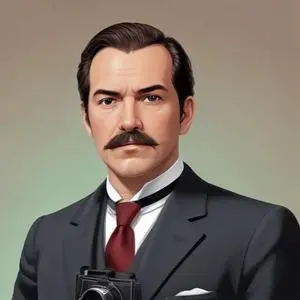
Edwin Stanton Porter: The Pioneer of Film Editing and Narrative Storytelling
A Life Dedicated to Pioneering Film
Edwin Stanton Porter is renowned for his groundbreaking contributions to the film industry, particularly in the realm of editing and narrative storytelling. As a pioneer of American cinema, Porter's innovative techniques and creative vision have left an indelible mark on the art of filmmaking.
Early Life and Career
Born on April 21, 1870, in Connellsville, Pennsylvania, Porter was fascinated by the world of entertainment from a young age. He began his career as an actor and stagehand in various theater companies, eventually transitioning to the film industry in the late 1890s. Porter's early work involved operating motion picture cameras and exhibiting films in nickelodeons.
Rise to Prominence
Porter's big break came in 1903 when he joined the Edison Manufacturing Company as a cameraman and director. During his tenure, he directed over 250 short films, including the iconic
The Great Train Robbery (1903), which is often cited as one of the earliest narrative films. This 12-minute masterpiece showcased Porter's innovative use of cross-cutting, camera angles, and storytelling techniques, setting a new standard for filmmaking.
Innovations and Contributions
Porter's most significant contributions to the film industry include:
- Development of Cross-Cutting: Porter pioneered the technique of intercutting between two or more scenes, creating a sense of continuity and tension.
- Narrative Storytelling: He introduced the concept of telling a story through film, using visual elements to convey emotions and plot.
- Camera Angles and Movement: Porter experimented with camera placement, movement, and lighting, creating a more dynamic visual experience.
Legacy and Influence
Porter's work had a profound impact on the development of film language and narrative structure. His innovations influenced a generation of filmmakers, including D.W. Griffith, who often credited Porter as a mentor and inspiration. Porter's legacy extends beyond film, with his storytelling techniques influencing literature, theater, and even modern media.
Personal Life and Later Years
Porter married Charlotte Koch in 1893, and the couple had one son, Blair. In the 1920s, Porter turned to producing and distributing films, eventually retiring in the 1930s. He passed away on April 30, 1941, leaving behind a body of work that continues to inspire and influence filmmakers today.
Awards and Recognition
Porter's contributions to the film industry have been recognized through various tributes, including:
- A star on the Hollywood Walk of Fame (1960)
- Induction into the National Inventors Hall of Fame (1974)
- A commemorative stamp issued by the US Postal Service (1974)
Trivia and Fun Facts
- Porter was a skilled magician and often incorporated magic tricks into his films.
- He was known for his meticulous attention to detail, often using storyboards to plan his shots.
- Porter's film, The Great Train Robbery, was originally intended to be a short sequence, but he expanded it into a full-fledged narrative.
Conclusion
Edwin Stanton Porter's groundbreaking contributions to film editing and narrative storytelling have left an indelible mark on the cinematic landscape. As a pioneer of American cinema, Porter's innovative techniques and creative vision continue to inspire filmmakers, writers, and artists to this day. His legacy serves as a testament to the power of storytelling and the boundless potential of the human imagination.
FAQ
What is Edwin Stanton Porter known for in the film industry?
Edwin Stanton Porter was a pioneering American director, producer, and screenwriter known for his innovative storytelling techniques and influential films like The Great Train Robbery (1903) and Life of a Cowboy (1906).
What was Edwin Stanton Porters role in the development of narrative filmmaking?
Porter played a significant role in the development of narrative filmmaking by introducing techniques like cross-cutting, camera movement, and editing, which allowed for more complex storytelling and paved the way for future filmmakers.
How did Edwin Stanton Porters work influence the silent film era?
Porters work had a profound influence on the silent film era, inspiring filmmakers like D.W. Griffith and Cecil B. DeMille, and shaping the course of cinematic storytelling for decades to come.
What was Edwin Stanton Porters contribution to the American film industry?
Porter was a pioneer of the American film industry, helping to establish the Edison Manufacturing Company and producing over 500 films during his career, including shorts, features, and newsreels.
What is Edwin Stanton Porters legacy in film history?
Porters legacy in film history is that of a visionary filmmaker who bridged the gap between the early days of cinema and the development of narrative filmmaking, earning him a place among the most important figures in film history.